

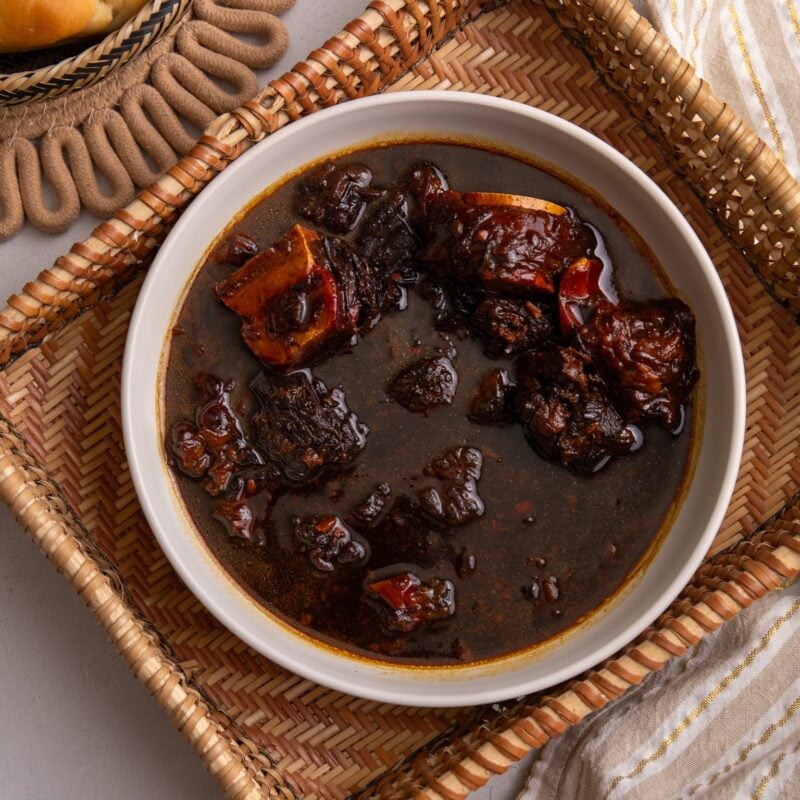
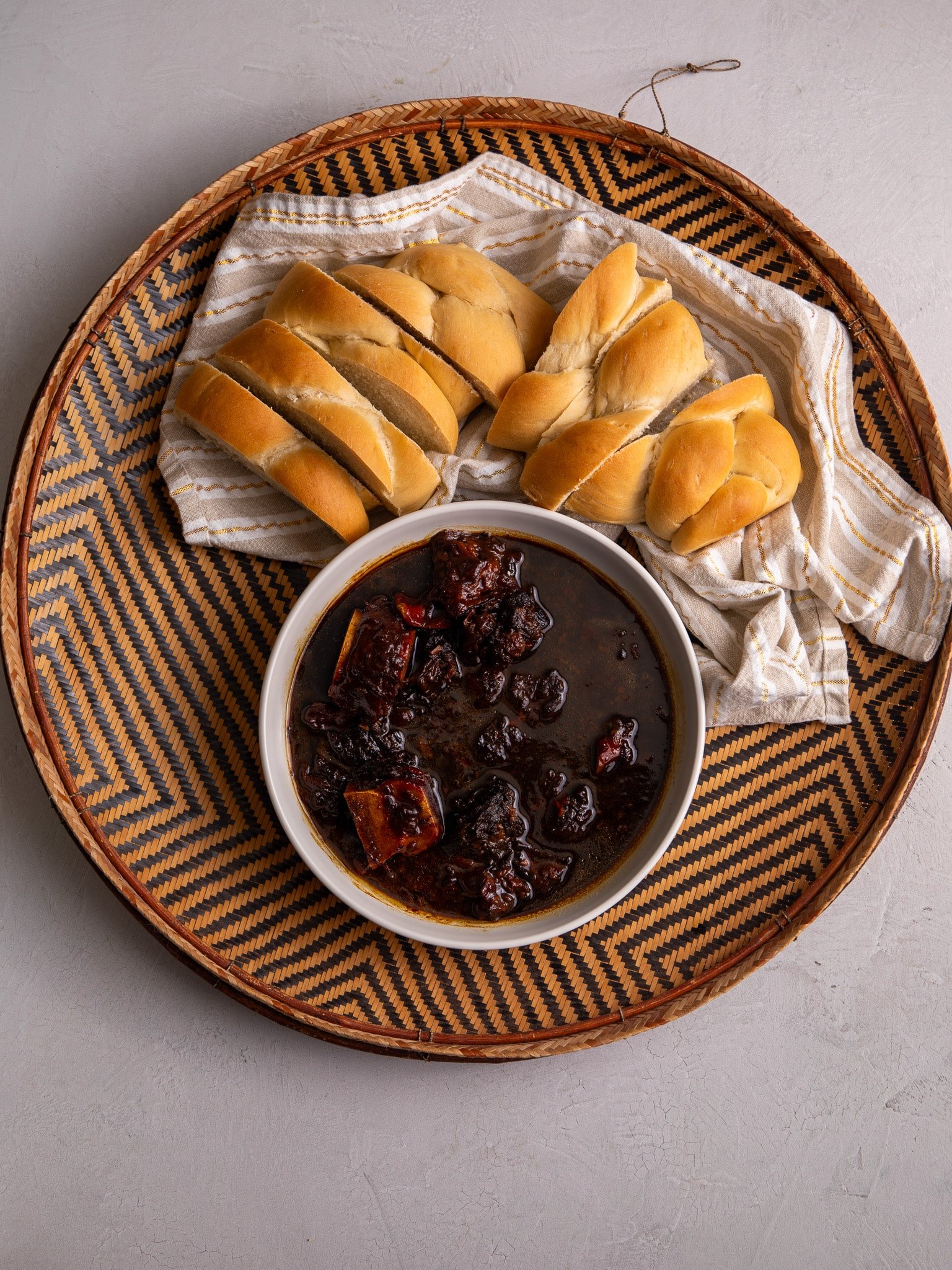
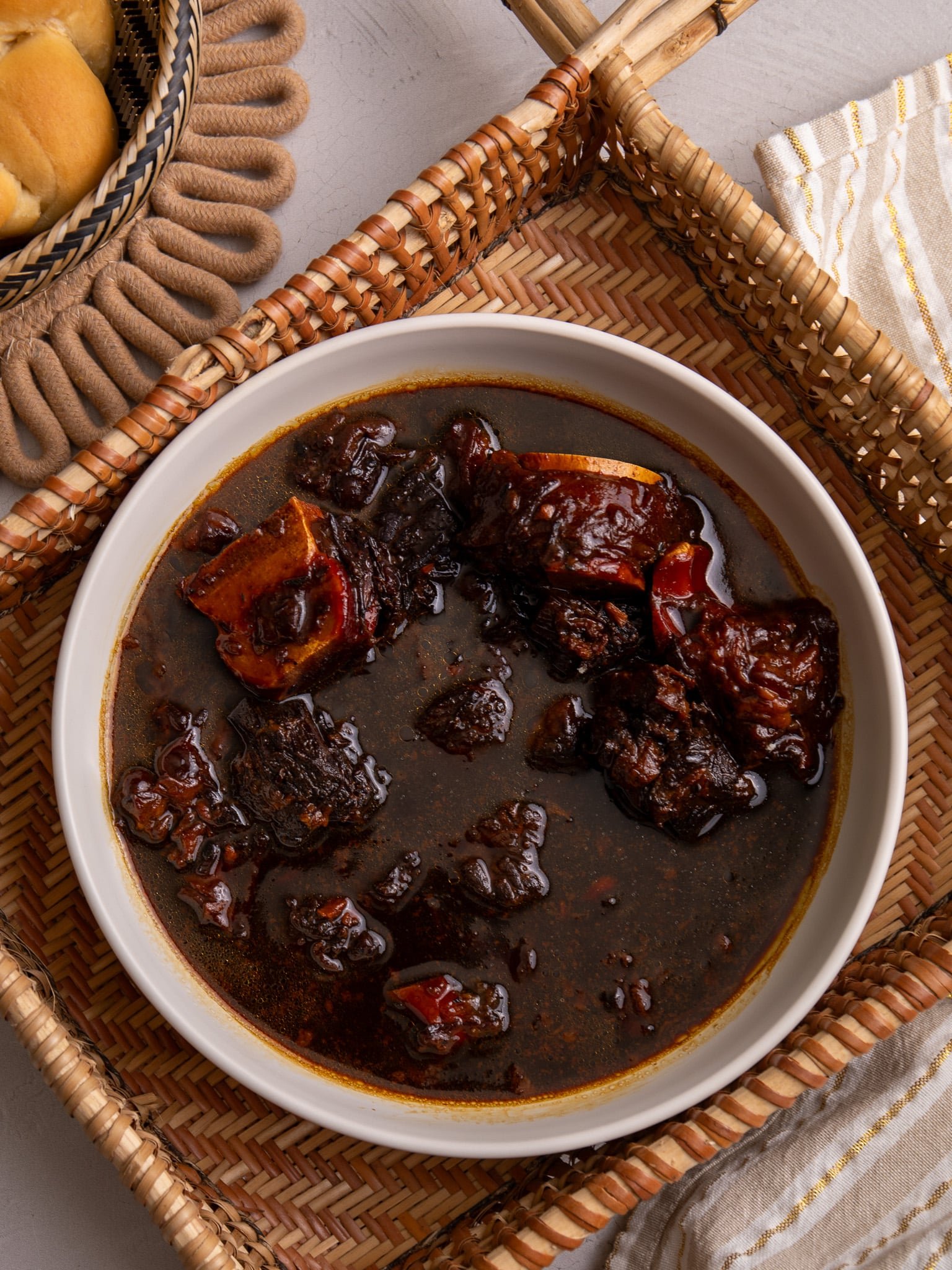
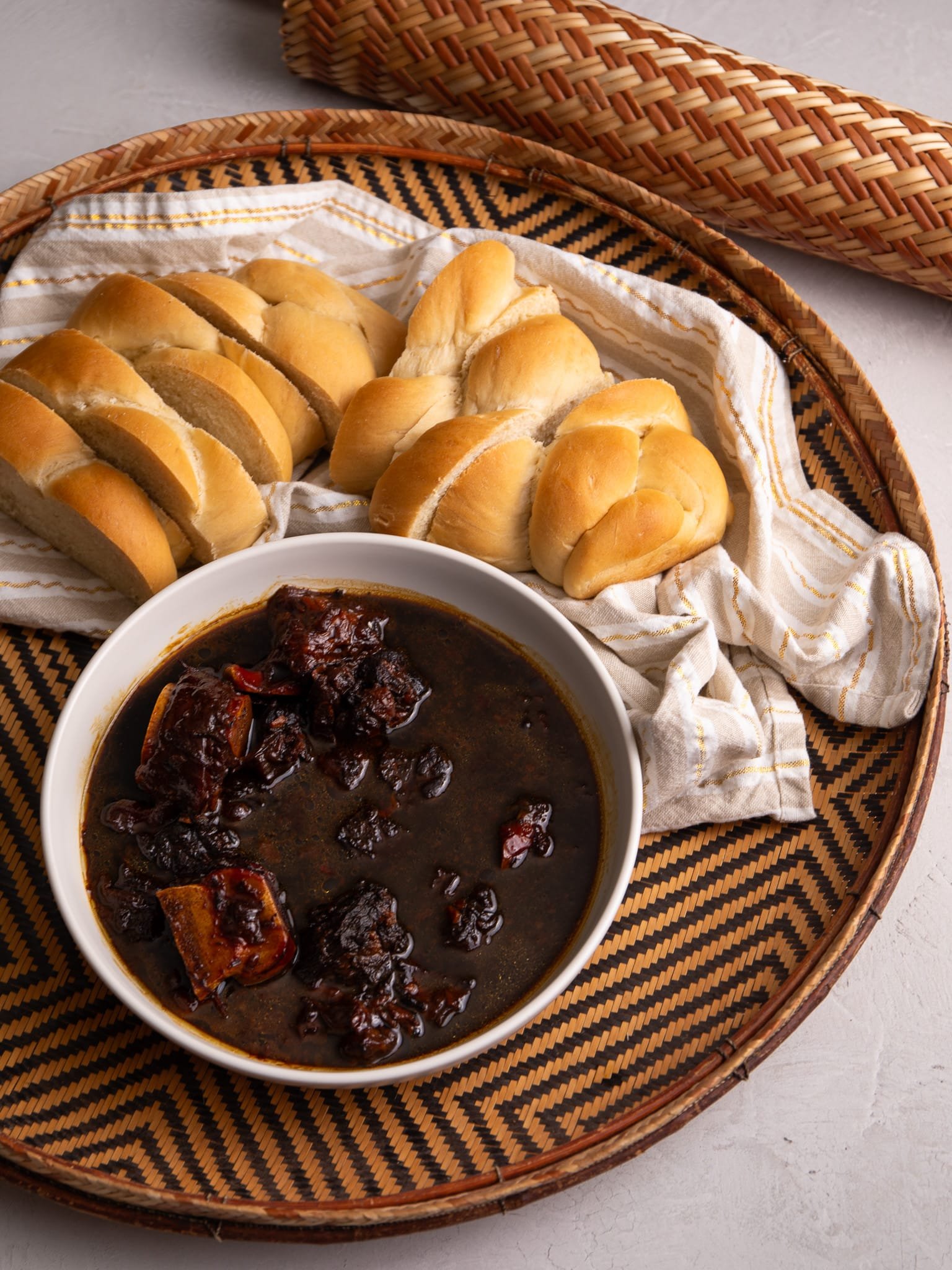
Guyanese Pepperpot is a rich meat stew that gets its signature dark color from cassareep, a thick “caramel” or reduction sauce made from cassava extract. It is traditionally eaten with cassava bread. Culturally it is eaten with homemade Guyanese plait bread on Christmas morning.
12/15/2025 Update: Updated photos and flow of recipe.
Guyanese Pepperpot
My favorite childhood Christmas memory is waking up to the smell of pepperpot and bread on Christmas morning. Traditional pepperpot making is a real labor of love. It’s best when simmered for hours, even days before being served.
- Guyanese Pepperpot
- What you need to know about this recipe.
- What is Pepperpot?
- Guyanese Pepperpot History
- Ingredients for Pepperpot
- How to Make Pepperpot
- Cook the tougher cuts of meat separately
- Combine all the meats
- Different Ways to Make Pepperpot
- Substitutions & Variations
- Equipment
- Storage
- Tips for the Best Pepperpot
- Frequently Asked Questions
- Guyanese Pepperpot
What you need to know about this recipe.
- Takes Time: Good Pepperpot takes time. It is not a dish that is rushed. This recipe takes about 6 hours (if not using a pressure cooker), but most of the time it’s on the stove simmering away so you don’t have much to do. The final result is braised beef that is fall off the bone tender.
- Gets Better With Time: There’s something magical about this dish. The longer it sits, the better it tastes.
- Amazing Flavor: Once you perfect this recipe, there is nothing quite like it. It has complex layers of flavor. It is slightly sweet, spicy, savory, incredibly rich with that distinct flavor from the cassareep.
- Adaptable: Modify this recipe to suit your taste buds. Use beef, mutton, pork, or goat. Make it as spicy or mild as you wish. The choice is yours! Also see below for other Pepperpot variations.
What is Pepperpot?
Pepperpot is Guyana’s national dish. This Caribbean meat stew has a distinct rich black cassareep sauce and is slowly simmered over hours with herbs, aromatics, and peppers.
Guyanese Pepperpot History
The origin of pepperpot can be traced back to Amerindians, the indigenous people of Guyana. It is tradition to eat pepperpot for breakfast on Christmas morning but today, Guyanese people indulge whenever the craving strikes.
Ingredients for Pepperpot
To make pepperpot stew, you need a variety of meats (I stuck to different cuts of beef), herbs, spices, aromatics, and seasoning.
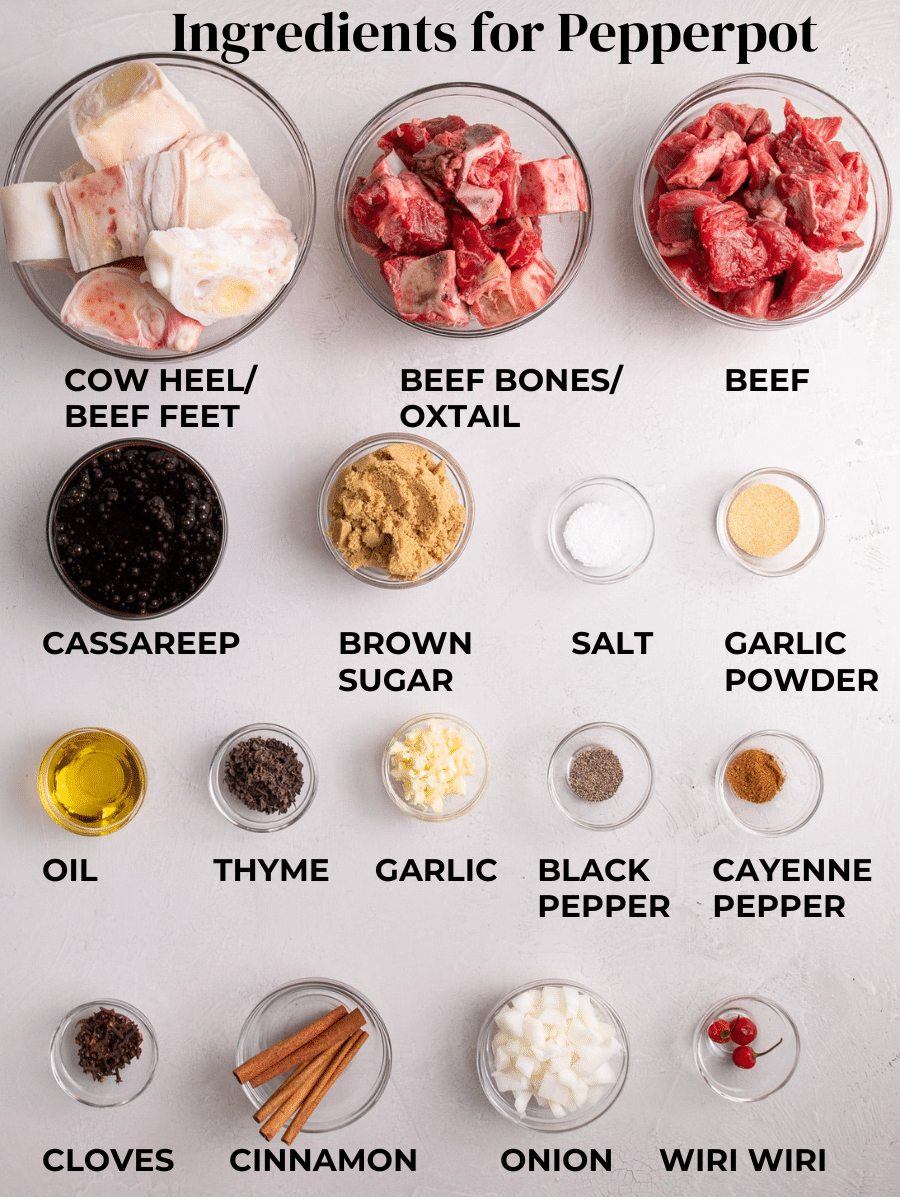
- Beef: I used a chuck roast, then cut it into 1-inch cubes.
- Beef Bones or Oxtail: In Guyana, we don’t typically use oxtail in pepperpot. We use any beef with bones. But sometimes it’s hard to find bone in beef in the US. That’s where oxtail comes in.
- Cow heel: This is also referred to as cow/beef feet and beef trotters
- Cassareep: Cassareep is the juice of cassava root. This thick brown sauce acts as a browning agent. It also preserves the meat, so it can sit for extended amounts of time without going bad.
- Brown sugar: This adds sweetness for another layer of flavor.
- Onions (optional): Many people avoid onions in cassareep but I love it in mine.
- Garlic: Use garlic cloves and granulated garlic.
- Cayenne pepper: For spicy and fruity notes.
- Cinnamon Sticks: This gives the pepperpot a warm spiced taste
- Wiri wiri peppers: This Guyanese chili pepper adds a spicy flavor and an aromatic quality.
- Cloves: This along with the cinnamon adds warmth to the dish. Like a hug in a bowl.
- Seasoning: I use salt, fresh ground black pepper and garlic powder.
- Dried Guyanese thyme: For an earthy, slightly citrusy flavor.
See recipe card for quantities.
How to Make Pepperpot
Season and Marinate the Meat
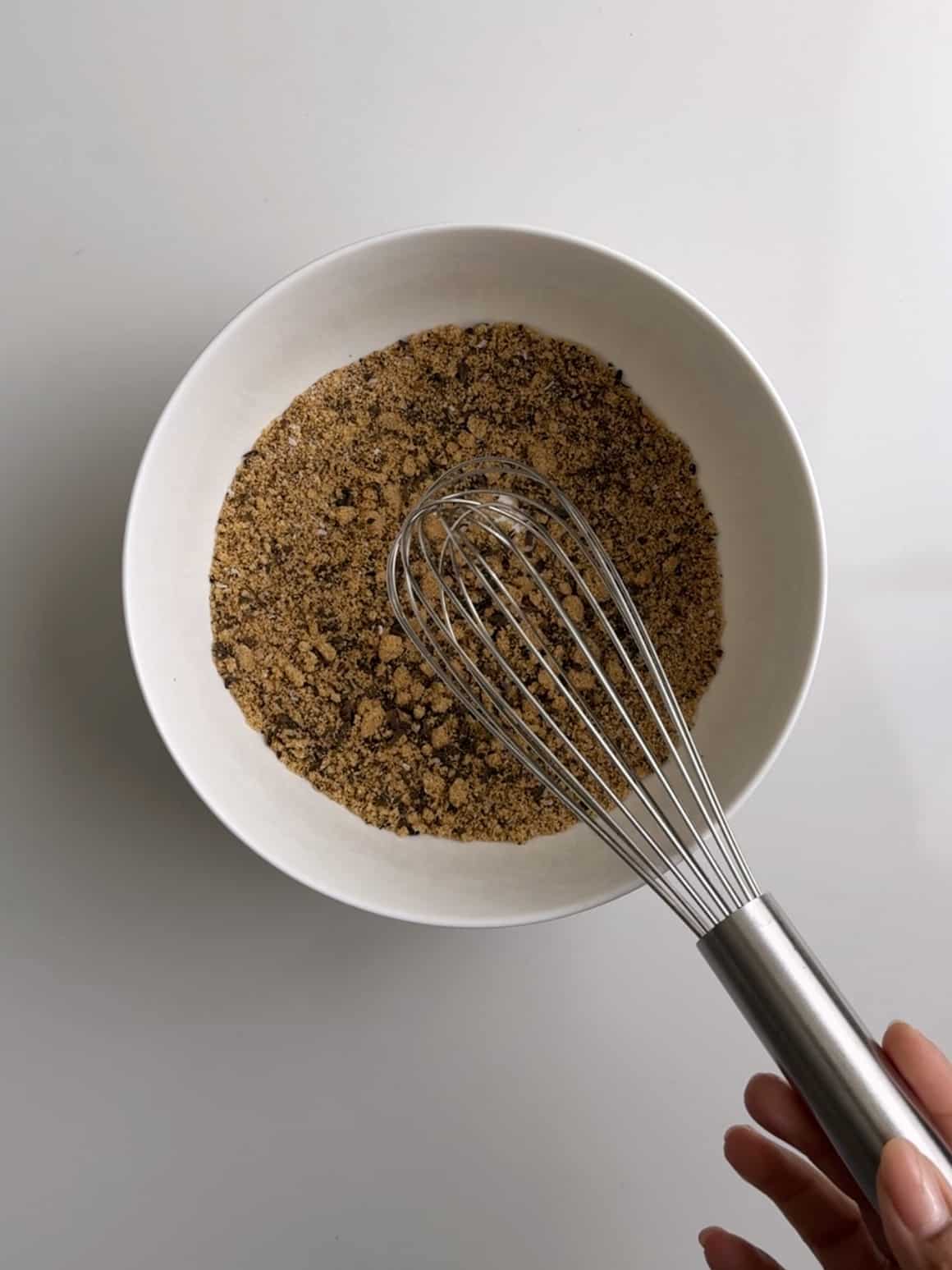
In a bowl or ziplock bag combine the sugar, salt, cayenne pepper, granulated garlic, black pepper and dried thyme and mix well. Then divide this mixture into 1/3s. Add a 1/3 to the beef, a 1/3 to the oxtail and a 1/3 to the cow heel.
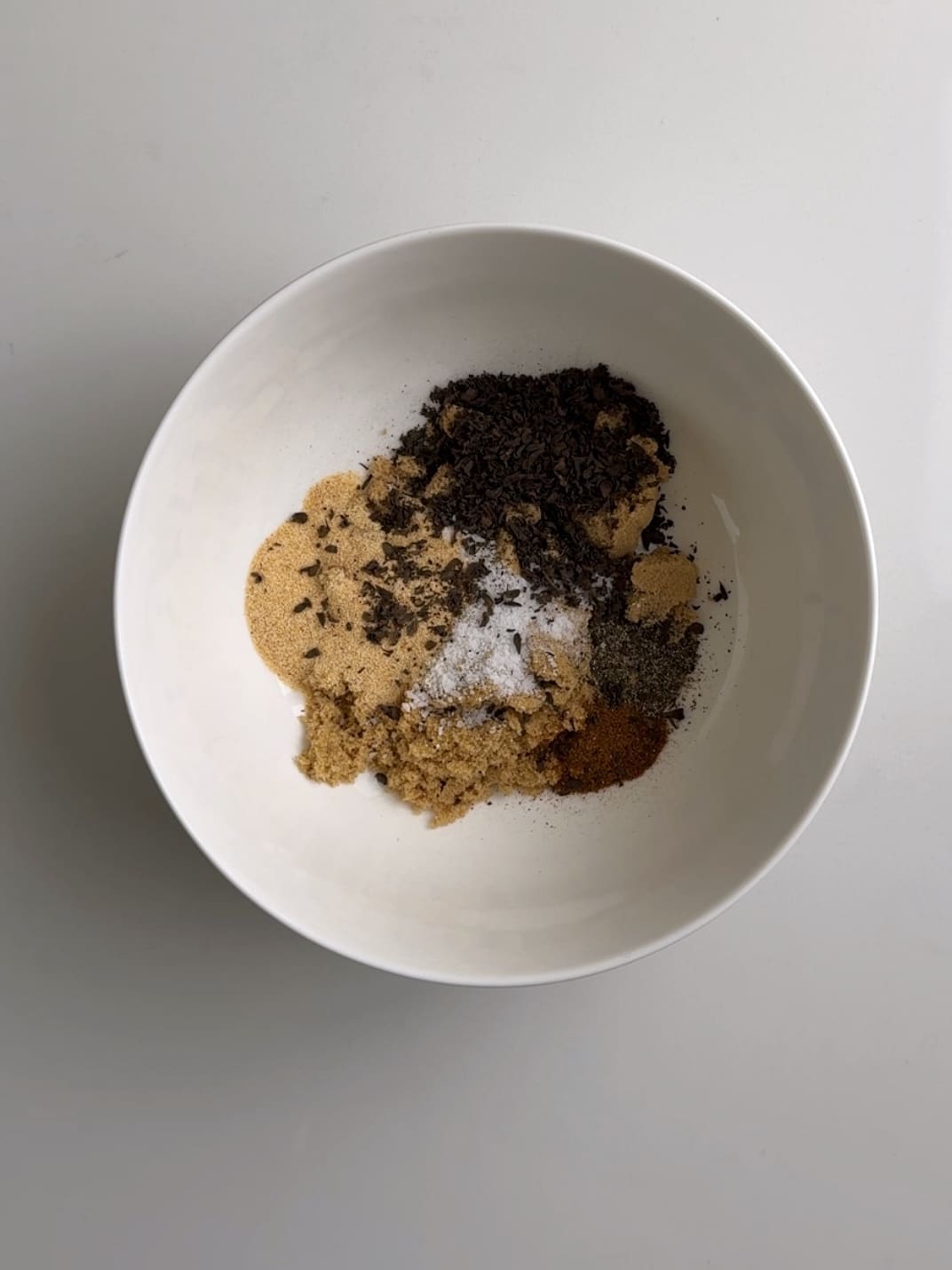
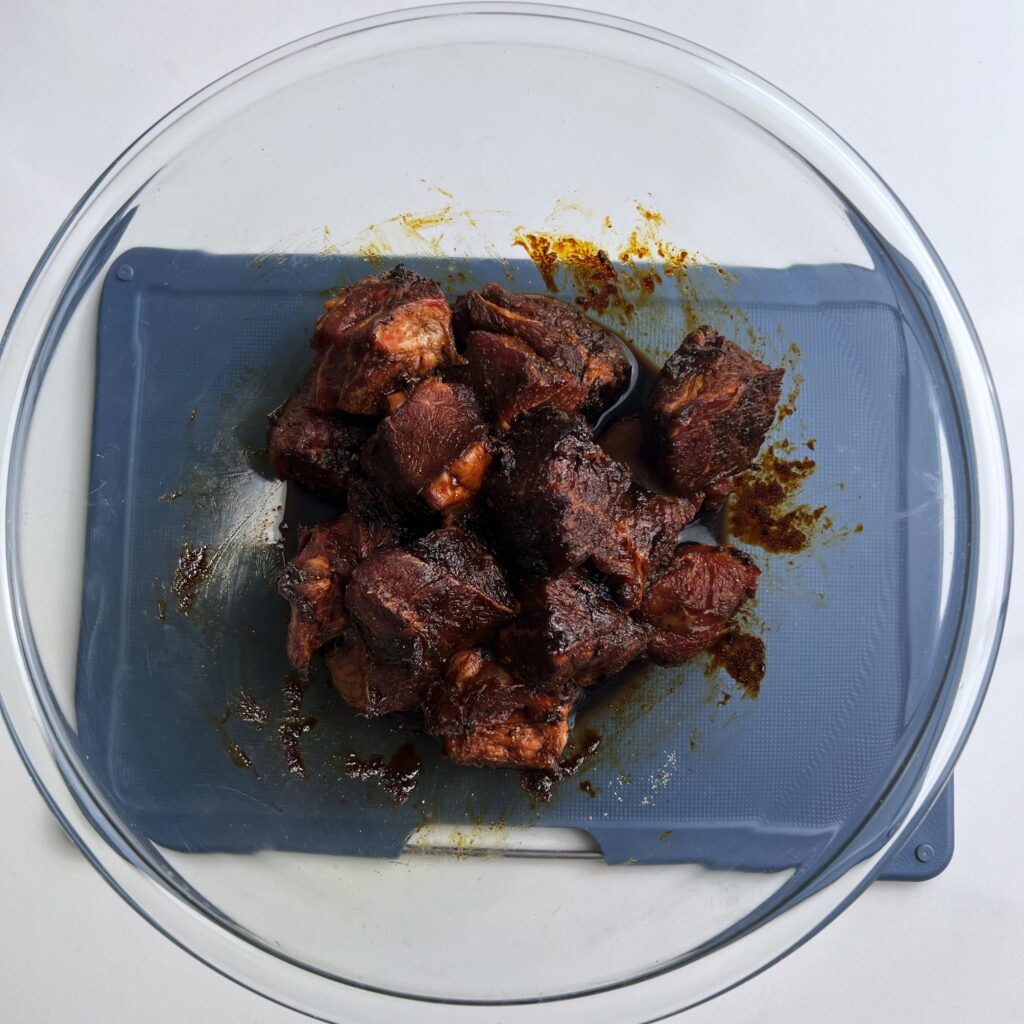
Then add a few table spoons of cassareep to each meat, reserving about 1/2 cup of cassareep for later.
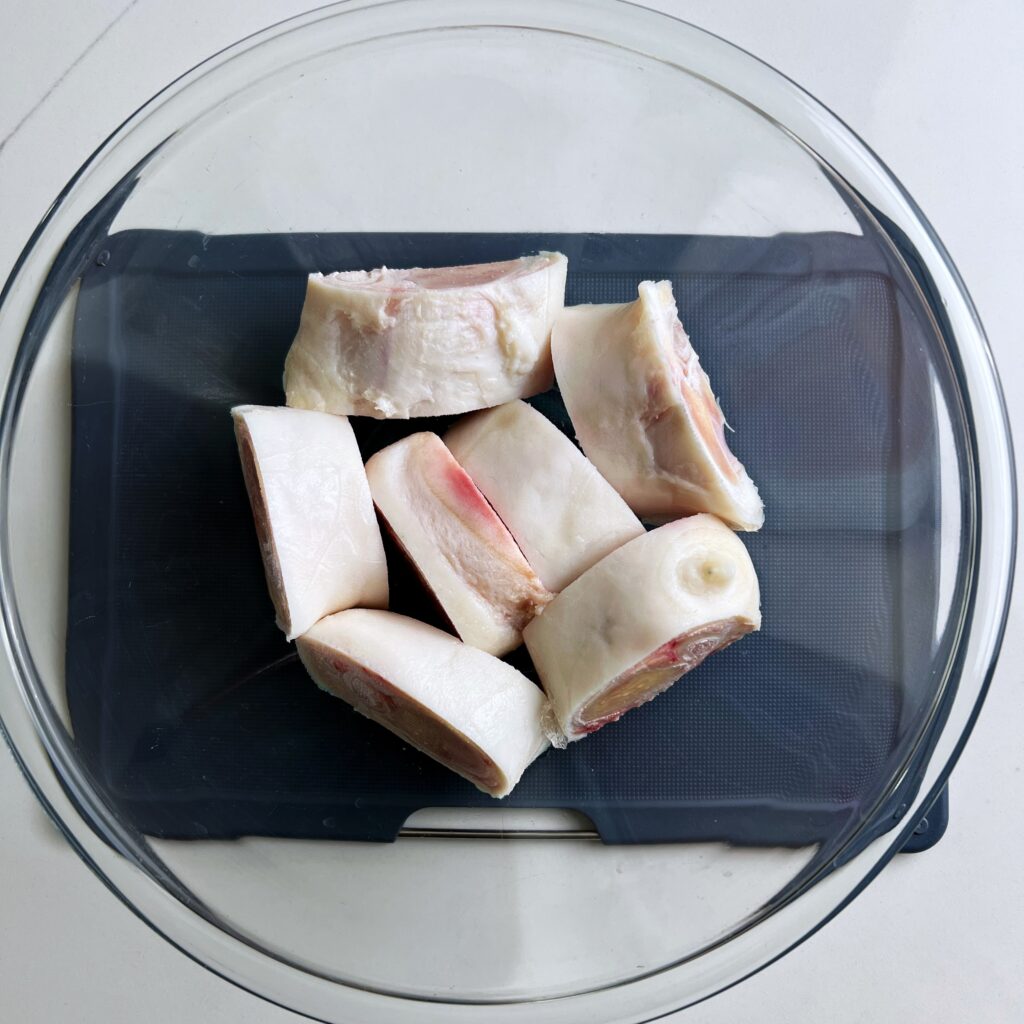
Follow the same steps above to marinate the beef and cowheel. Some people prefer to blanch their cowheel before cooking. You can blanch your cowheel by boiling it in some salted water for about 10 minutes and then draining it.
Once everything has been marinating for at least 30 minutes, we can start the long but wonderful pepperpot cooking process.
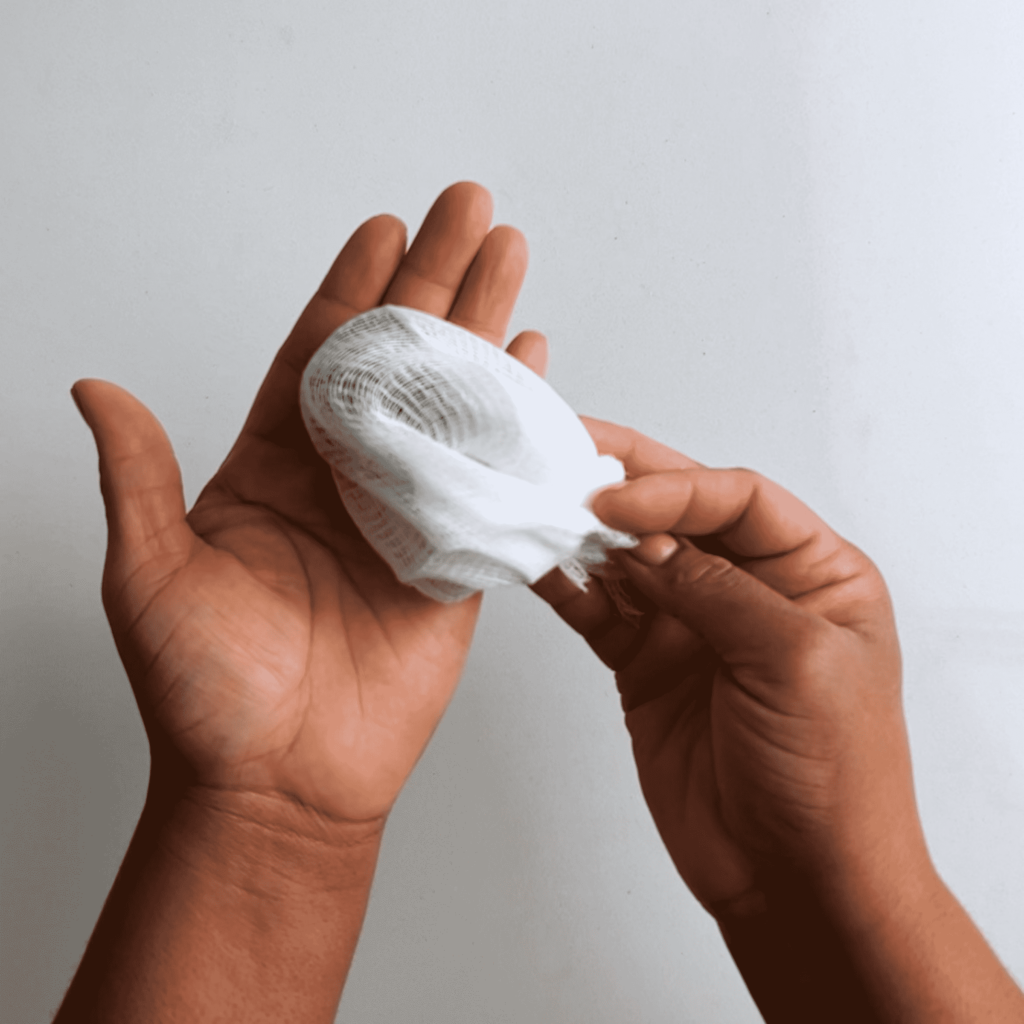
The thing I hate most about pepperpot is biting into a clove while eating. Since the pepperpot sauce is a rich dark color, the cloves blend right in. Putting the spices in a pouch keeps them in one place and you can fish the pouch out after cooking. Place the cloves in a 6 inch square of muslin fabric or cheese cloth. Gather up the edges of the fabric and make a knot. Now you have a nice little clove infuser.
Brown the Meat for your Guyanese Pepperpot
In a large stock pot sauté 1/3 of the onion (if using) and garlic on high heat, in about 2 tbsp of oil. Then add the seasoned beef, cinnamon and cloves (unless you are using a clove pouch). Sauté the beef until all pieces are brown all over. Browned meat is delicious when slow cooked. Browning also seals in the flavors of the spices.
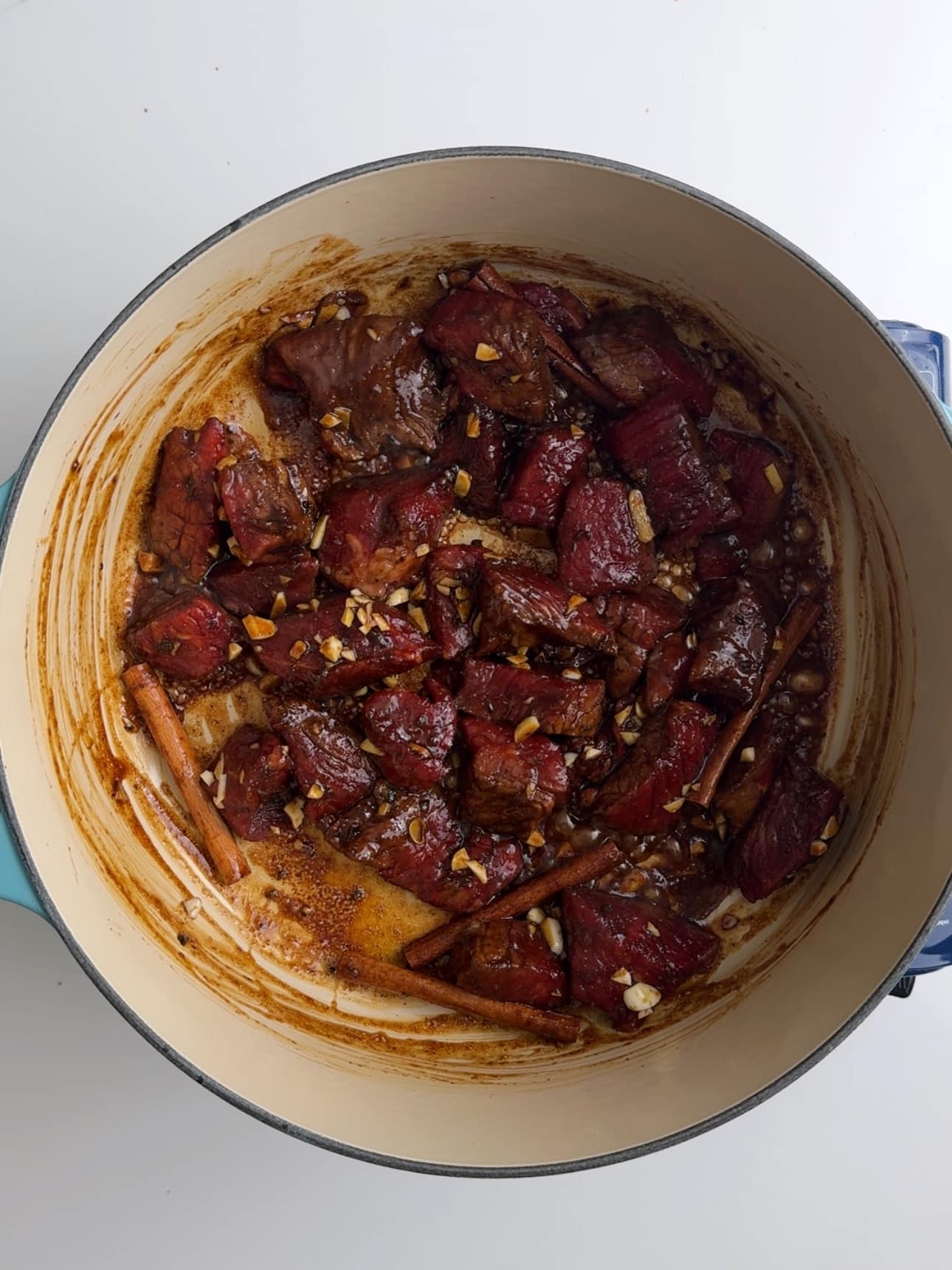
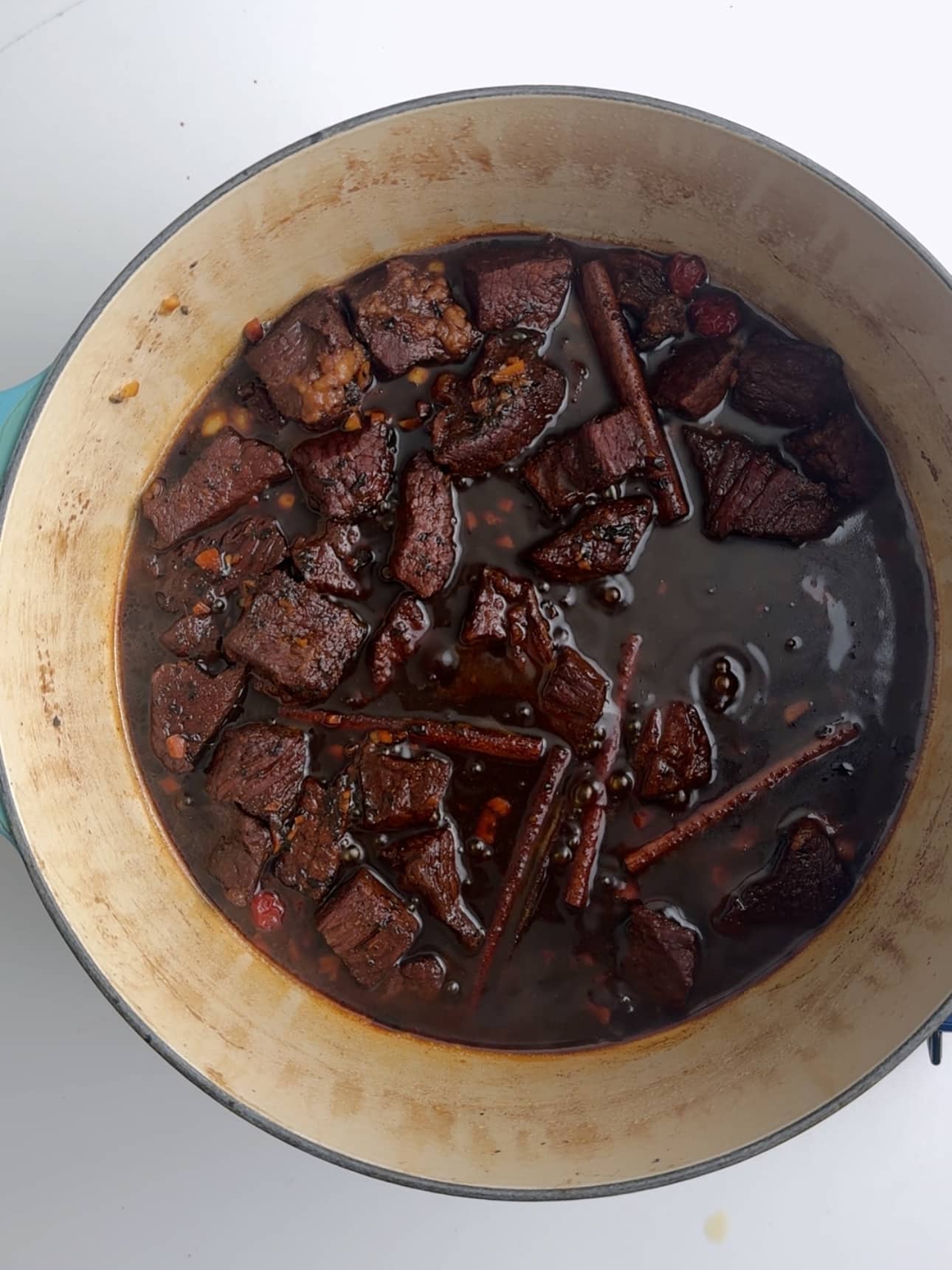
Once the meat is nice and brown, add about 6 cups of water to the beef, bring to a boil on high heat, then reduce the heat to low and let simmer. This will continue to cook slowly, while we are prepping all the other ingredients.
Cook the tougher cuts of meat separately
Pressure Cooking: Warm about 1 tbsp oil in a traditional pressure cooker on high heat (this can also be done in an instant pot), then add oxtail and 1/3 of onion and garlic. Sauté oxtail until brown, then add 5 cups of water to the pressure cooker. Cover and pressure cook until the oxtail is tender but not completely falling off the bone. Some meats take a very long time to cook, I use my pressure cooker to speed up the process.
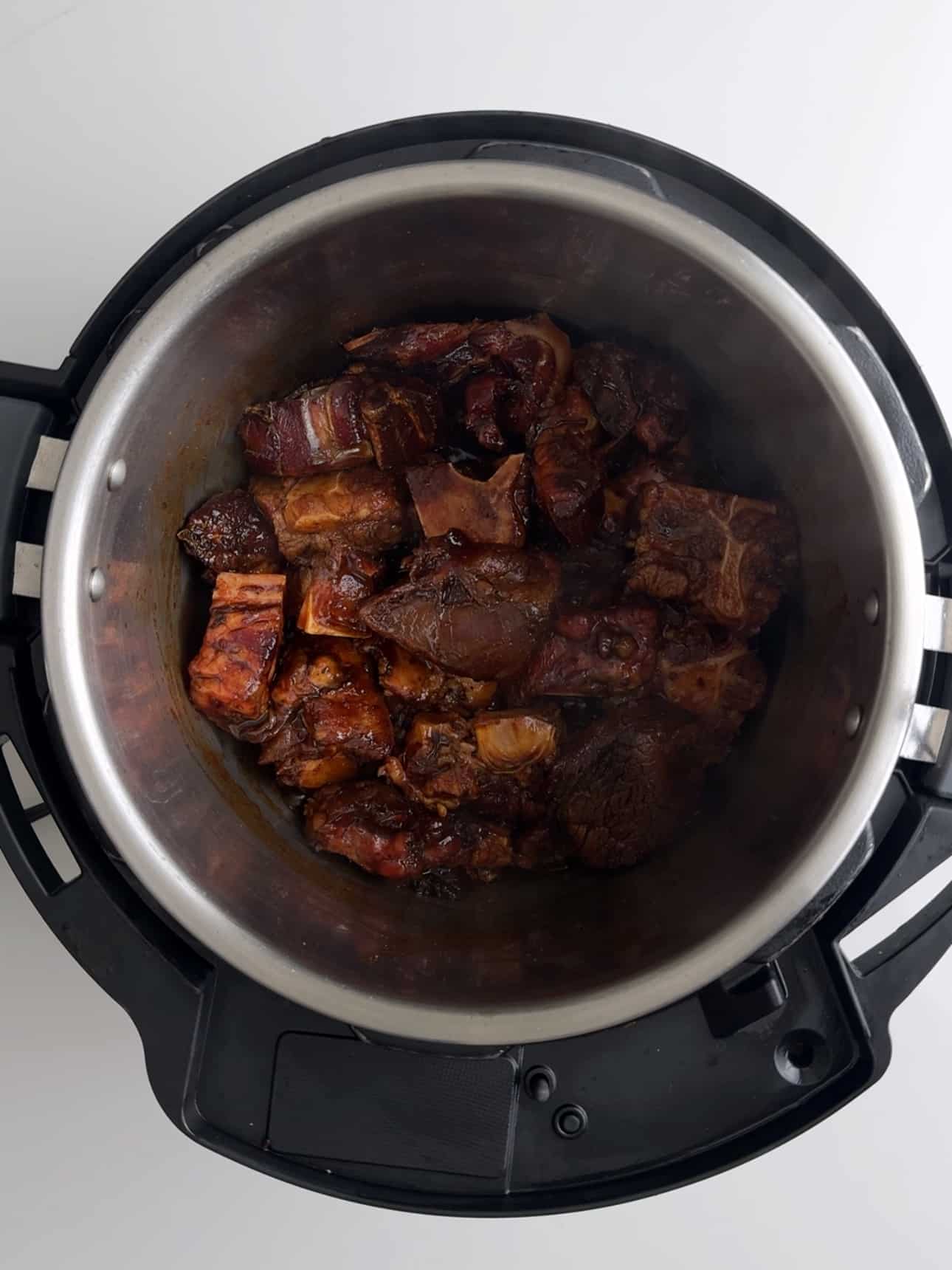
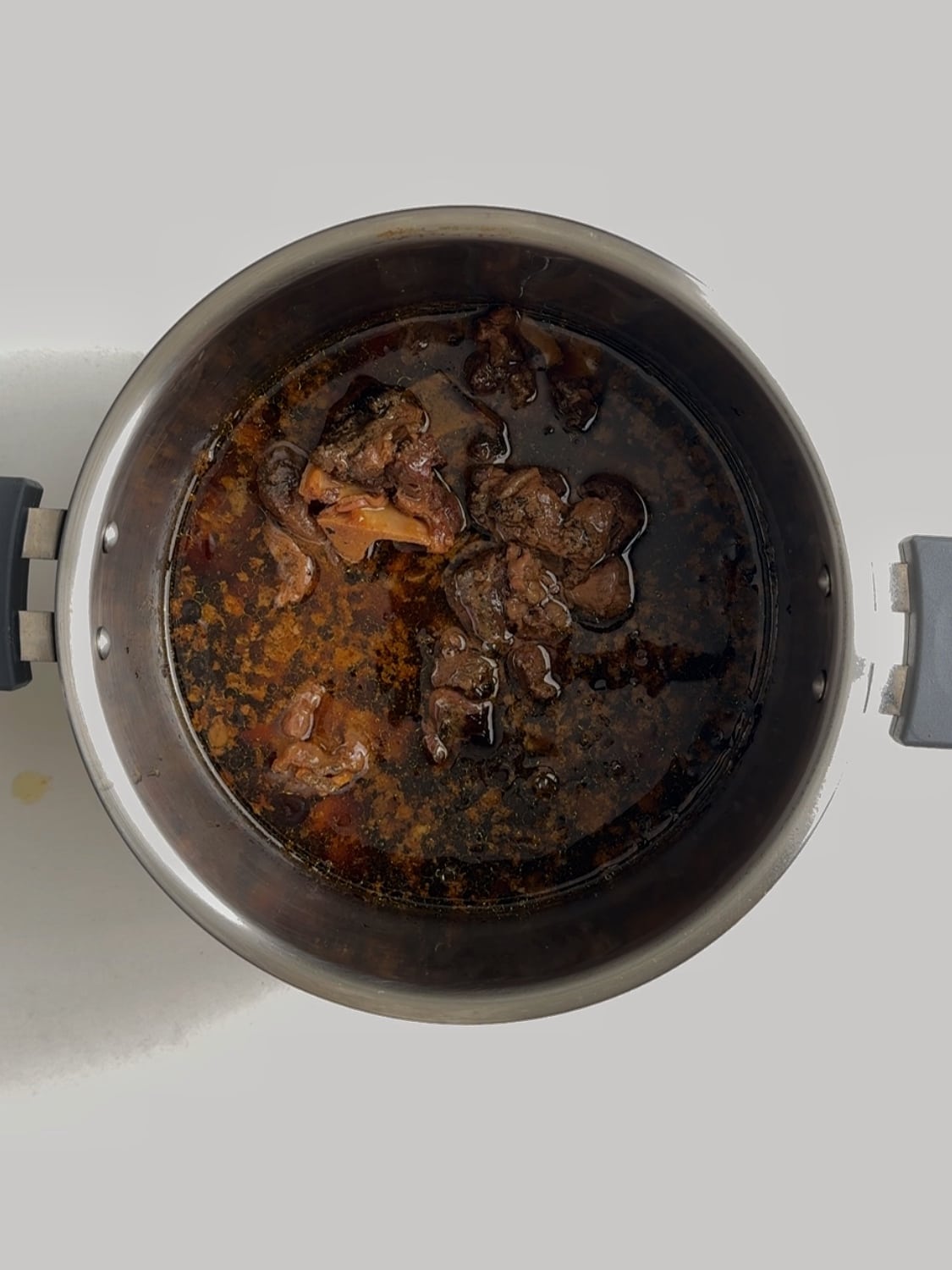
Follow the same steps to pressure cook the cow heel, as you did with the oxtail. It took about 45 minutes to pressure cook each. You can do it together if your pressure pot is big enough. While they were pressure cooking, the beef was simmering on low.
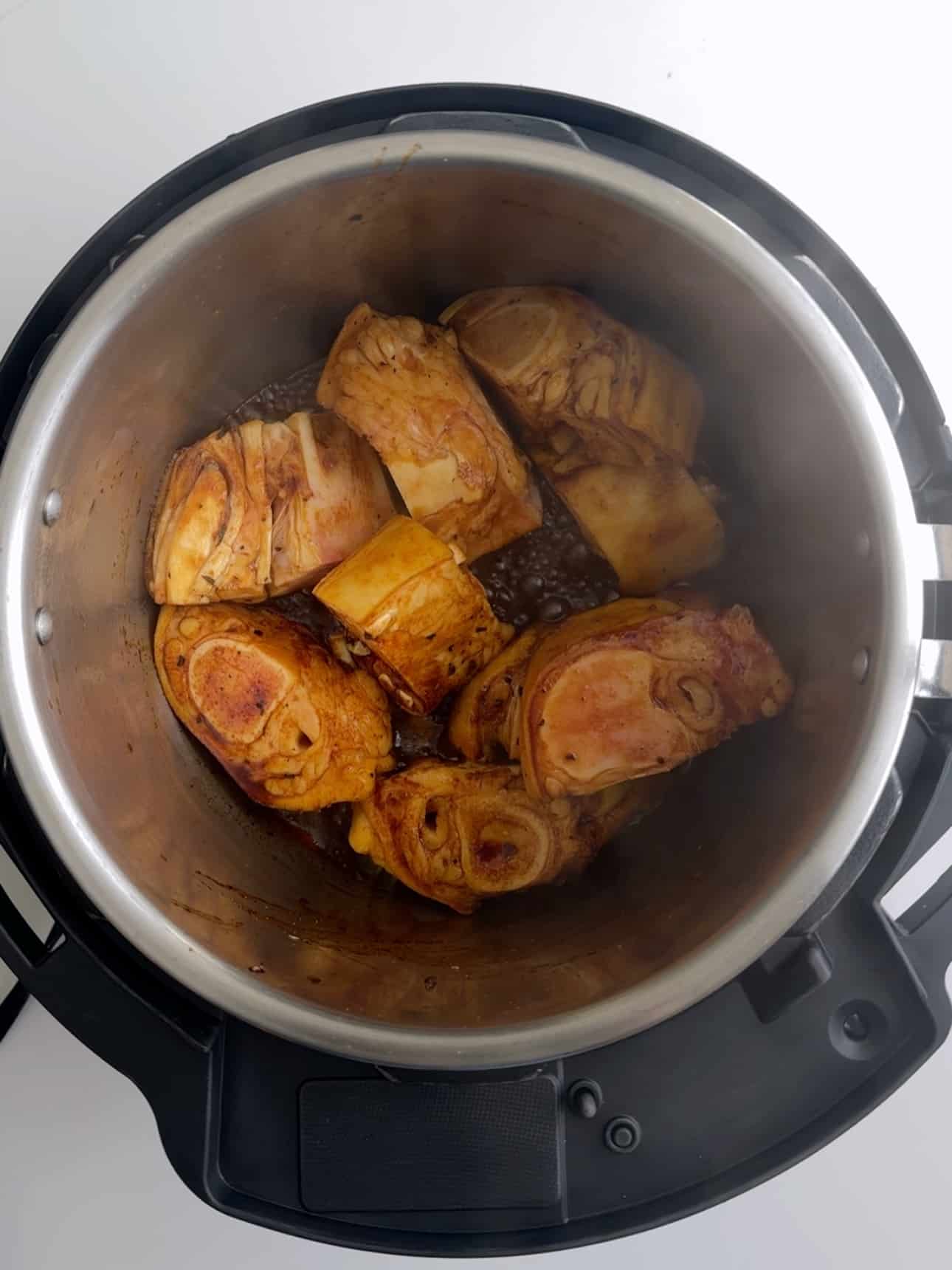
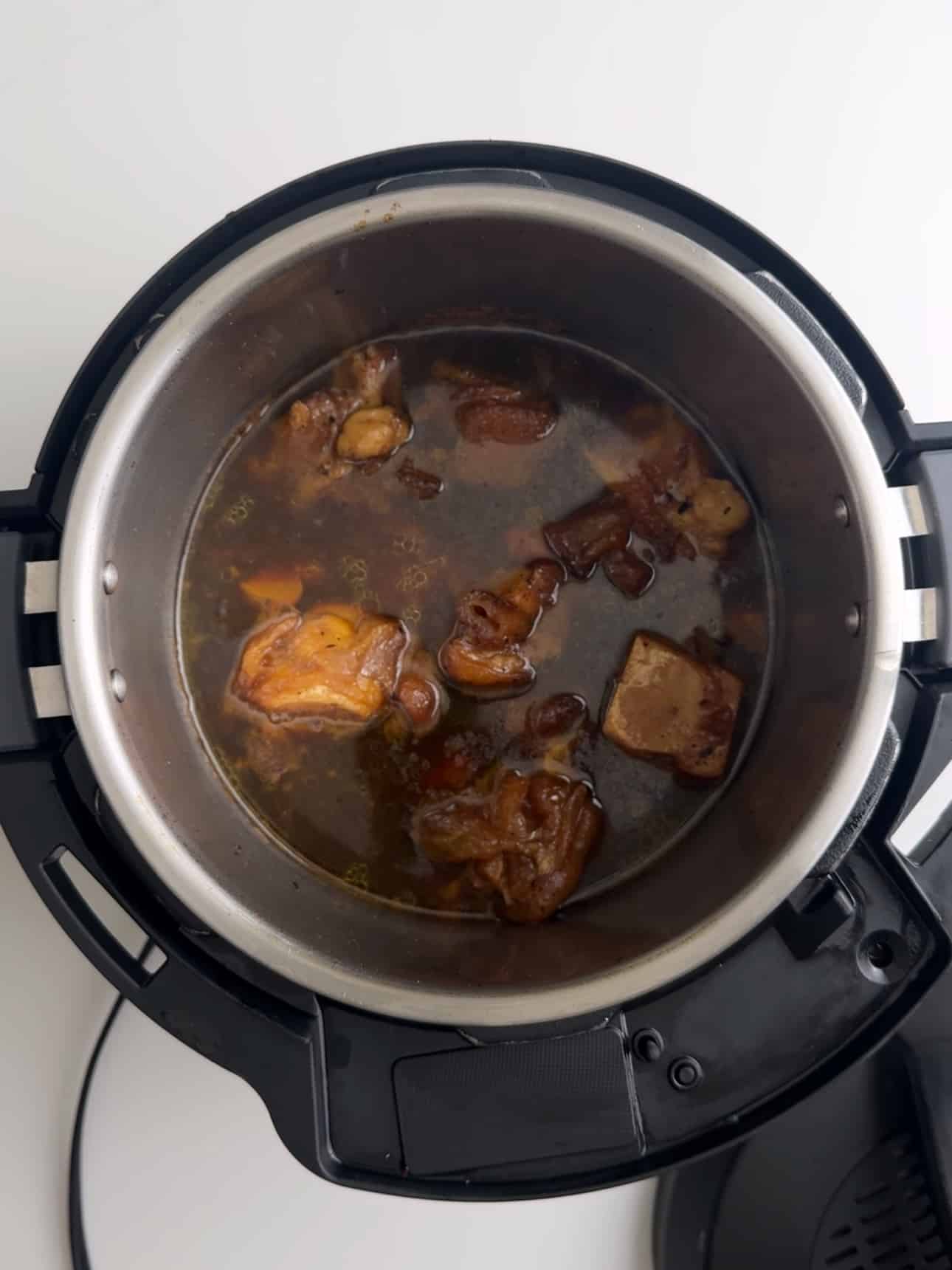
Stove top cooking: Don’t have a pressure cooker, don’t worry you can follow the same steps in a stock pot on the stove top. Once you add the water (per the instructions above) bring it up to a boil, then reduce the heat to medium-low and let it slow cook. This will take up to 3 hours until the oxtail and cow heel are tender enough to be combined with the beef.
Combine all the meats
Add the oxtail and cow heel to the beef then add the wiri wiri pepper and thyme. Mix to combine.
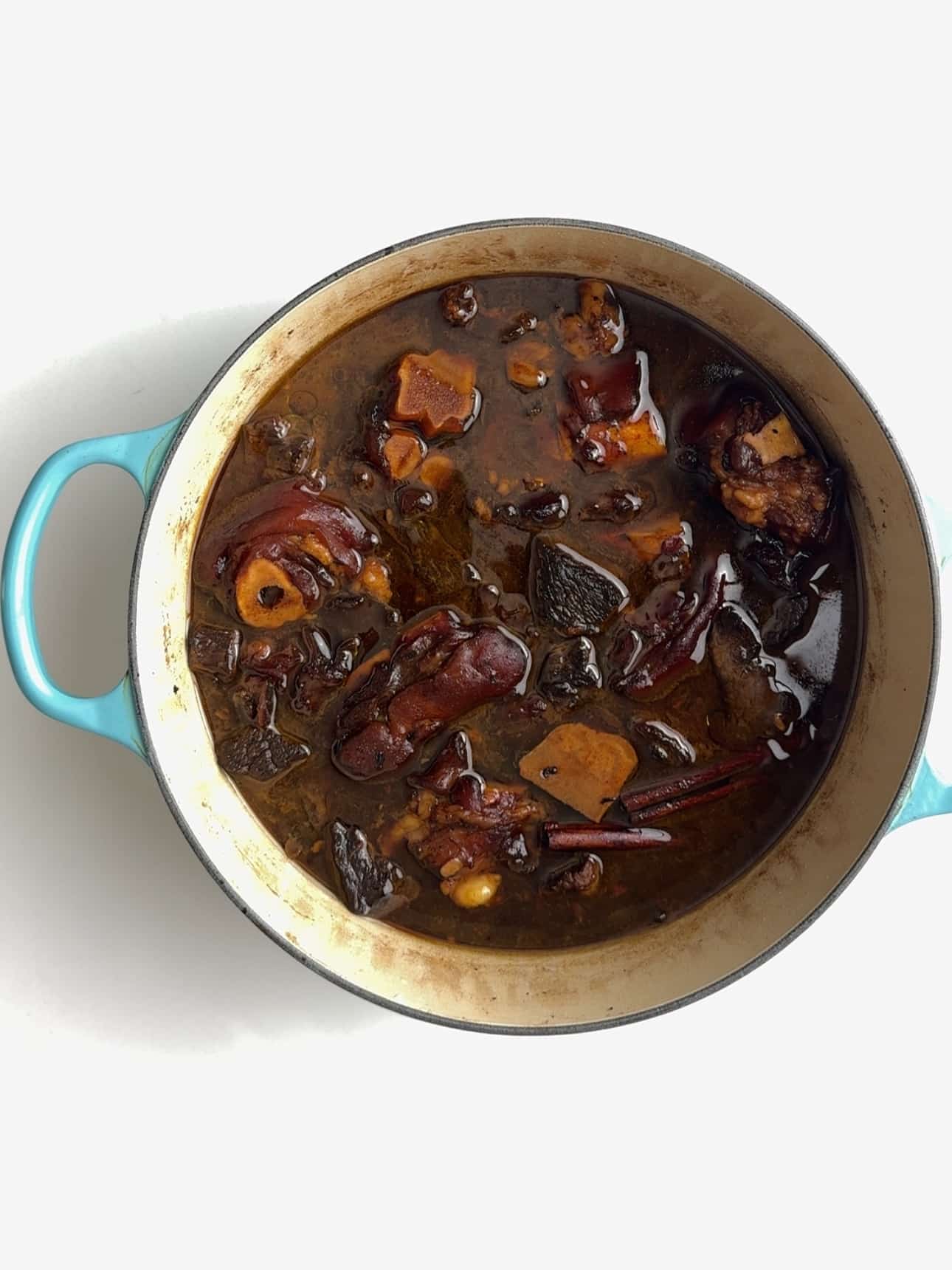
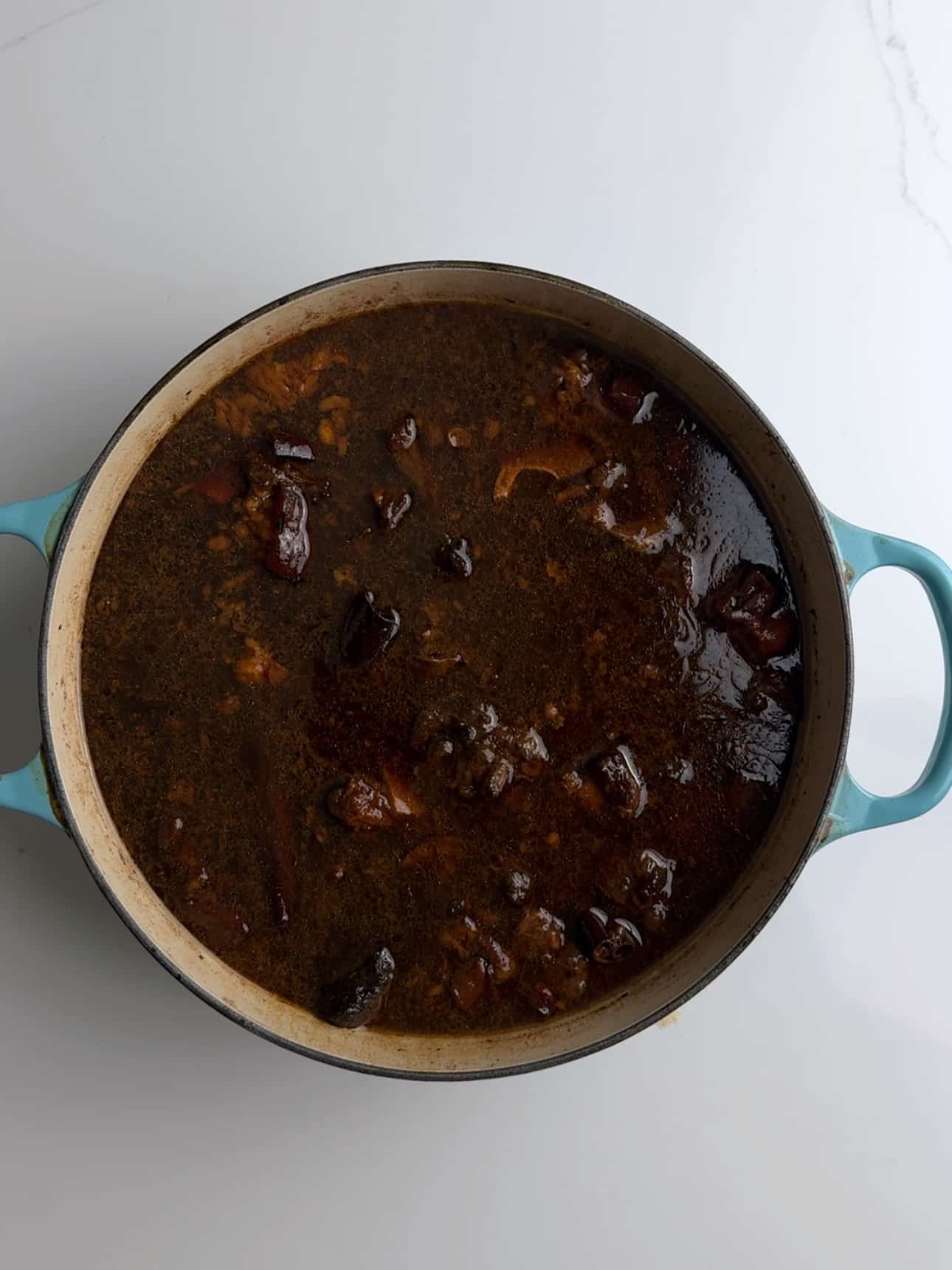
You may add 2 to 3 cups more water, just enough to cover the meat (if needed). It is also at this point that I add the 1/2 cup of cassareep we reserved in the beginning and the clove pouch. Increase the heat to high and bring the pot to a roaring boiling. Let boil for 10 to 15 minutes. Then reduce the heat to low and let it simmer for 2 to three hours to bring the flavors together.
Along the way, taste the pepperpot and add about 1/4 cup brown sugar and a pinch of salt (if needed) and cut open the wiri wiri peppers for heat.
Skim the Fat from Pepperpot
At the end of the cooking process, you will notice a layer of oil floating above the pepperpot. Use a ladle or pot soon to skim as much fat as possible from the pepperpot. You can also do this the next day after the fat coagulates and is easier to skim.
Different Ways to Make Pepperpot
Over the years I’ve made pepperpot in the Instant Pot and in the slow cooker. You can find those recipes here:
With the instant pot, it is a bit of a process but the results are worth it. You will need a large enough instant pot if you are hoping to make a large serving. I use my 10-quart instant pot for pepperpot.
However, the slow cooker was the easiest pepperpot I’ve ever made. I just set everything overnight and woke up to a delicious pepperpot the next morning.
Substitutions & Variations
- Beef: You can use lamb or goat as a substitute for the beef in this recipe, if you don’t eat beef.
- Cow Heel: Some people also use pig trotters and pig tail in their pepperpot. It’s the collagen in the cow heel or pig trotters that give pepperpot that thick and sticky consistency.
- Oxtail: In the US it’s hard to find beef bones so I use oxtail or beef neck bones if you can find that. The bones add depth and richness to the pepperpot
- Cassareep: There is no substitution for cassareep in this recipe. Without it you are not making pepperpot. The Cassareep is what makes this dish unique.
- Guyanese Thyme (also called Portuguese thyme): You may use regular fresh thyme if you can’t get Guyanese thyme or simply skip it
- Wiri Wiri Peppers: Wiri wiri peppers are a small round chili pepper found in Guyana. You can substitute the wiri wiri peppers in this recipe for a scotch bonnet pepper or habanero pepper.
Equipment
- Large Stock Pot: Use this to contain the pepperpot as it simmers.
- Pressure cooker: This is used to tenderize the oxtail and cowheel. If you don’t have a pressure cooker or feel comfortable using one, scroll to the notes section of the recipe card for tips on what to do if you don’t have a pressure cooker.
Storage
The cassareep in pepperpot acts as a preservative, therefore you do not need to refrigerate the pepperpot. Just leave it sitting on the stop top and reheat twice daily, until it is all gone. Once in the morning and once at night. To reheat, simply bring to a boil on high heat, then let boil for 5 to 10 minutes (until all of the meat come up to temperature. Then remove from the heat.
Tips for the Best Pepperpot
- This dish is better when it sits for at least 12 hours in the gravy before serving. Most people make their pepperpot on Christmas Eve, let it sit overnight, reheat it, and then serve it on Christmas morning.
- There is no need to refrigerate your pepperpot, cassareep acts as a preservative and will prevent the pepperpot from going bad.
- Keep your pepperpot on the stovetop and keep reheating it twice daily, once in the morning and then at night before you go to bed.
- If you add orange peel to your pepperpot, it must be dried orange peel or the natural oils in the fresh orange peel will overpower the flavor of your pepperpot.
Frequently Asked Questions
Pepperpot is best enjoyed with Guyanese plait bread. If you don’t want to make Guyanese bread the best next thing is a brioche bread. Pepperpot and bread is a match made in heaven, but the unpopular combination is pepperpot and white rice. Some people enjoy their pepperpot over a bowl of steamed white rice. It is not my favorite combination but I don’t judge anyone who likes it.
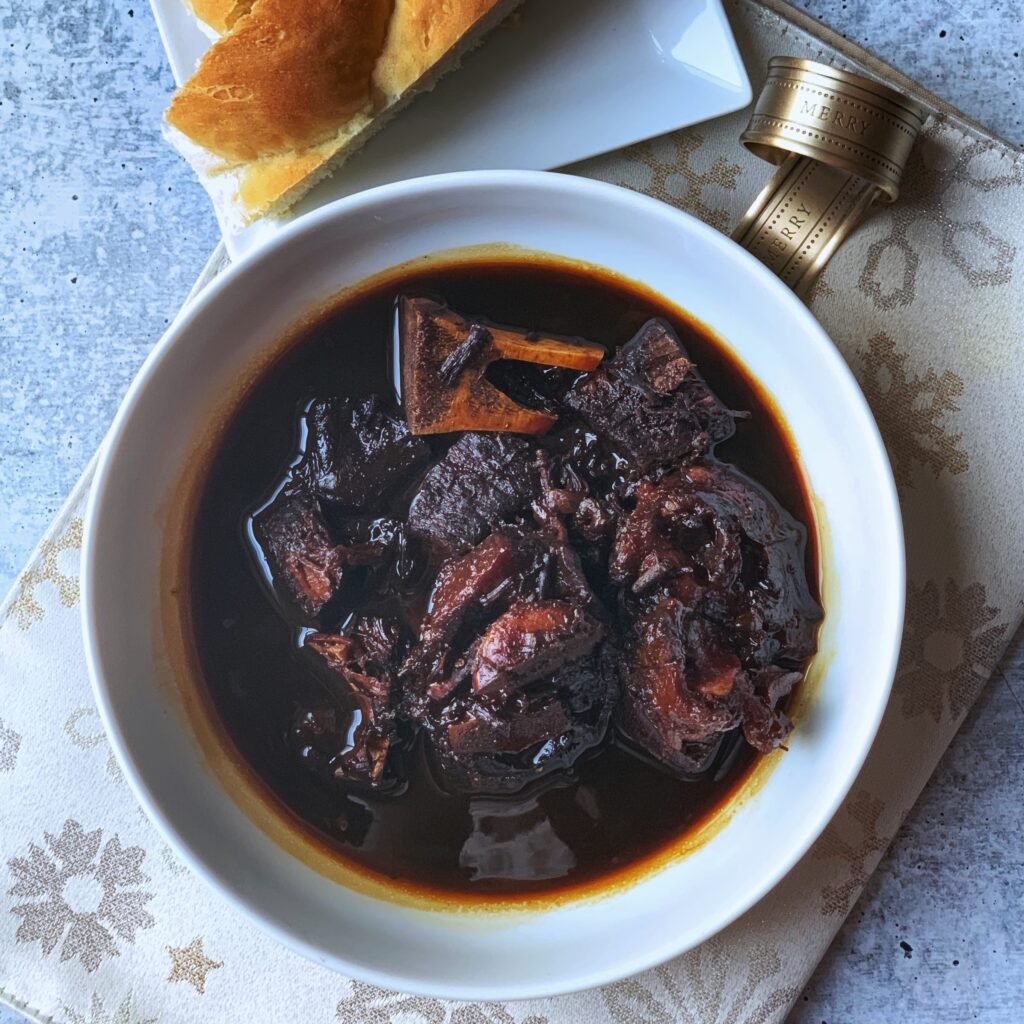
The sauce in pepperpot is cassareep, a dark brown sticky sauce, enhanced with brown sugar and spices.

Guyanese Pepperpot
Equipment
- Large Stock Pot
Ingredients
- 1/2 cup Brown sugar (plus 1/4 cup for the end if needed)
- 2 teaspoons Salt or salt to taste
- 1 tablespoon Granulated garlic
- 1 Yellow Onion (Optional)
- 1 tsp Black pepper (I prefer fresh ground)
- 1 tsp Cayenne pepper
- 2 tbsp Dried Guyanese thyme
- 1 cup Cassareep (Divided into 2)
- 1.5 lbs Beef (I used a chuck roast, cut it into 1 inch cubes)
- 2 lbs Oxtail (fat trimmed)
- 3 lbs Cow Heel (also called beef feet/trotters)
- 6 cloves Garlic (finely chopped)
- 2-4 tablespoons Oil for cooking
- 1 tbsp whole cloves
- 5 cinnamon sticks
- 3-5 wiri wiri peppers (may use 1 scotch bonnet or habanero pepper)
Instructions
- Make a dry rub: In a ziplock bag or small bowl combine the sugar, salt, cayenne pepper, granulated garlic, fresh ground black pepper and thyme and mix well.
- Next add 1/3 of the dry rub, about 3 tablespoons of the cassareep and the chopped garlic to the beef. Mix well then let marinate for at least 30 minutes before cooking.
- Add another 1/3 of the dry rub to the oxtail, followed by about 3 tablespoons of cassareep and let that marinate for at least 30 minutes before cooking. Do the same for the cow heel.
- Peel and dice the onions and set aside.
- When ready to cook, heat a large stock pot on high heat. When the pot is hot add about 2 tablespoons of oil. Then add all of the onions (if using). Cook for onions for about 2-3 minutes or until translucent.
- Add the seasoned beef, cinnamon, cloves (if not putting the cloves in a pouch) and continue to sauté until all pieces of the beef are brown all over. You may brown the beef in batches if necessary.
- Once the beef is brown, add about 6 cups of water to the beef and bring to a boil, then reduce heat to low and let simmer.
- While the beef if simmering, bring about 1 tbsp oil up to temperature in a pressure cooker on high heat then add about a tablespoon of oil and the seasoned cow heel.
- Cook the cowheel for a few minutes turning often, then add 5 cups of water to the pressure cooker. Cover and pressure cook until the cow heel is tender but not completely falling off the bone, this should take about 45 minutes depending on the size of the cow heel but I recommend checking the tenderness of the meat after 30 minutes of pressure cooking. You are looking for fork tender but not fall off the bone tender.
- Follow the same steps to pressure cook the oxtail as you did with the cow heel. If you have a large enough pressure cooker you may cook the oxtail and cow heel together but start by pressure cooking the cow heel first for 45 minutes, then adding the oxtail and continuing for another 45 minutes.
- Once the oxtail and cow heel are tender add them to the pot with the beef. Mix to combine. You may add 2-3 cups of water here if need, but just enough to cover the meat in the pot.
- Then add the remaining 1/2 cup of cassareep, the wiri wiri peppers and your pouch of cloves (if you are doing that). Increase the heat to high and bring pot back up to a roaring boiling. Let it boil for 10 to 15 minutes. Then, reduce heat to low and simmer until all the meat is falling off the bone tender, about 2.5 hrs.
- About half way through taste the pepperpot and check for color. At this point you may add a pinch of salt, about 1/4 cup more cassareep if it is not dark enough and 1/4 cup more sugar if need (but thread lightly you don't want it to be overly sweet). You may also pop open your wiri wiri peppers for additional heat.
- Pepperpot is traditionally served with cassava bread or Guyanese Plait Bread.
Notes
Nutrition
The information listed in the recipe card is an estimate provided by an online nutrition tool. The tool evaluates ingredient names and amounts then makes calculations based on the number of servings listed for the recipe. It is provided as a general guideline and not as a precise calculation. For precise nutrition information please feel free to add the ingredients to your preferred nutrition calculator or consult a doctor or licensed nutritionist.
 Sardines and Crackers
 Guyanese Kitchri
 Guyanese Milk Peera
 5 Must Try Guyanese Foods
Bonita DeAbreu Says
I made this for the first time and oh man was this amazing! I followed your instructions for the instapot cause I was scared to have tough meat. The tenderness, the flavor and smell my husband and kids rated me better than the OG himself my father in law! That was a Christmas gift in itself. Thank you!
Annie Says
Came out perfect and everyone loved it!!
Royston Says
Congratulations Althea on ALL of your recipes and your endeavor to bring Guyanese cuisine to the diaspora and keeping it “simple”
Rhea Says
I used this recipe as a base for making chicken pepperpot as I don’t eat beef, mutton etc and it’s a great explanation to the dish and very easy to make the variation. Thanks so much!
HoneyBee Says
I Remember adapting recipes from Metemgee even before she was metemgee! Lol iykyk!
Excellent recipe for Pepperpot. I changed a few things here and there (omitting the onion & garlic) and it was delicious. I’ll prbly be making a 2nd pot to ring in the new year!
Maggie Says
loveeee how simple this recipe was. I made it for the first time on Christmas Day and it was a hit. Letting it rest for a few more days before eating from it again since it was advised that’s when it reallly taste the best
Nadia Says
Yum
Afia Says
Excellent recipe, I use some of your tips with what my mom showed me. I don’t marinate the meat with cassreep directly and no onions but it’s still delicious.
Natalie Perry Says
This is the only Pepperpot recipe I’ve ever used and will ever use. It’s perfect! Try to plait bread too!
Shelly Says
Great recipe that I come back to every year. My girls are still enjoying this year’s pepper pot. Might have to add more meat.
SB Says
I kept this recipe opened throughout the process to compare what my family typically does when making pepperpot, and also to help me better understand the steps and measurements. I don’t cook often so I need every form of guidance there is. Overall, this recipe is detailed and captures the authenticity of the dish. I’m confident when I’m ready to make this on my own, I’ll be able to, thanks to Metemgee.
Tiffany Says
Used this recipe with a few alterations(didn’t have wiri wiri so I used scotch bonnet) and it was amazing!