
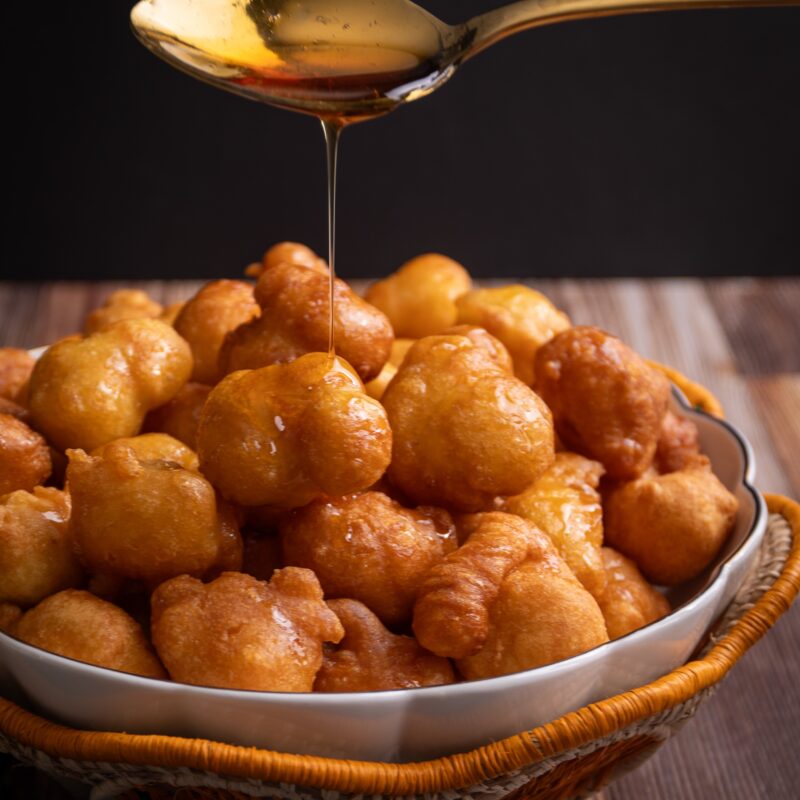
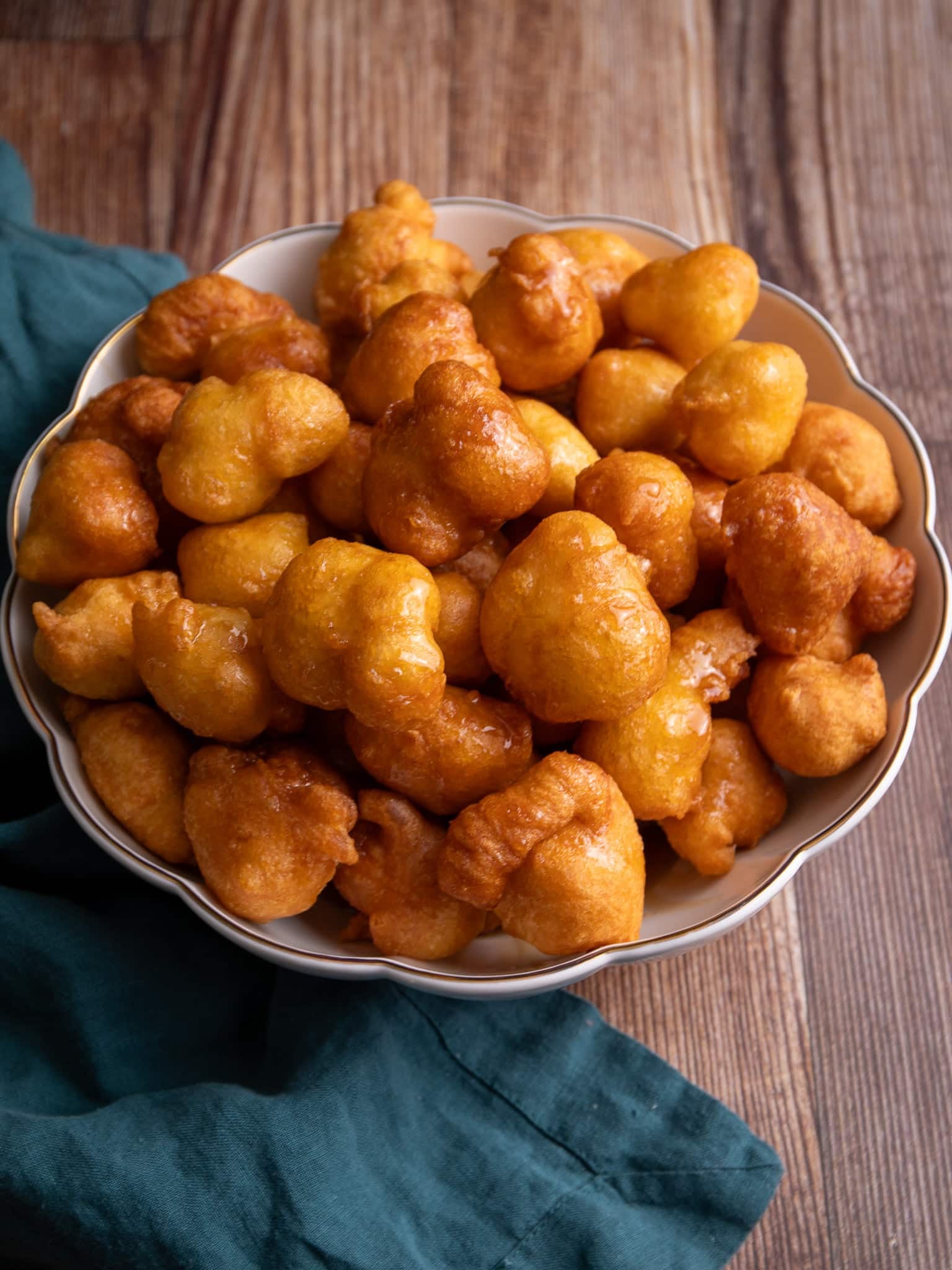
Guyanese Portuguese style pancakes are light and fluffy deep-fried yeasted dough balls drizzled with a lemony cinnamon cane sugar syrup. It is traditionally made the day before Ash Wednesday, called pancake day by Catholics in Guyana.
Guyanese Portuguese Pancakes Recipe
When I was growing up in Guyana, my next-door neighbors were Catholic and made these pancakes every year on Pancake Day. This day is also called Shrove or Fat Tuesday around the world and many people make some version of pancakes on this day.
The mom, Aunty Dawn, always passed a few pancakes over the fence for us to enjoy. The first time I had it, I said it tasted like a sweet pholourie. But as an adult, I know that they are totally different recipes.
- Guyanese Portuguese Pancakes Recipe
- What you should know about this Shrove Tuesday Pancake Recipe
- The Origin of these Malasadas
- What are Portuguese Pancakes or Malasadas?
- Ingredients for Guyanese Portuguese Style Pancakes
- How to Make Guyanese Portuguese Style Pancakes
- Cooking Portuguese Pancakes (Step by Step)
- Storage
- Tips for the Best Guyanese Portuguese Pancakes
- Make it Gluten Free
- Recipe Variations
- Frequently Asked Questions
- Guyanese Portuguese Style Pancakes – Malasadas
What you should know about this Shrove Tuesday Pancake Recipe
- Has Portuguese Roots: This recipe comes from Madeira and is made buy Guyanese Catholics with Portuguese roots for shrove Tuesday (Pancake Day)
- Indulgent: Everyone loves something sweet and deep-fried. Served with a sticky, sweet, citrus infused syrup, this is perfect for that last treat before fasting for Lent.
- Customizable to dietary needs: Make these gluten free or dairy free so even more people can enjoy it!
The Origin of these Malasadas
Malasadas originated in Madeira, a Portuguese island in the Atlantic Ocean. Thousands of people from Madeira emigrated to Guyana in the mid 1800s, shortly after the emancipation of enslaved Africans. They came as indentured laborers to work on Guyana’s sugar plantations, but most eventually became shop owners and merchants. They brought with them their food traditions like garlic pork and of course these delicious pancakes.
What are Portuguese Pancakes or Malasadas?
Portuguese pancakes are our version of Madeira Malasadas, a deep-fried yeasted batter. Think of a light and fluffy donut hole, but instead of dusting it in sugar, it is drizzled in a lemony cane syrup. In Madeira they are drizzle with mel de cana or Madeira honey, which is not from bees but made from cane sugar. You can learn more about the origins of these Portuguese Pancakes here.
Ingredients for Guyanese Portuguese Style Pancakes
These sweet fried dough balls are made with a few kitchen staples.

- Demerara Sugar: You can use brown sugar or sugar in the raw as alternatives.
- Warm Water: The water should be 110°F.
- Dry Active Yeast: This gives the pancakes a light, airy texture.
- Eggs: This provides the structure necessary for the dough to rise, for a nice fluffy texture. It also enriches the flavor.
- Melted Butter: This ensures the malasadas are moist.
- Evaporated milk: The thick, creamy consistency gives the pancakes a tender crumb.
- Flour: This is the base of the recipe.
- Salt: This balances the other flavors.
- Oil: Use an oil suitable for frying like vegetable oil, canola oil, or peanut oil.
Syrup
- Granulated Sugar
- Water
- Cinnamon Sticks
- Lemon peel/zest
- Vanilla Extract
See recipe card for quantities.
How to Make Guyanese Portuguese Style Pancakes
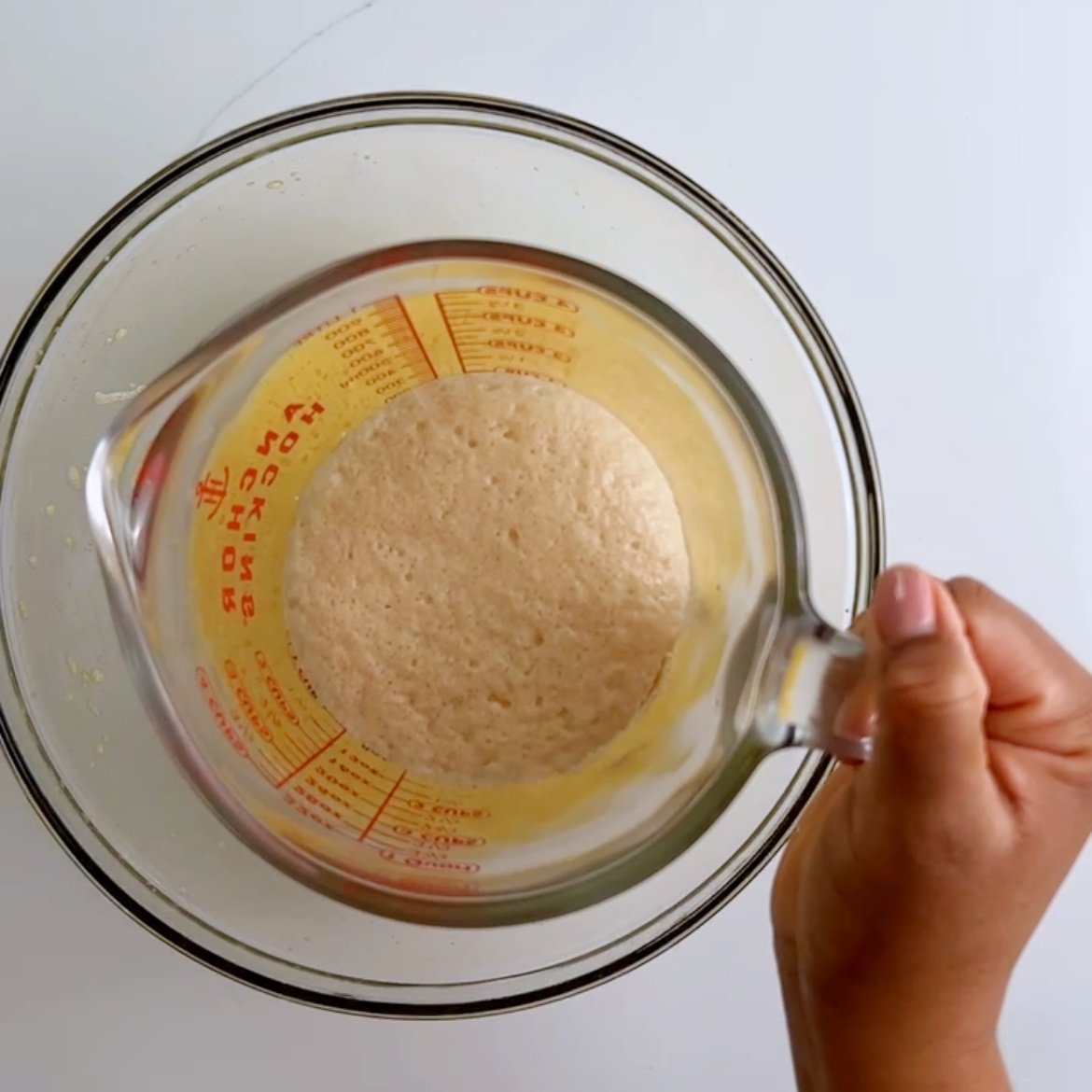
Bloom the yeast by dissolving a tablespoon of sugar into 1/4 cup of warm water, then add the yeast. Let sit until the yeast is nice and frothy.
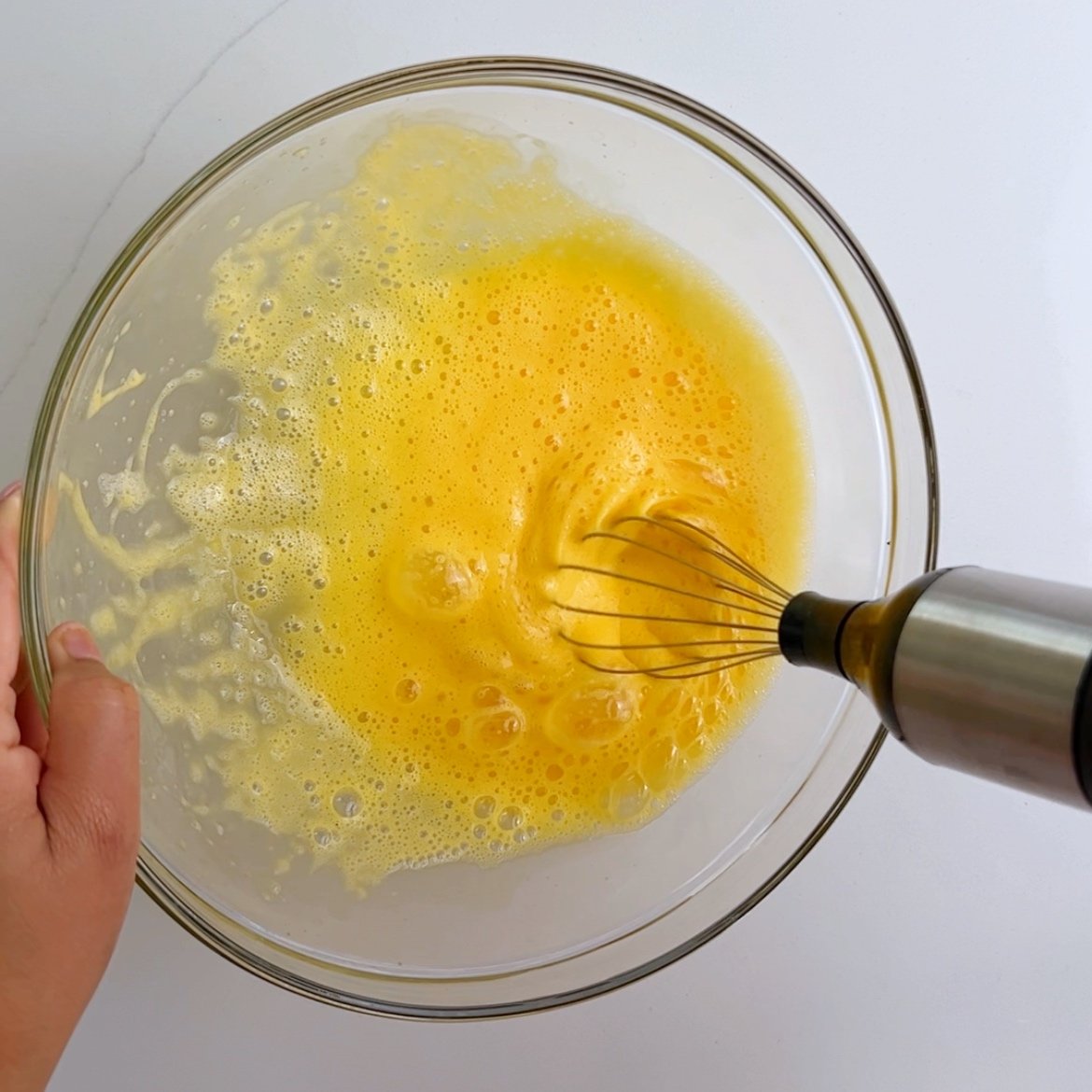
Whisk the eggs until light and fluffy. A hand mixer works really well for this step.
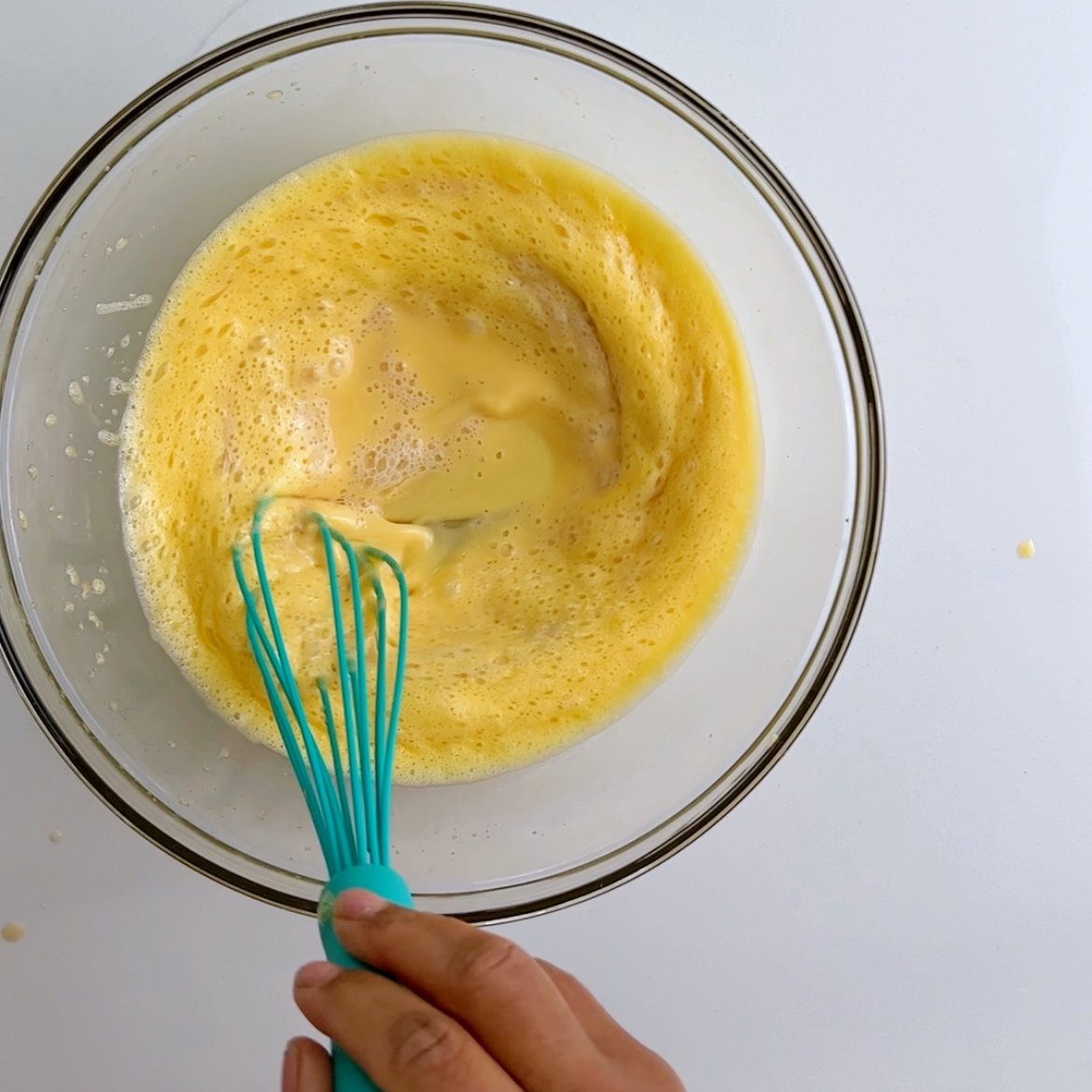
Combine the bloomed yeast, eggs, and melted butter and continue to whisk.
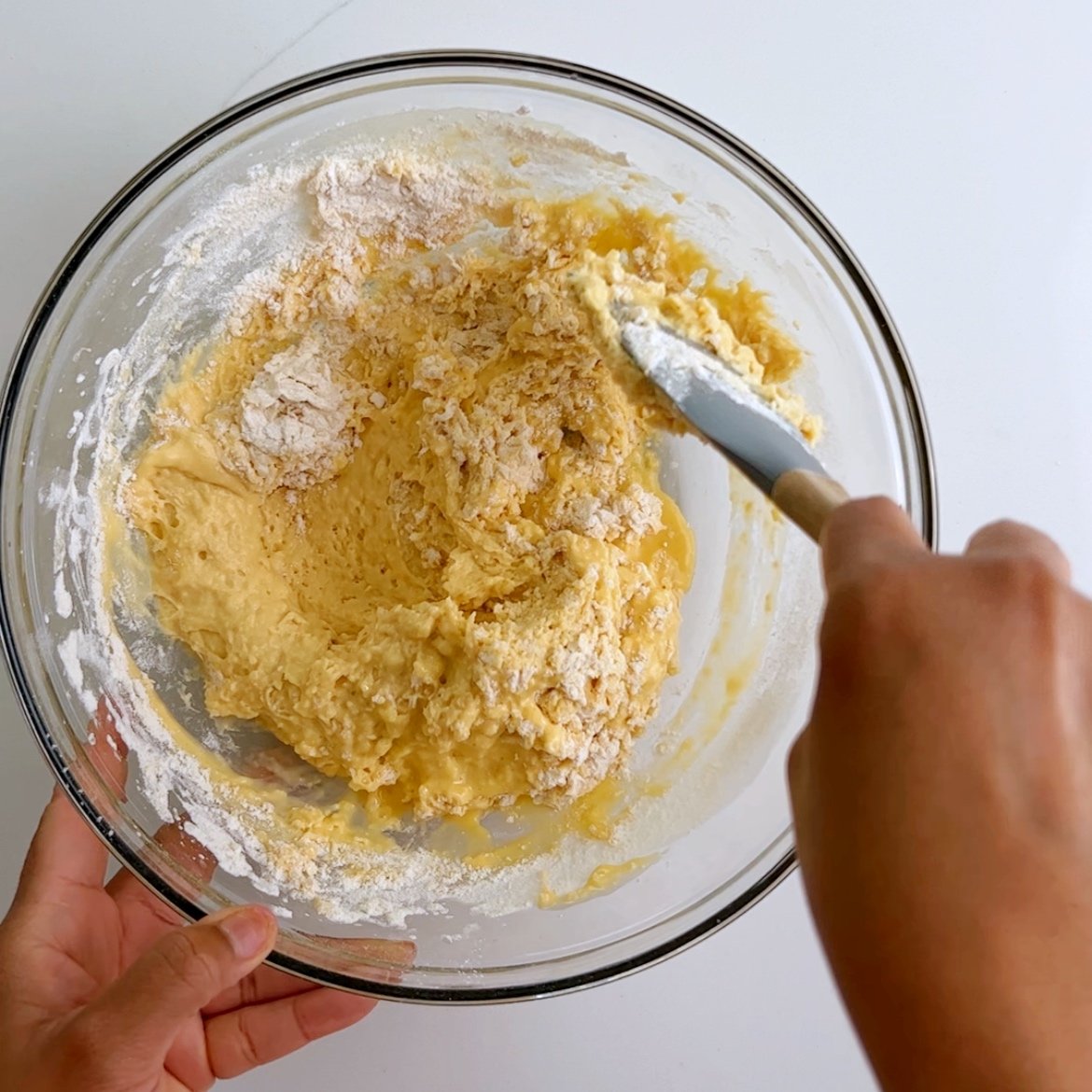
Fold the sifted flour and salt into the wet ingredients to form a pancake batter consistency.
Cooking Portuguese Pancakes (Step by Step)
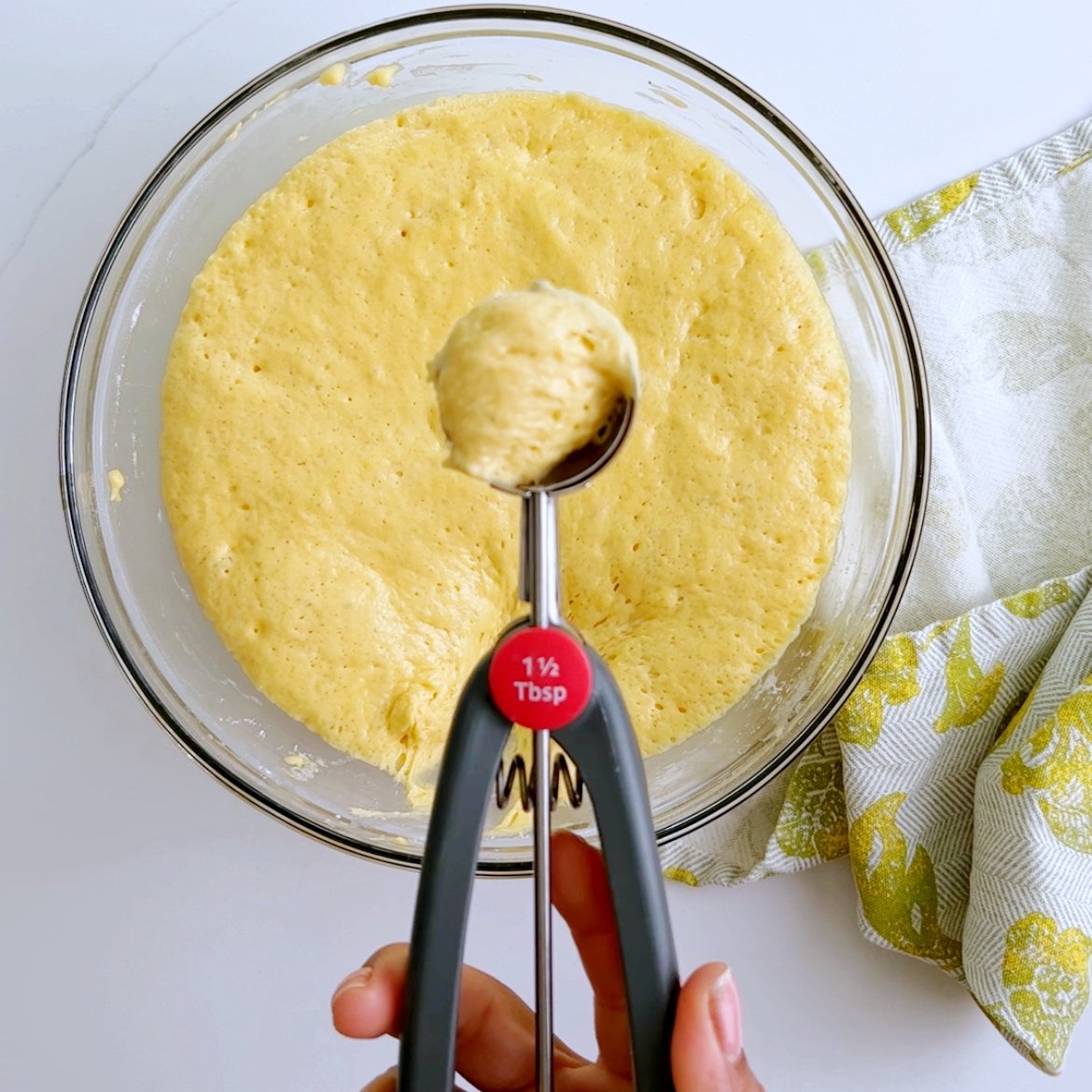
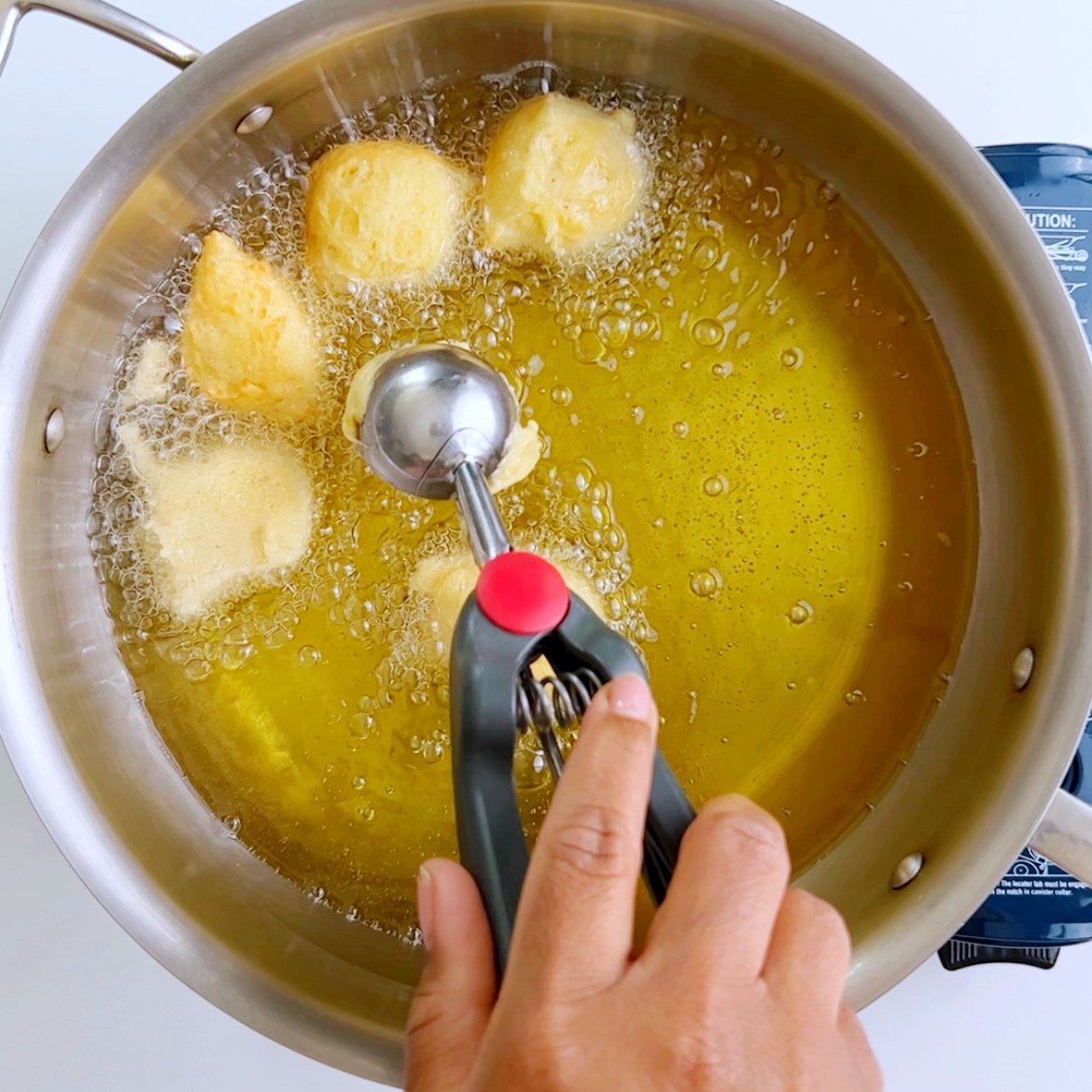
Traditionally two spoons are used to dip, scoop and dispense the batter into hot oil. But I find a cookie scoop to be more efficient and it delivers consistently round pancakes.
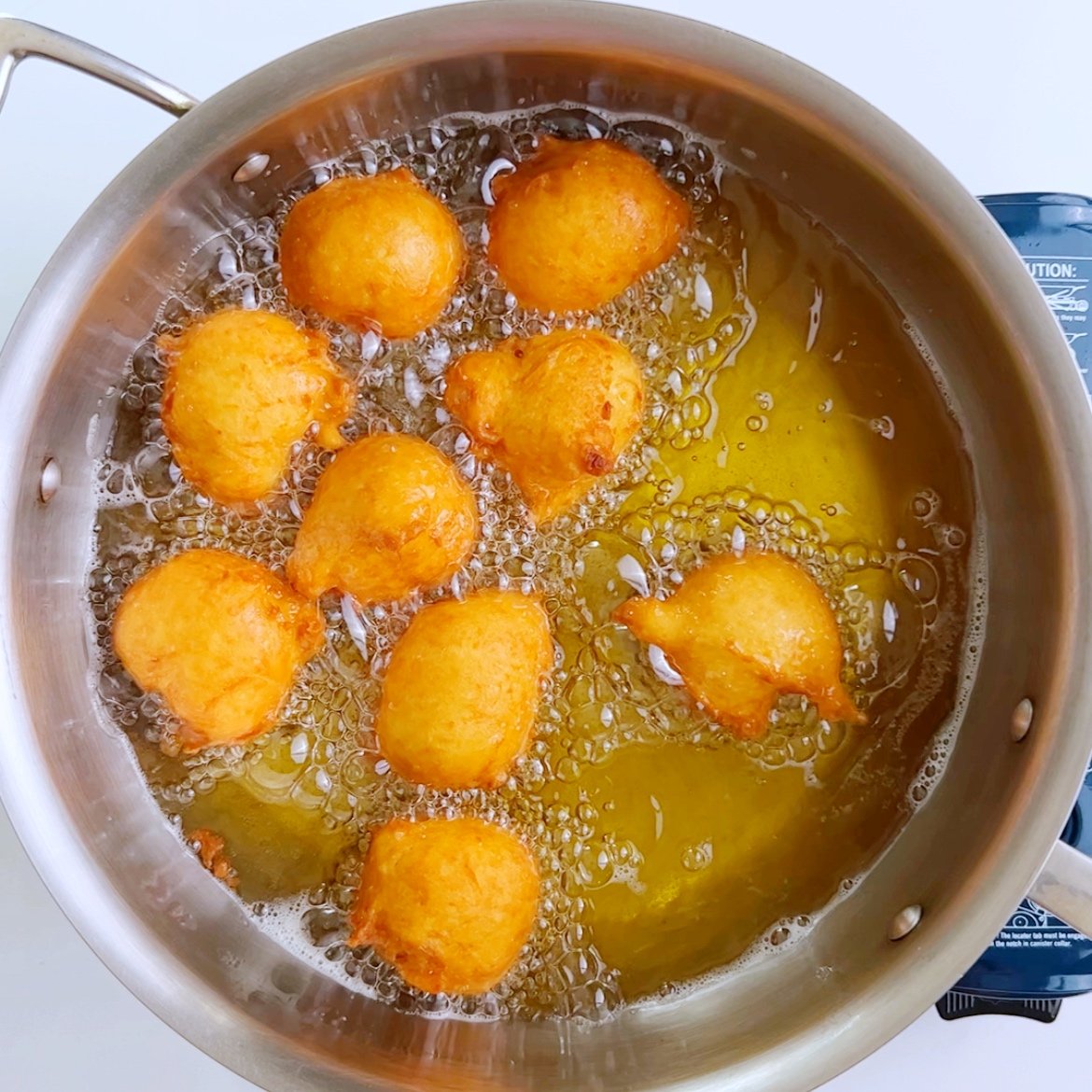
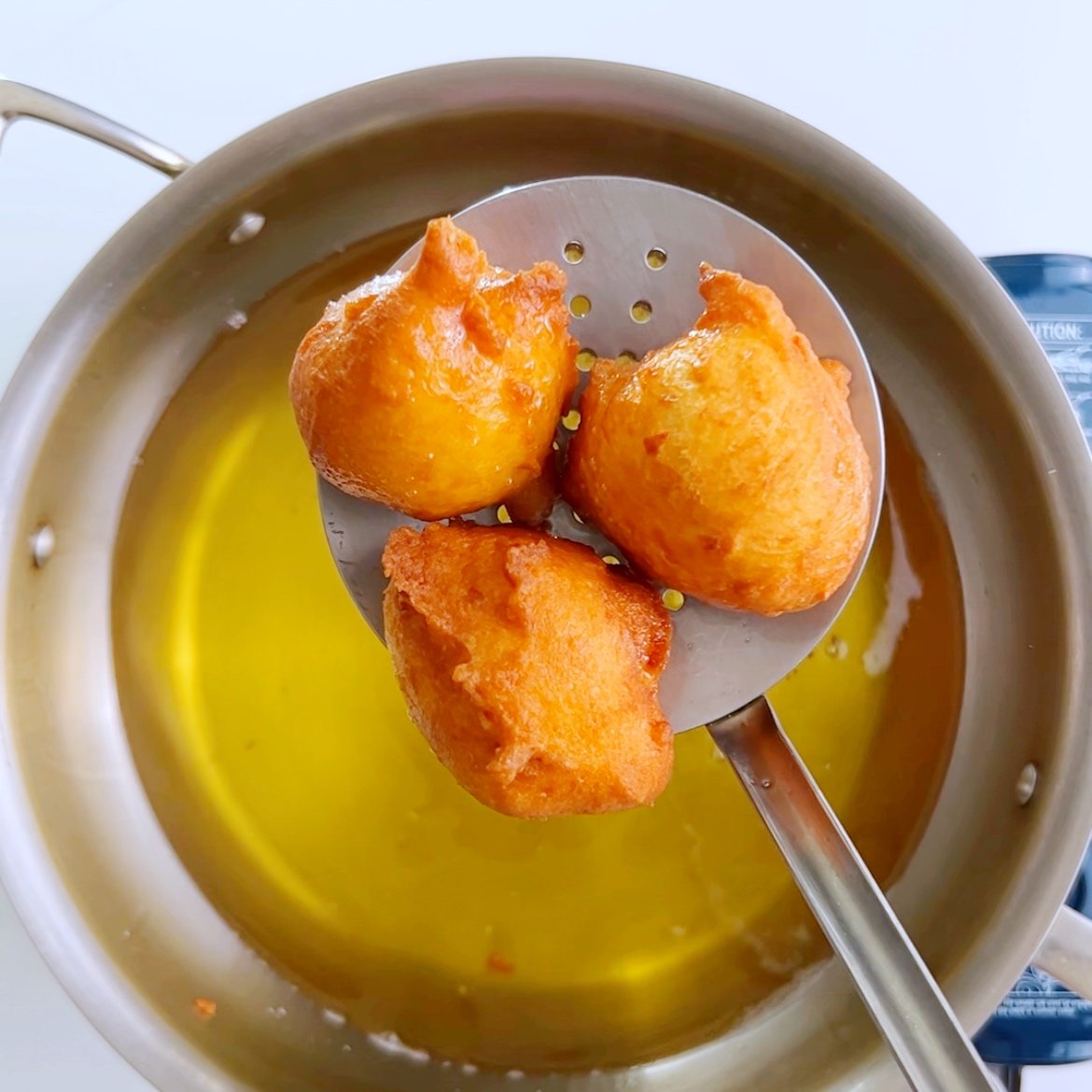
Cook the pancakes for about two minute to ensure they cook all the way through and are golden brown.

Storage
Enjoy Malasadas (Guyanese pancakes) while freshly made and hot. You may store any leftover pancakes at room temperature for a day or two and then move them to the refrigerator. Please note that when refrigerated they may dry out.
Tips for the Best Guyanese Portuguese Pancakes
- Use an electric whisk to get the fluffiest eggs. You can do this with a hand whisk or by putting your eggs in the stand mixer.
- Let the batter rest for at least 1 hour but no more than 2 hours. If it rests longer than that it may overproof and have a very yeasty taste. You may let the batter rest in a warm oven. Warm up the oven for 5 minutes at 200 °F and then turn it off. Then cover the batter and place it in the oven for an hour. This method results in a perfectly light and fluffy batter.
- The easiest way to scoop and drop the batter is to use a cookie scoop. Use cooking spray to the cookie scoop before scooping up the first set of batter. This will make it easier for the batter to release from the scoop. Alternatively, you can also use two dinner spoons. One to scoop the batter and the other one to scrape the batter into the dough.
- The oil should be hot enough that it takes a minute for the dough to get brown. If it gets brown immediately, the oil is too hot and the pancakes will be raw on the inside.
- If the oil is too cold the pancakes will be soggy. I recommend using a thermometer if you have one. Alternatively, test one of the malasadas before adding the full batch to the frying oil.
Make it Gluten Free
It was so easy to make this pancake recipe gluten-free. I simply swapped the all-purpose flour for Bob’s Red Mill 1:1 Baking Flour and kept everything else the same. I took it a step further by replacing the butter with a dairy-free alternative and using coconut evaporated milk instead of regular milk.
The result was a soft, delicious, donut-hole–like Portuguese pancake. They weren’t quite as light and airy as the original version, but they were really, really close, and that was good enough for me.

Recipe Variations
- Flour: For my gluten free friends, this recipe works really well with a 1:1 substitution for the All Purpose flour with All Purpose Gluten Free Flour.
- Milk: If you are dairy free, you can replace the milk with evaporated coconut milk.
- Sugar: Substitute the sugar with coconut sugar for a refined sugar free version of the recipe. And maple syrup works really well as a substitution for the cane sugar syrup.
Frequently Asked Questions
Although both derive from Portuguese malasadas, the two recipes are entirely different. Hawaiian malasadas are more donut-like and often have sweet fillings (like fruit and chocolate). Guyanese Malasadas are more like Portuguese Sonhos although they are yeasted and do not use a choux pastry dough.
In Portuguese, malasada means “poorly cooked.” This references the contrast between the crisp outer layer and the soft, fluffy center.
Both are doughy and fried, traditional malasadas are coated in sugar whereas beignets are coated with powdered sugar. Perhaps the biggest difference between the two fried dough balls are the regions they originate from.

Guyanese Portuguese Style Pancakes – Malasadas

Equipment
- Large Bowl
- Stand Mixer/Whisk
- Deep Pan
- Cookie Scoop
Ingredients
- 1 tbsp Brown Sugar
- 1/4 Cup Warm Water (110 *F)
- 1 1/2 tsp Dry Active Yeast
- 6 Large Eggs
- 2 tbsp Melted Butter
- 1/2 Cup Evaporated milk
- 1 tsp Vanilla Extract (Optional)
- 1 tsp lemon zest (About the zest of one lemon)
- 2 1/4 Cups All Purpose Flour
- 1/4 tsp salt
- 4 Cups Oil (any neutral tasting, high smoke point oil)
Syrup
- 1 Cup Demerara Sugar (May use turbinado or sugar in the raw)
- 1/2 Cup Water
- 2 Cinnamon Sticks
- 2 inches lemon peel/zest
- 1/2 tsp Vanilla Extract
Instructions
- Bloom the yeast by dissolving the sugar in the warm water, then adding the yeast and mix to combine. Cover and let rest until the yeast blooms and has a frothy top of at least an inch thick.
- While the yeast it blooming, add the eggs to a large enough bowl to allow the batter to proof and double in size. Then whisk the eggs until light and fluffy. If using a stand mixer, whisk on speed 2 for 2 minutes. Then add the melted butter and evaporated milk. Continue to whisk for another minute.
- Next, add the bloomed yeast to the eggs, lemon zest and vanilla extract (if using). Then gently whisk to combine.
- Sieve the flour and salt into the wet ingredients, then whisk the dry ingredients into the wet ingredients until fully combined and it has a pancake batter consistency.
- Cover the batter and place it in a warm place to proof for an hour or until it doubles in size.
Make the Syrup
- While the batter is resting, make the syrup by combining all of the ingredients into a saucepan on medium heat. Stir the mixture until the sugar dissolves, then allow it to come up to a boil. Boil for about 5 minutes or until it thickens and looks like pancake syrup. Then remove from the heat and allow to cool completely. Strain to remove the cinnamon sticks and the lemon zest.
Cook the Guyanese Portuguese Pancakes (Malasadas)
- When ready to cook, pour the oil into a pan deep enough so that there is at least 3 inches of oil in the pan. Heat the oil on medium heat until it is really hot but not smoking about 300 °F
- Using a cookie scoop, or two dinner spoons, scoop and drop batter into the hot oil. Cook each dough ball for a minute, then flip and continue to cook for an additional minute for even cooking. The aim is to get an evenly golden brown pancake ball. Work in batches to not over crowd the pan.
- Remove from the oil, then rest on a few paper towel sheets. Repeat until all of the pancakes are cooked. Then Pour the syrup over the malasdas and serve them warm.
Notes
- Make it Gluten Free: You can easily make these gluten free by swapping out the all purpose flour for gluten free all purpose flour. See the section above titled “Make it Gluten Free” for more details.
- The oil should be hot enough that it takes a minute for the dough to get brown. If it gets brown immediately, the oil is too hot and the pancakes will be raw on the inside.
- If the oil is too cold the pancakes will be soggy. I recommend using a thermometer if you have one. Or testing one malasadas before adding in a full batch.
Nutrition
The information listed in the recipe card is an estimate provided by an online nutrition tool. The tool evaluates ingredient names and amounts then makes calculations based on the number of servings listed for the recipe. It is provided as a general guideline and not as a precise calculation. For precise nutrition information please feel free to add the ingredients to your preferred nutrition calculator or consult a doctor or licensed nutritionist.
 Paynoose
 Guyanese Soft Mithai
 Gluten Free Guyanese Gulgula
 Flutie (Guyanese Ice Block)
Janet Says
Guyanese golgula is made primarily with mashed ripe bananas, sugar, spices and a small amount of flour. I do not know what your recipe is about.
paul Says
Hi Althea
Love your work as always. Im going to make this on a Sunday soon
I tried get get my aunt to make this and she couldn’t make it properly, a long while back. Didnt turn out well as she couldn’t remember. this was before people started writing and making videos about Guyanese food
We didn’t call it Malasadas. Probably recent retroactive naming I think, as people realized its the same thing that is made in Portugal. and this is just recently…past 10 years 15 years. Or only old Guyanese Portuguese remember it by that name.
My grandmother used to make this in Berbice regularly. It was consider another form of bake. We called it soft make. With no syrup.
Its very similar to Gulgula and my grandmother sometimes made it with banana. The weird thing is we know about Gulgula (were indo), but we didn’t call it that and we never made Gulguala. But I find a lot of stuff was kept alive in Berbice
Althea Brown Says
Sorry I missed this comment. My notifications for comments was somehow turned off. I wonder if you are thinking about soft bakes sometimes called teacher girl or monkey ears. I shared a recipe for those a while back. You can search for it with the search option and let me know. Also I know its been several months since your comment, did you make the pancakes?
Giselle DaMota Says
Hi Althea, You mentioned Evaporated Milk in your ingredient list in the body of this post, but it isn’t in the instructions, or on the recipe card. Is it safe to assume it isn’t needed, or am I missing a part of the recipe?
Thank you.
Juanita M Says
I notice this too but I poured enough to have a thicker consistency of pancake.
Althea Brown Says
Apologies for not getting back to this comment sooner. Thanks for pointing that out. The post has been updated.