

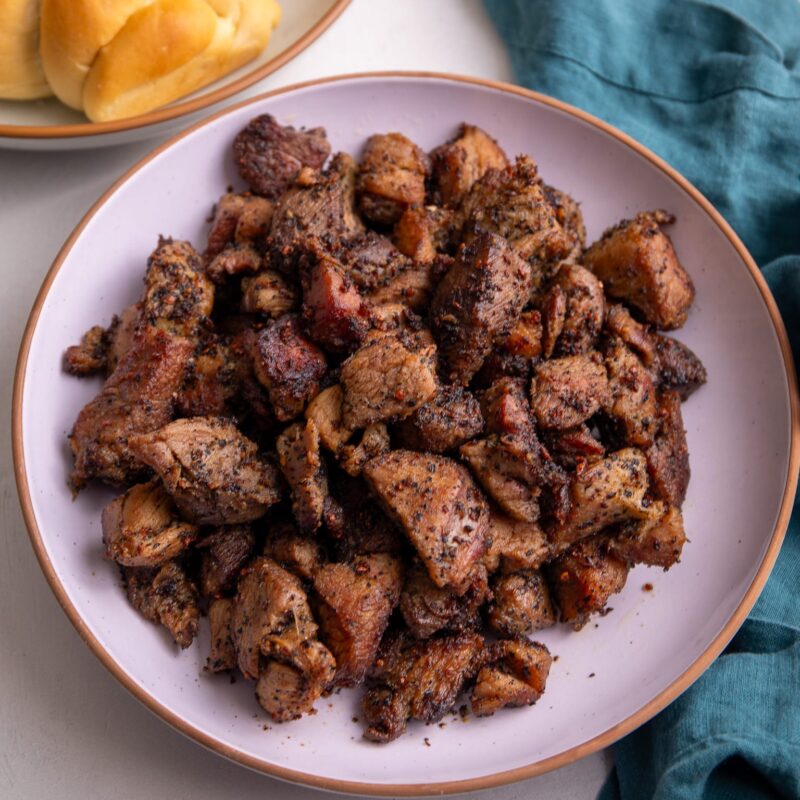
Guyanese Garlic Pork is pork pickled in vinegar with lots of garlic, thyme and wiri wiri pepper, then fried in its own fat until golden brown. Start the pickle 3 to 5 days before Christmas so it’s ready for Christmas morning breakfast with plait bread, as is Guyanese tradition.
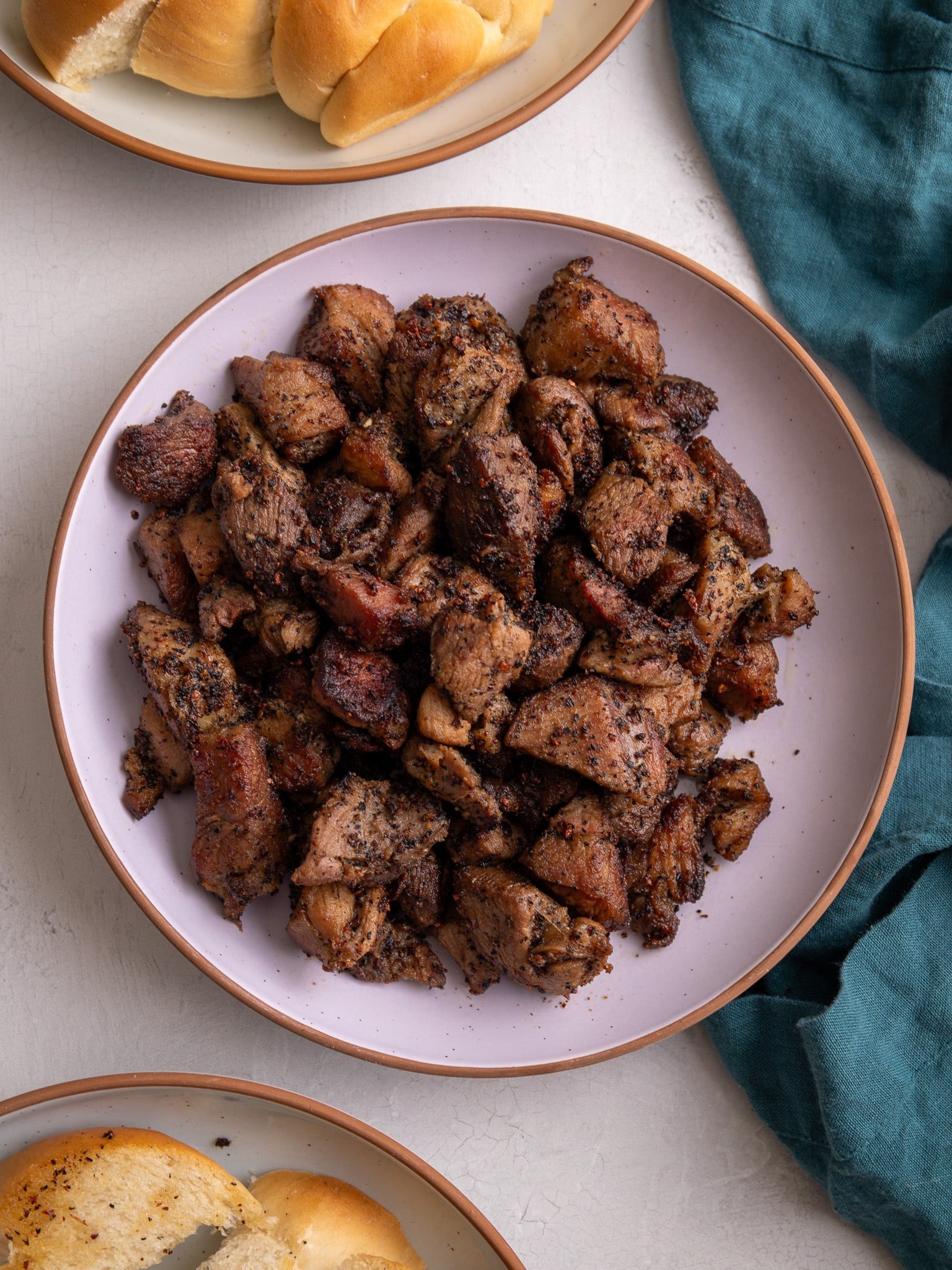
Guyanese Garlic Pork
This Guyanese Garlic Pork recipe is from my dear Aunty Rita. Aunty Rita was my great-aunt. We connected about almost anything, but our favorite thing to talk about was food and recipes. During our time together, I felt the overwhelming need to capture her recipes and stories about traditions. This is her recipe exactly as it was given to me, with measurements and instructions included. And I am honored to pass it on to you! Aunty Rita passed away in June 2026, and I will now make her garlic pork every Christmas in her honor.
I didn’t grow up eating garlic pork for Christmas dinner. I grew up in a Seventh-day Adventist home so we were not pork eaters. My dad made delicious garlic beef. He used thin slices of beef to replace the pork in the traditional recipe and fried it up to a delicious tasty dish that we ate with Guyanese plait bread on Boxing Day (the day after Christmas).
- Guyanese Garlic Pork
- Why You’ll Love This Guyanese Garlic Pork Recipe
- Origins of Garlic Pork
- Ingredients for Guyanese Garlic Pork
- Choosing the Right Garlic
- Preparing the Garlic
- How to Make Guyanese Garlic Pork
- Variations to Guyanese Garlic Pork
- Storage
- Tips for the Best Guyanese Garlic Pork
- Frequently Asked Questions
- Aunty Rita’s Guyanese Garlic Pork
Why You’ll Love This Guyanese Garlic Pork Recipe
- Easy: This is one of those set-it-and-forget-it recipes. Chop and season the pork, set in a jar for a few days, and then sauté!
- Flavorful: Chunks of pork are marinated for 3 to 5 days in a pickle of garlic, thyme and pepper then sautéed into a tangy and garlicky dish. The meat tenderizes in the vinegar solution so both the texture and taste are incredible!
- Versatile: This recipe includes 3 different cooking methods and alternate meat options.
Origins of Garlic Pork
Guyanese Garlic Pork has Portuguese origins brought to Guyana by the Portuguese who came from the island of Madeira as indentured workers. It is very similar to the Madeiran Carne Vinha D’Alhos. While we don’t put wine in our garlic pork, their method of pickling the pork for several days and then cooking is very similar to our dish. It is also no surprise that it is traditionally served with plait bread, which also comes from our Portuguese ancestors. On Christmas morning, you’ll usually find it next to a pot of pepperpot.
Ingredients for Guyanese Garlic Pork
This recipe is simple but packed with fresh flavor from plenty of garlic and herbs.
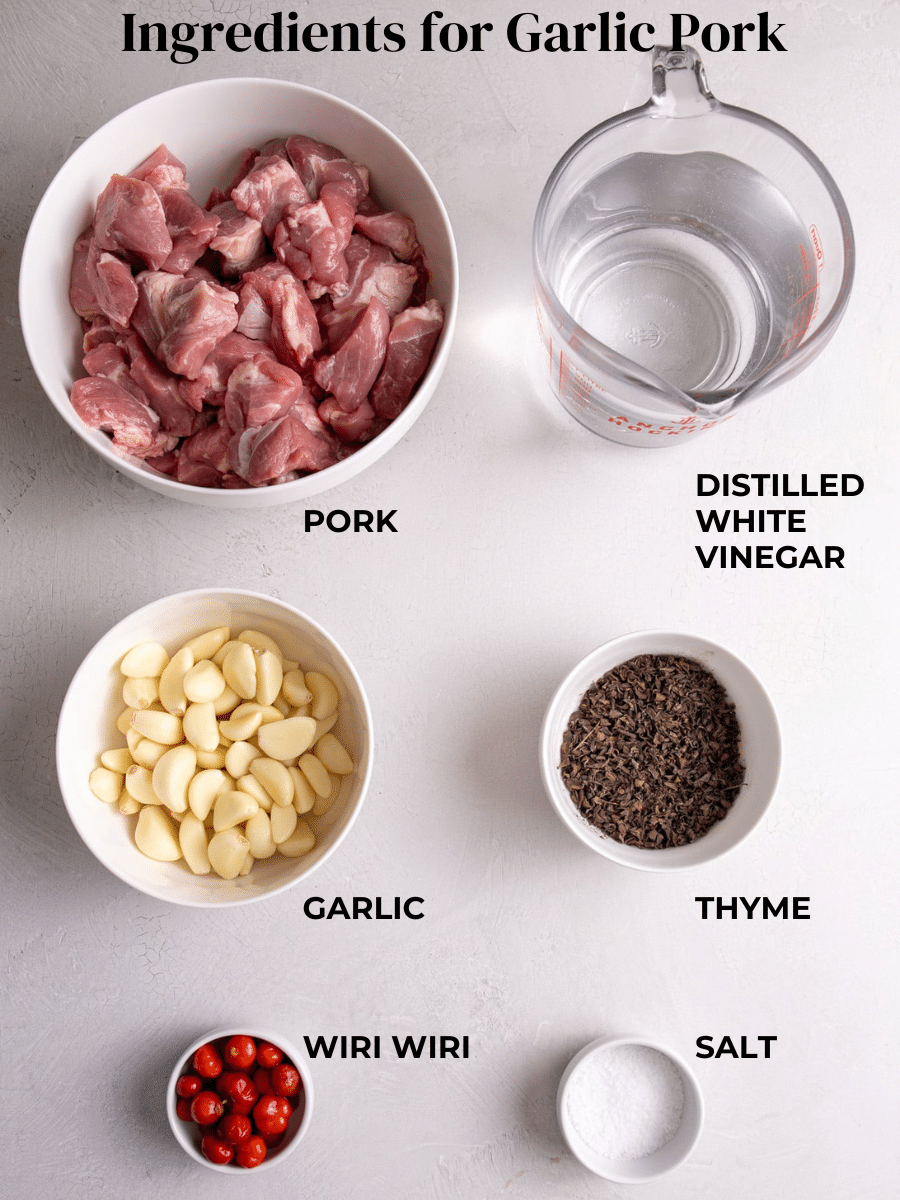
- Pork: Use a fatty part of the pork for the best flavor. I suggest pork shoulder or loin with visible fat. Cut it into 1 1/2 to 2-inch cubes.
- Coarse Kosher Salt: Seasons the pork before it goes into the jar.
- Fresh Garlic: Garlic is the star of this dish and you will need lots of it. See below for more details.
- Guyanese Thyme (also called Portuguese thyme): Use fresh thyme or Guyanese dried thyme, not regular store-bought dried thyme, which tastes very different. Look for Guyanese dried thyme at Caribbean grocery stores.
- Vinegar: Traditionally we use white distilled vinegar, but I’ve also used red wine vinegar.
- Wiri wiri peppers: Substitute scotch bonnet or habanero peppers if you can’t find wiri wiri.
See recipe card for quantities.
Choosing the Right Garlic
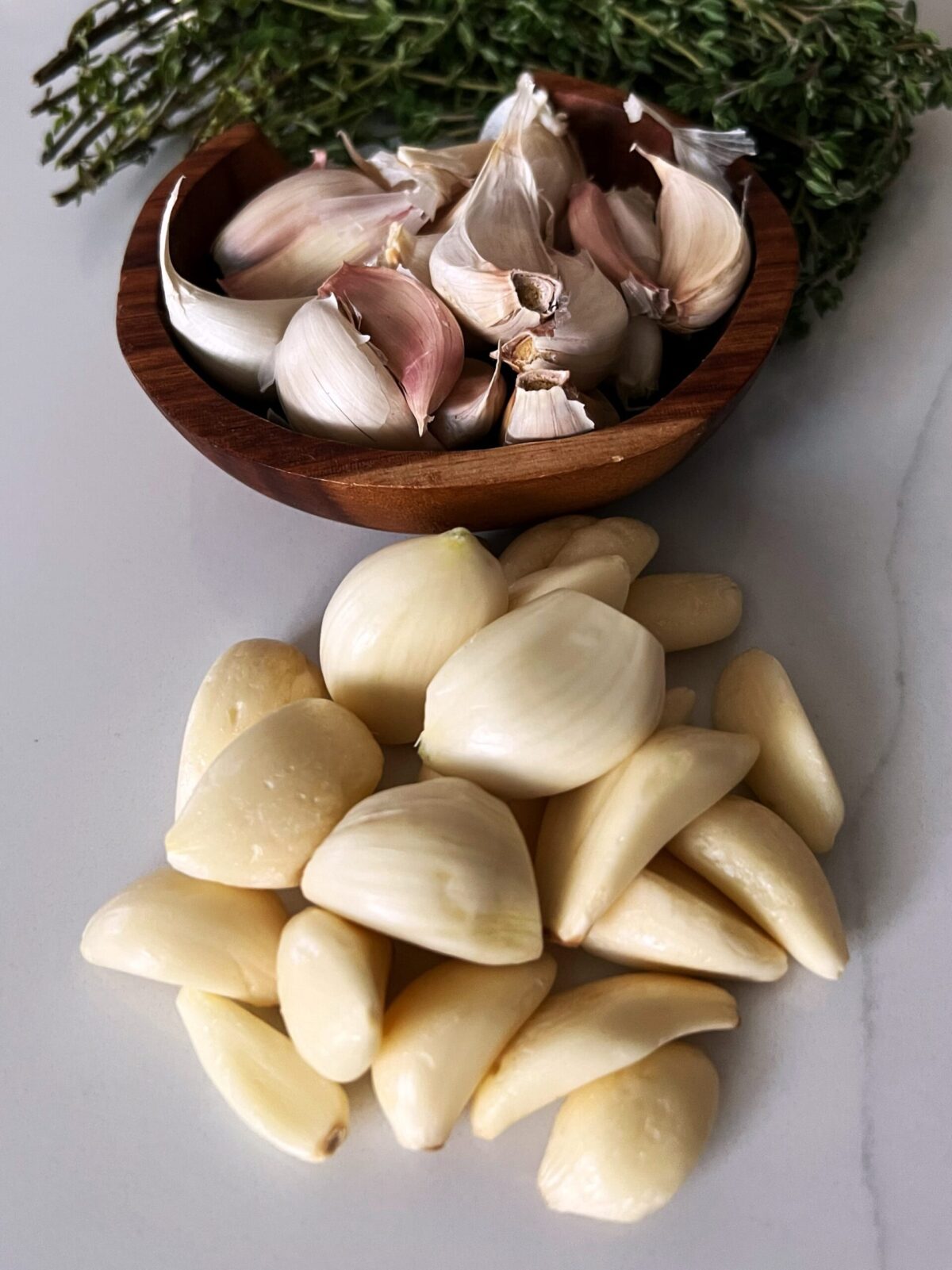
Garlic is a key ingredient in garlic pork. Choosing the right garlic is also important. Use fresh, firm garlic. If you buy it pre-peeled, make sure the cloves are white and firm, not yellow or glassy looking. Trim off any soft or brown spots.
Preparing the Garlic
I use a food processor to mince my garlic, pepper, and thyme into a smooth paste but you can also use a blender with a little bit of vinegar. You can also keep fresh thyme or the stems and not blend it. Guyanese or Portuguese thyme is best for this recipe.
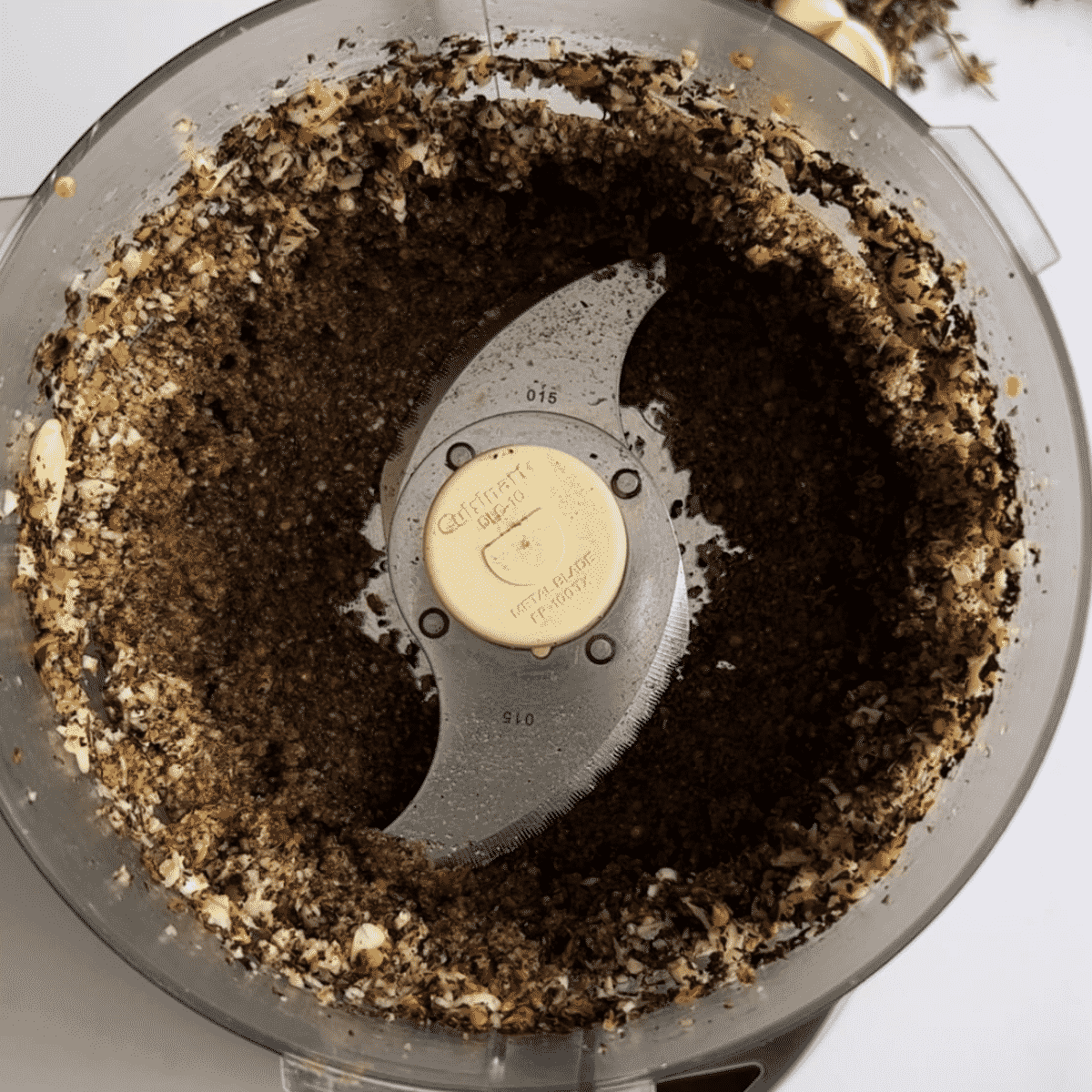
While recipe testing for this post, I also smashed, chopped, and simply cut the garlic bulbs in half instead of peeling and chopping. The version with the blended garlic, pepper, and thyme yielded the best results.
How to Make Guyanese Garlic Pork
Season & Marinate the Pork
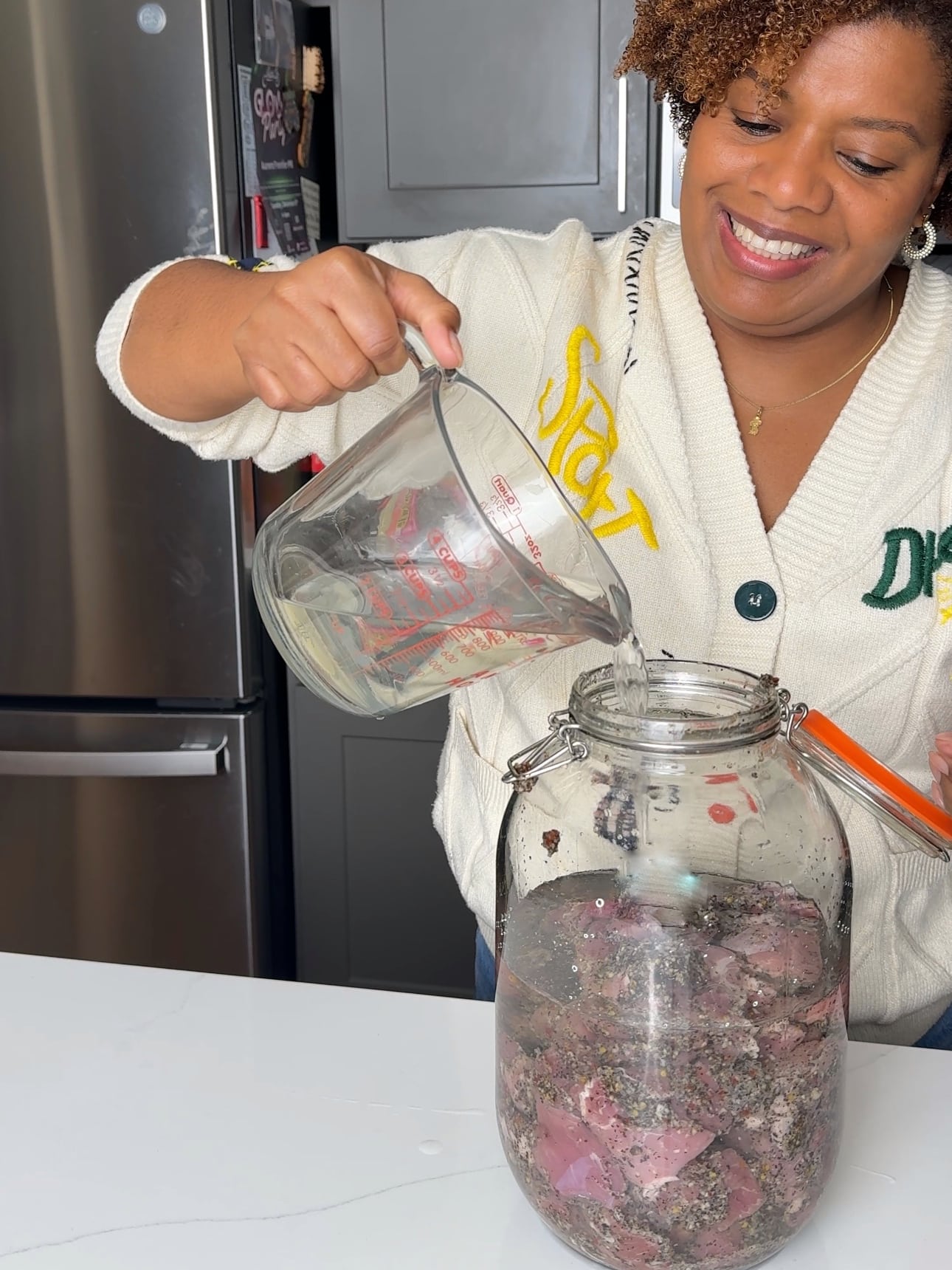
Add your peeled garlic, thyme (I’m using dried Guyanese thyme here) and wiri wiri peppers to a food processor and blend it into a smooth paste. Then add all of the seasoning paste to the prepped pork.
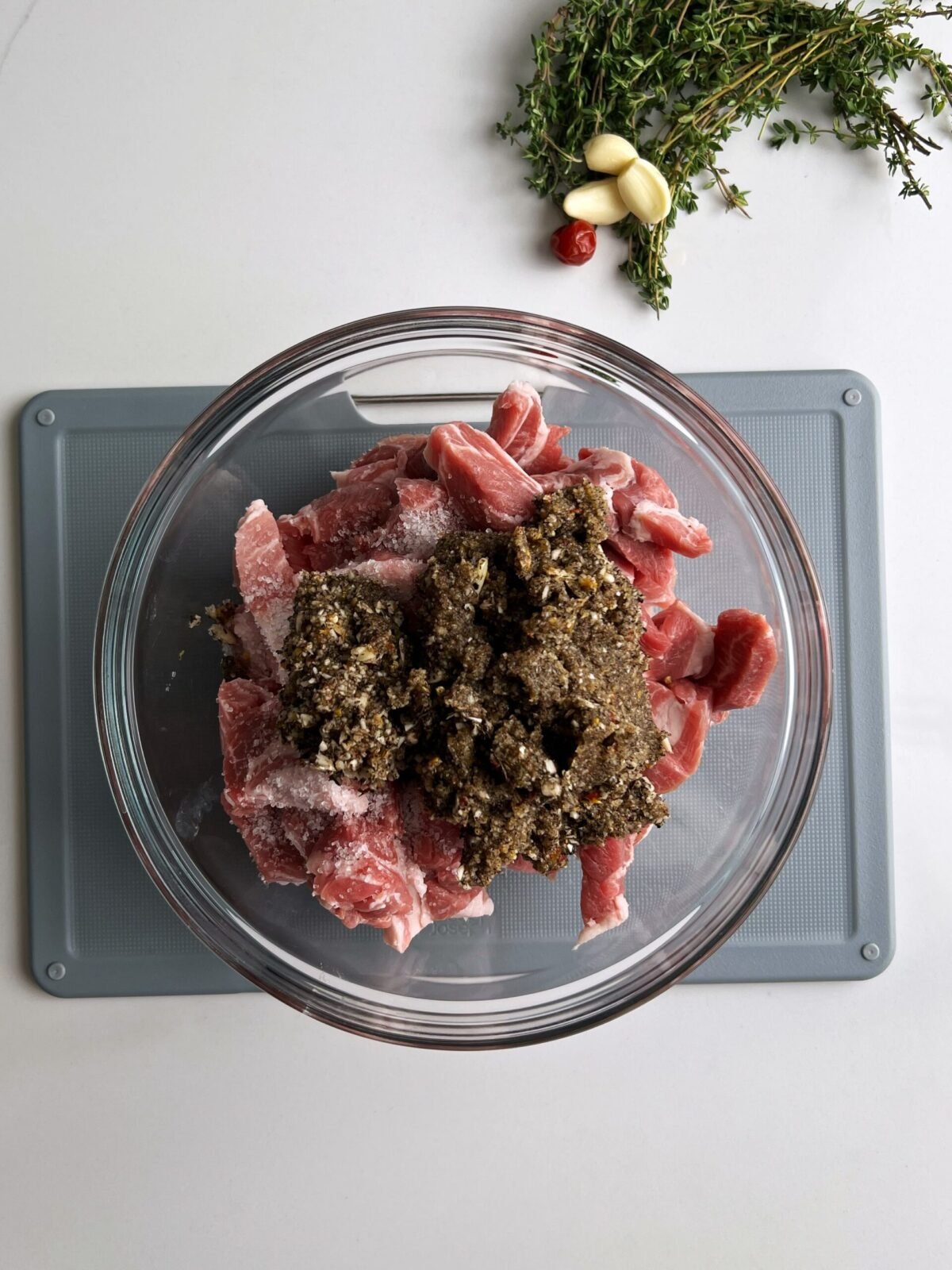
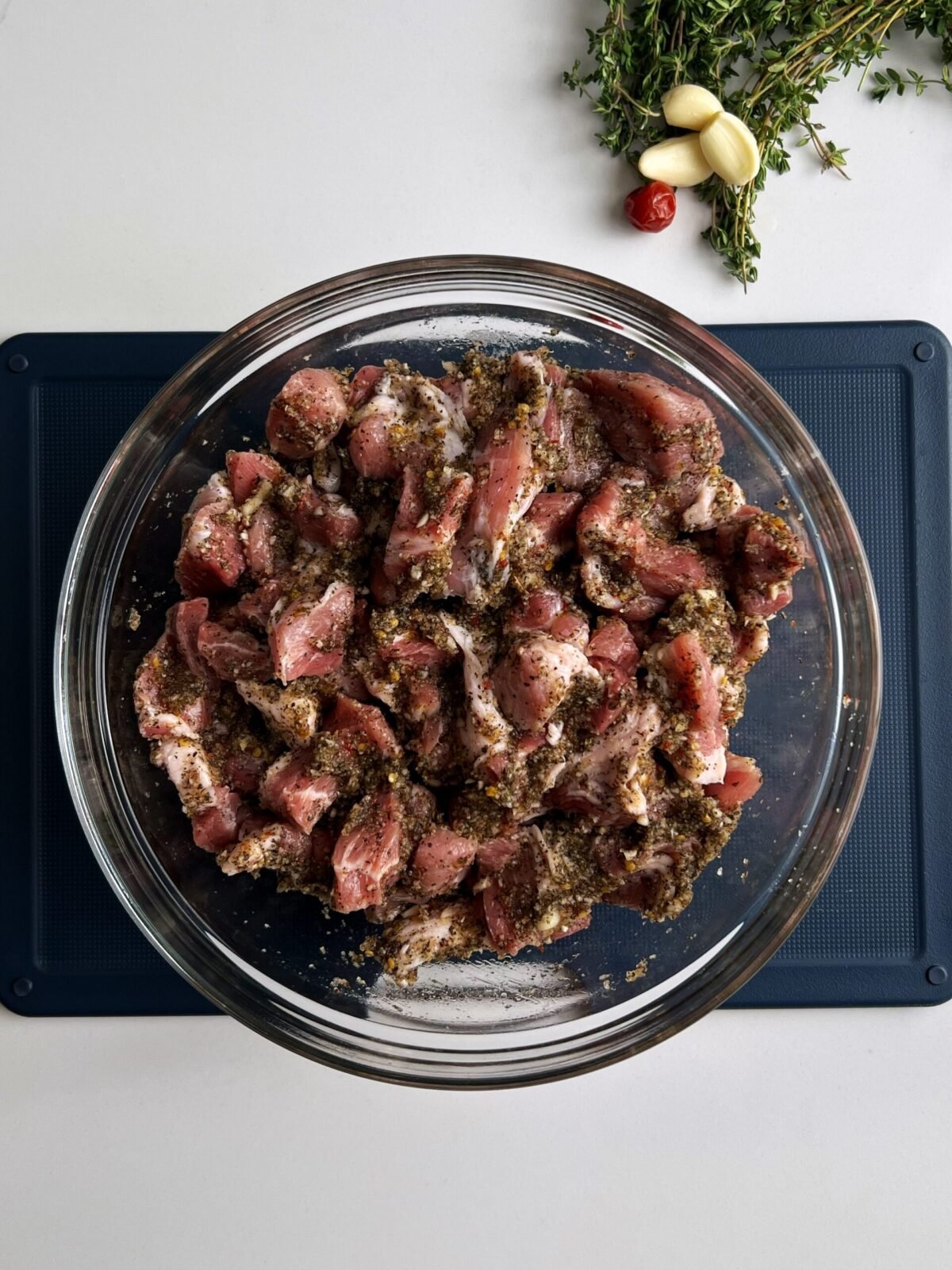
Then mix to combine and set aside. Sometimes I let this marinate for 30 minutes before adding the vinegar. Next add the pork to a sterilized jar, then add all of the vinegar.
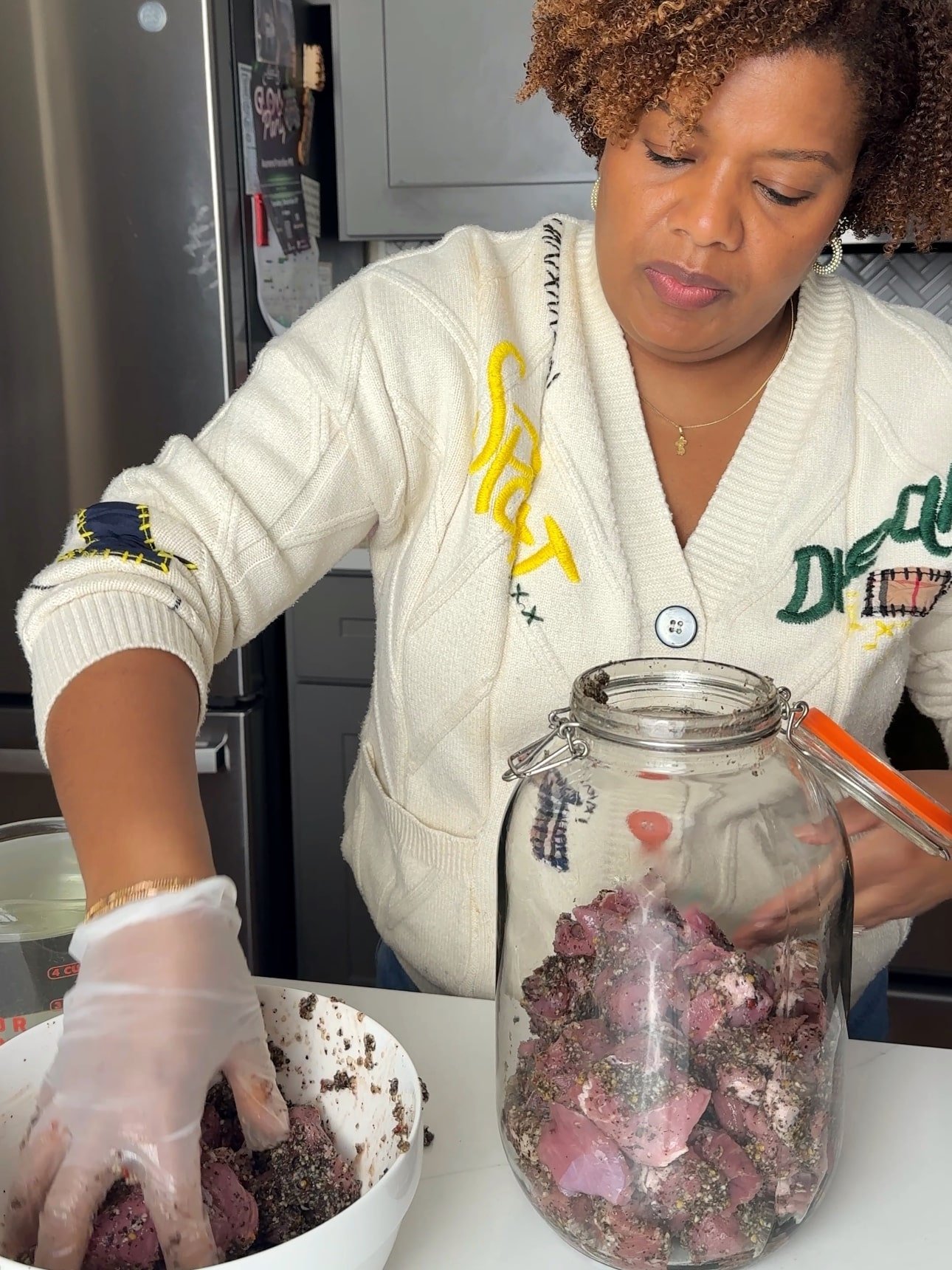
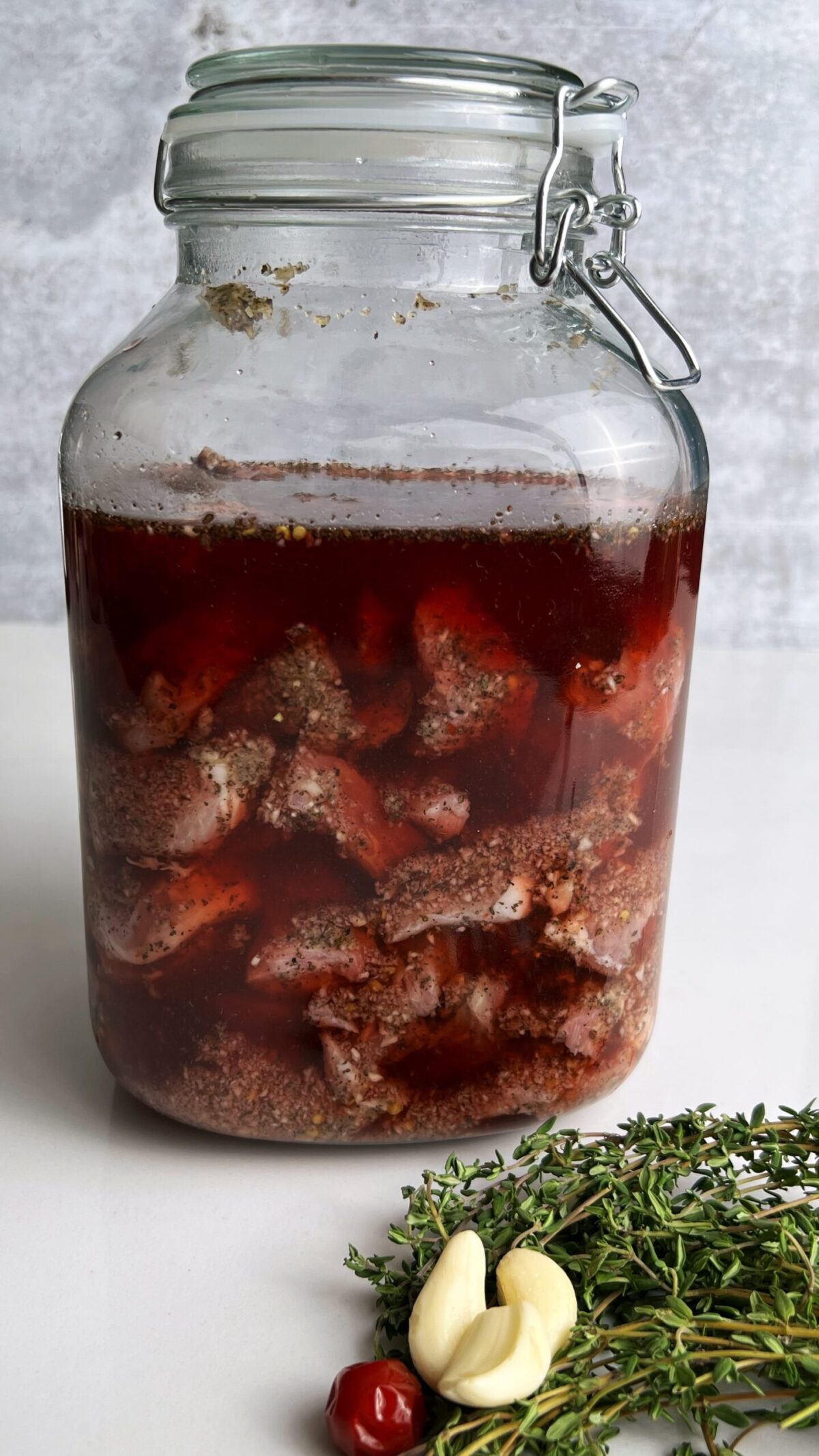
Alternatively, add salt to the pork, blend the garlic and pepper together, and leave the fresh thyme and stems intact, then layer in your jar (as shown above). I loved the look of the layering process but honestly, it is not necessary.
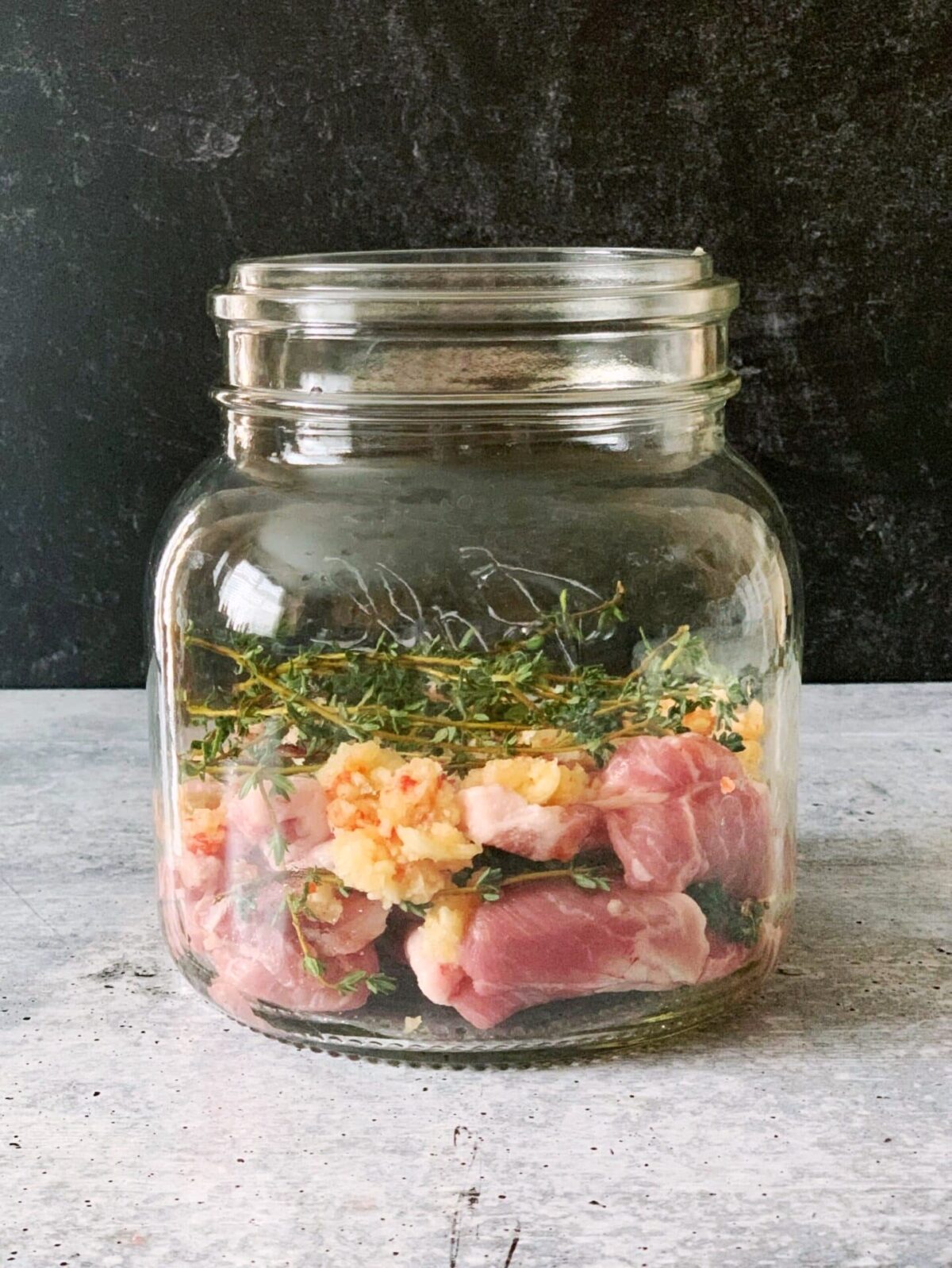
To layer the pork and seasoning, start with some vinegar, then a layer of meat, then the seasoning and thyme, then repeat until all the meat and seasoning are in your jar. Give it a little stir then seal up the jar and let it marinate for 3 to 5 days (7 at most), until the pork turns white all the way through.
Cooking the Garlic Pork on the Stove Top
After 3 to 5 days, when the pork is ready, you may drain off the pickling liquids keeping the garlic and thyme. You can do this with a sieve or colander. Some people also just like to keep the pork pickling and cook small portions as needed. Just be careful to use a clean sterilized utensil every time you take from the jar so that it does not get contaminated.
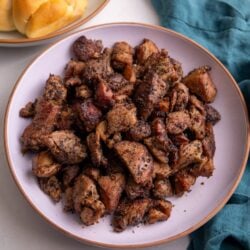
When cooking you don’t need any additional oil or fat. If you are cooking it all at once just add the marinated pork to a large heavy-bottomed pot on medium heat and cook until all the liquid cooks down and it starts to cook in its own fat.
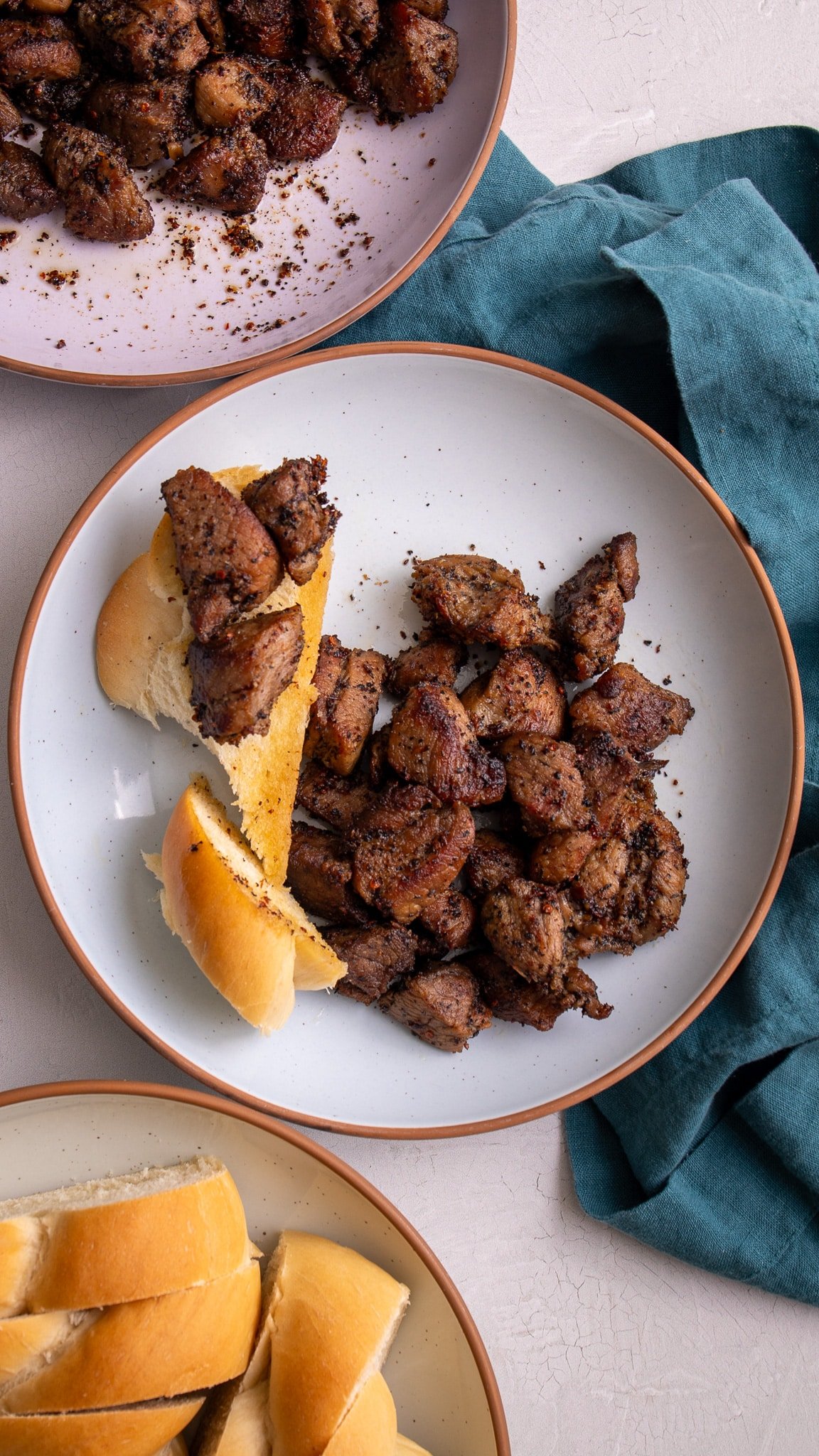
I love having a good char on the garlic pork so once it started frying in its fat, I let it sauté until it was really brown. If you are cooking it in small portions just add the pickled pork to a hot frying pan and cook until the liquid cooks off and it starts to brown. But be careful because it will spit and splatter. I used a splatter guard in order to prevent burns.
Cooking the Garlic Pork in the Oven
Alternatively you can cook your garlic pork in the oven. Drain the liquid from the pickled pork, then spread out in a single layer on a sheet pan. I sprayed the sheet pan with a bit of cooking spray first to prevent sticking. Then set your oven to broil (mine broils at 500°F) and broil for 20 minutes or until the liquid cooks off and the pork is golden brown.
Cooking the Garlic Pork in the Air Fryer
Add your garlic pork (drained from all liquids) in a single layer in your air fryer and air fry at 450°F for 10 minutes, or until it has a nice roasted color. If your air fryer only goes up to 400°F, give it a few extra minutes and shake the basket halfway. This method of cooking the pork is so easy, you won’t regret it.
Variations to Guyanese Garlic Pork
- Guyanese Garlic Beef or Garlic Chicken: This recipe works really well with chicken or beef. Using the same measurements, I swapped the pork for a well-marbled ribeye steak. I did the same with some fatty chicken thighs. The results were really great and tasty. The chicken tasted closest to the pork but the beef was equally delicious. For the chicken or beef I pickled for no more than 3 days or the meat will become mushy.
- Garlic Mushrooms: I created a separate recipe post for garlic mushrooms as the ingredients vary. Try my garlic mushrooms recipe.
- Use red wine vinegar: A few years ago I substituted red wine vinegar for the white distilled vinegar in this recipe. I was channelling the Madeiran recipe that influenced Guyanese Garlic Pork (Carne Vinha d’alhos). I have to admit this added a depth of flavor and slight sweetness to the recipe and is my favorite vinegar to use.
Storage
Store leftover cooked pork in an airtight container in the fridge and consume it within 4 days. To reheat, warm it in a skillet over medium heat until sizzling to crisp the edges again, or microwave.
Tips for the Best Guyanese Garlic Pork
Choosing the Right Jar
I highly recommend using a glass jar with a tight seal, for this recipe (like the mason jar shown above). You also need a large enough jar for the pork to be completely submerged in the pickling liquids, with a bit of space left between the liquid and the top of the jar. Do not overstuff the jar. The pork should be floating in the jar after you add all of the vinegar.
Sterilize Everything before Making the Garlic Pork
The first time I made this dish, my aunt told me to sterilize the jars and utensils by boiling them in hot water and being careful not to contaminate them. So I did that in a large stock pot and carefully used tongs to hold everything. I followed the instructions in this article on how to sterilize jars for canning.
This time around I sterilized everything with vinegar and used sterile gloves when putting it all together. I simply poured a little vinegar over everything before I started, it was so much easier than boiling everything, but do what works for you.
Frequently Asked Questions
Garlic pork is made with a fatty cut of pork, 1/2 pound of garlic, wiri wiri peppers and Guyanese thyme. It is set in a solution of salt and either red wine vinegar or white vinegar.
Guyanese garlic pork pickles for 3 to 5 days, and up to 7 days at most.
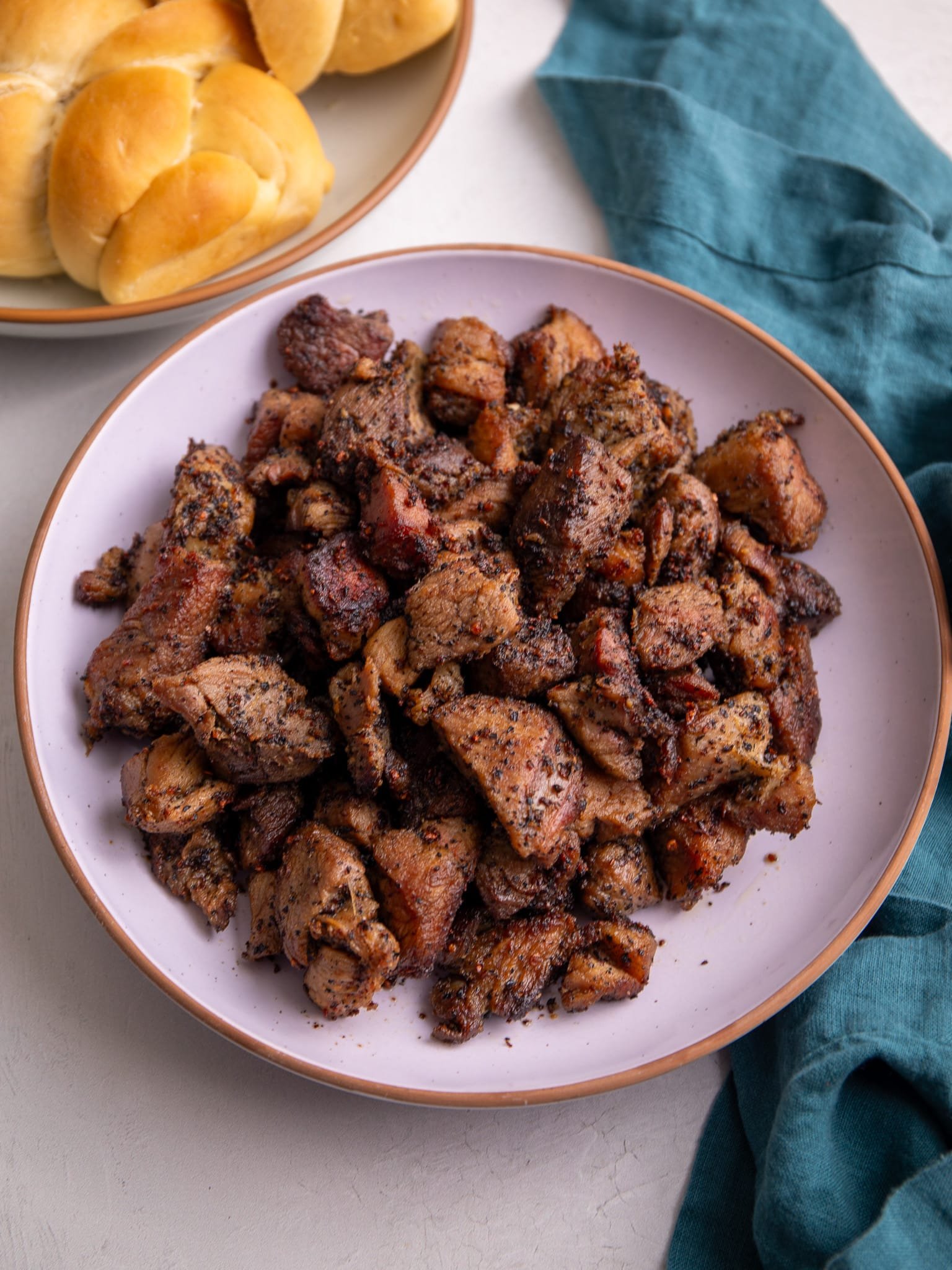
It is served with plait bread, especially anise seed plait bread. The sweetness of the bread balances the tang of the pork.
Garlic pork can sit on the counter at room temperature during the pickling process. This is because we are using straight vinegar and not a diluted vinegar solution. But if you are worried, feel free to refrigerate your Guyanese garlic pork while it pickles.
Garlic pork is a Christmas morning tradition in Guyana. It is served for breakfast on Christmas day with plait bread, often alongside pepperpot.
The pork is ready when it has turned white all the way through. Cut a cube in half to check.

Aunty Rita’s Guyanese Garlic Pork
Equipment
- Food processor or blender
- Large Glass Jar sterilized
- Sieve or Colander
- Heavy Bottom Pot or Frying Pan
Ingredients
- 3 lbs pork shoulder or loin with visible fat cut into 1 1/2 to 2 inch cubes
- 1 1/2 tablespoons coarse kosher salt
- 1/2 lb garlic peeled
- 1 cup fresh thyme or 1/2 cup Guyanese dried thyme (see note)
- 1/4 cup wiri wiri peppers or 2 habanero peppers
- 4 1/2 cups white distilled vinegar or red wine vinegar
Instructions
Prep
- Sterilize the jar and all of your utensils before you begin. See the note below for tips on sterilizing.
- Rinse the cubed pork with 1/2 cup of vinegar diluted with water. Drain any excess water and sprinkle with 1 1/2 tablespoons of coarse kosher salt, then mix well and set aside. Alternatively, you can add the salt to the seasoning paste.
- If using fresh thyme, strip the leaves from the stems, saving the stems.
- Add the peeled garlic, thyme leaves and peppers to a food processor (remove some of the seeds and veins from the peppers for less heat), then process until smooth. You can also use a blender with about 1/2 cup of the vinegar.
Making the Guyanese Garlic Pork
- In a sterilized large glass jar add 1/2 cup of vinegar, followed by a layer of the pork, then a layer of the seasoning and a few of the thyme stems, then top it off with another 1/2 cup of vinegar.
- Repeat the layering of vinegar, meat and seasoning until everything is in the jar then top it off with the remaining vinegar.
- Alternatively, add the seasoning to the pork and mix together well, then add 1/2 cup of vinegar to the jar, then some pork, then some vinegar, and repeat until all the seasoned pork and vinegar are in the jar.
- Make sure all of the meat and seasoning is completely submerged in the vinegar and that there is enough space in the jar for all of the ingredients and liquids.
- Store in a cool, dry place (typically your kitchen counter) for 3 to 5 days (7 days at most), until the pork turns white all the way through.
Cooking the Guyanese Garlic Pork all at once:
- When you are ready to cook the garlic pork, drain all of the vinegar from the pickled pork. This can be done with a sieve or colander. You may also remove the thyme stems at this point.
- Heat a heavy-bottomed pot over medium heat and add the pickled garlic pork.
- Cook until all the liquids cook down and the pork starts to sizzle in its own fat.
- Continue to cook until the pork is golden brown, stirring often to avoid burning but being careful not to break the pork cubes apart.
Cooking small portions of Garlic Pork at a time:
- Heat a small frying pan over medium heat. Remove a small portion of the pickled pork from the jar with a clean utensil and pat dry with paper towels.
- Add the garlic pork to the frying pan and cook until all the liquid cooks off and the pork begins to “fry” in its own fat. Continue to cook until golden brown, then remove from the heat.
Cooking Garlic Pork in the oven
- Drain the pork from the pickling liquids. Then spray a baking sheet with cooking spray and spread the pickled pork on it in a single layer.
- Set your oven to broil (mine broils at 500°F) and broil for 20 minutes, or until all the liquid cooks off and the pork is golden brown.
Cooking Garlic Pork in the air fryer
- Drain the pork from the pickling liquids and add it to the air fryer in a single layer.
- Air fry at 450°F for 10 minutes, or until it has a nice roasted color. If your air fryer only goes up to 400°F, give it a few extra minutes and shake the basket halfway.
Serving
- Serve your garlic pork with Guyanese plait bread, preferably anise seed plait bread.
Notes
- Thyme: Use fresh thyme or Guyanese dried thyme. Regular store-bought dried thyme is very different and won’t give you the same flavor.
- You can swap the pork for chicken thighs or beef. For beef, choose a cut that has some fat and marble. Check out the variations section in this post for more.
- Use red wine vinegar. I highly recommend swapping out the white distilled vinegar in this recipe for red wine vinegar. It is not the traditional way but in my humble opinion it’s the tastiest.
- Sterilizing the Jar and Utensils:
- You can sterilize your jars and utensils using sterilizing tips used for canning and pickling. See article here.
- You can pour some white vinegar over the utensils and swish it around inside the jar, then use sterile gloves to handle everything.
Nutrition
The information listed in the recipe card is an estimate provided by an online nutrition tool. The tool evaluates ingredient names and amounts then makes calculations based on the number of servings listed for the recipe. It is provided as a general guideline and not as a precise calculation. For precise nutrition information please feel free to add the ingredients to your preferred nutrition calculator or consult a doctor or licensed nutritionist.
 Caribbean Pumpkin Rice
 Sardines and Crackers
 Guyanese Kitchri
 Guyanese Milk Peera
Donna Johnson Says
Thank you so much! Right in time for Christmas❣️ My mother passed in 2005 and was our traditional Christmas breakfast! Thank you! I am surprising my family who will be visiting from Maryland❤️❤️ Thank you????
Althea Brown Says
Donna, this means so much. I lost my Aunty Rita this year, and garlic pork is how I’m keeping her at our Christmas table too. I hope surprising your family brought back lots of memories of your mom. Merry Christmas! ❤️
Kaiana aka TheInsiderBeauty Says
This is such a detailed recipe. I tried my hand for the first time at making garlic pork last Christmas and I loved it. Will definitely be trying your recipe this year. Thank you!
Althea Brown Says
Thank you, Kaiana! I hope it became part of your Christmas tradition. I just updated the post with more tips, so it’s even easier now. Merry Christmas!