

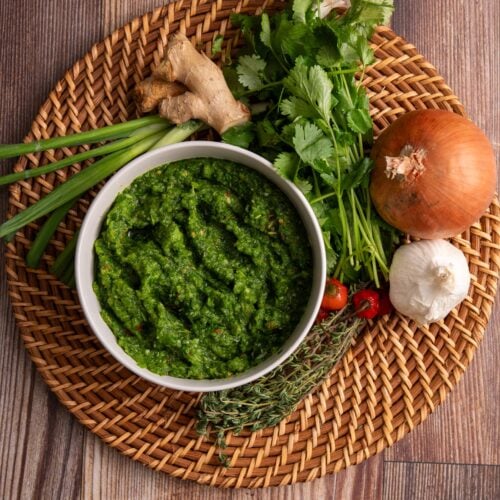
Green seasoning is a Caribbean staple and a foundational recipe used across everyday cooking. This herbaceous, marinade adds flavor to meats, seafood, stews, rice, and curries. It only takes about 10 minutes to make, and it freezes well for easy use later.
Making this marinade was part of my mom’s Sunday routine when I was growing up in Guyana. Although I have to confess that my mother didn’t call it green seasoning. She called it grind seasoning or grind up seasoning. As soon as my mom came home from the market, she made a fresh batch of this marinade. Then she added it to all of her meats, portioned off the meats and froze them based on what she planned to cook during the week.
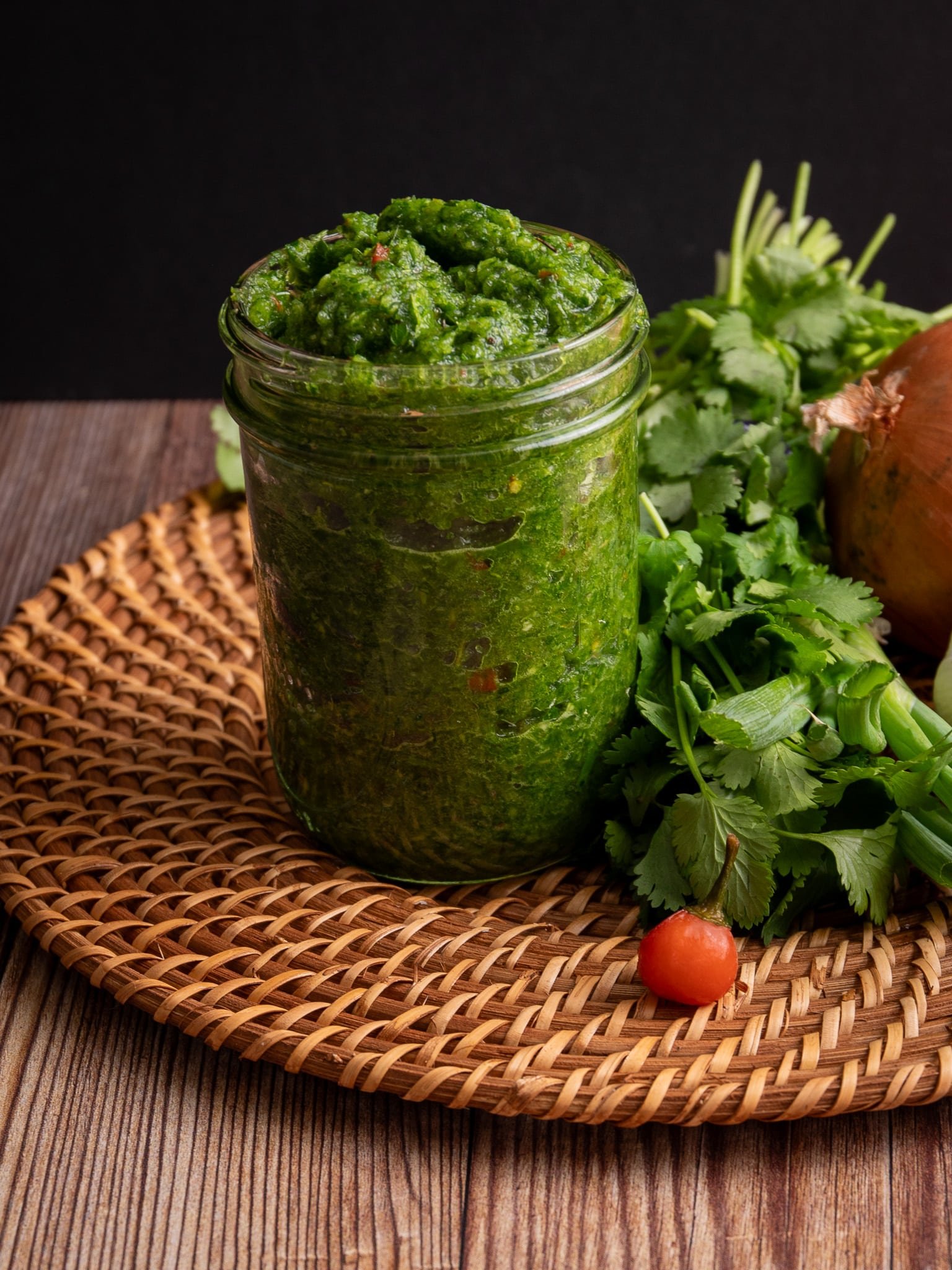
I’ve kept that tradition alive in my own kitchen, with a small adjustment. I make this seasoning when I need it, then freeze the extra in ice cube trays. This way, I always have some on hand when a dish needs a quick boost of flavor, without starting from scratch every time.
- What You NEED to Know About This Easy Caribbean Green Seasoning Recipe
- What is Green Seasoning?
- What is Green Seasoning made of?
- How to Make Easy Green Seasoning
- My Grandmother’s Grind Seasoning
- Storing & Freezing Green Seasoning
- Recipe Variations
- Recipe Tips
- How to Use Easy Caribbean Green Seasoning
- Frequently Asked Questions
- Easy Caribbean Green Seasoning Recipe
What You NEED to Know About This Easy Caribbean Green Seasoning Recipe
- Easy: Putting this marinade together takes about 10 minutes and most of it is just prepping the herbs.
- Versatile: It works across a wide range of Caribbean recipes, from marinades and stews to rice dishes and curries.
- Customizable: This recipe is your baseline. You can add or remove any herbs you don’t like. You can keep it mild, make it spicy, or tweak it specifically for your dishes depending on how you plan to use it.
- Save It For Later: Green seasoning freezes well, so you can make a batch once. Then you’ll have small portions ready whenever you need to add flavor to a recipe.
What is Green Seasoning?
Green seasoning is an all purpose herb blend used as a base for cooking across the Caribbean, especially in Guyana and Trinidad. It is a fresh blend of herbs and aromatics used to build flavor. It is typically used as a marinade for meats and sometimes added to a base for sauces. In non-english speaking Islands it may have a different name, like sofrito in Puerto Rice and Epis in Haiti.
What is Green Seasoning made of?
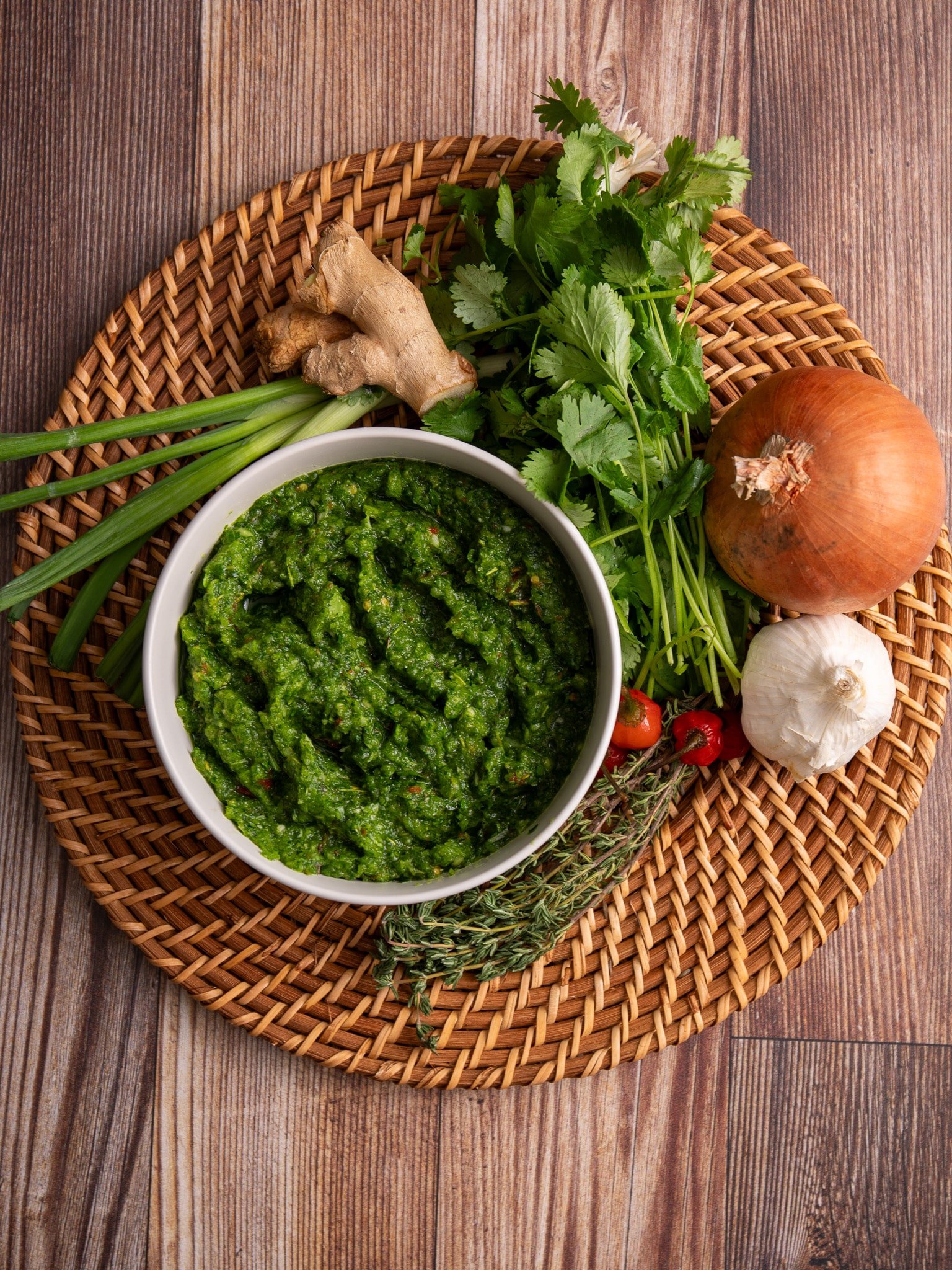
This seasoning is all about balance, and each ingredient plays a specific role in building that signature flavor. They work together to create a seasoning that’s bold but not overpowering, and flexible enough to use across so many dishes.
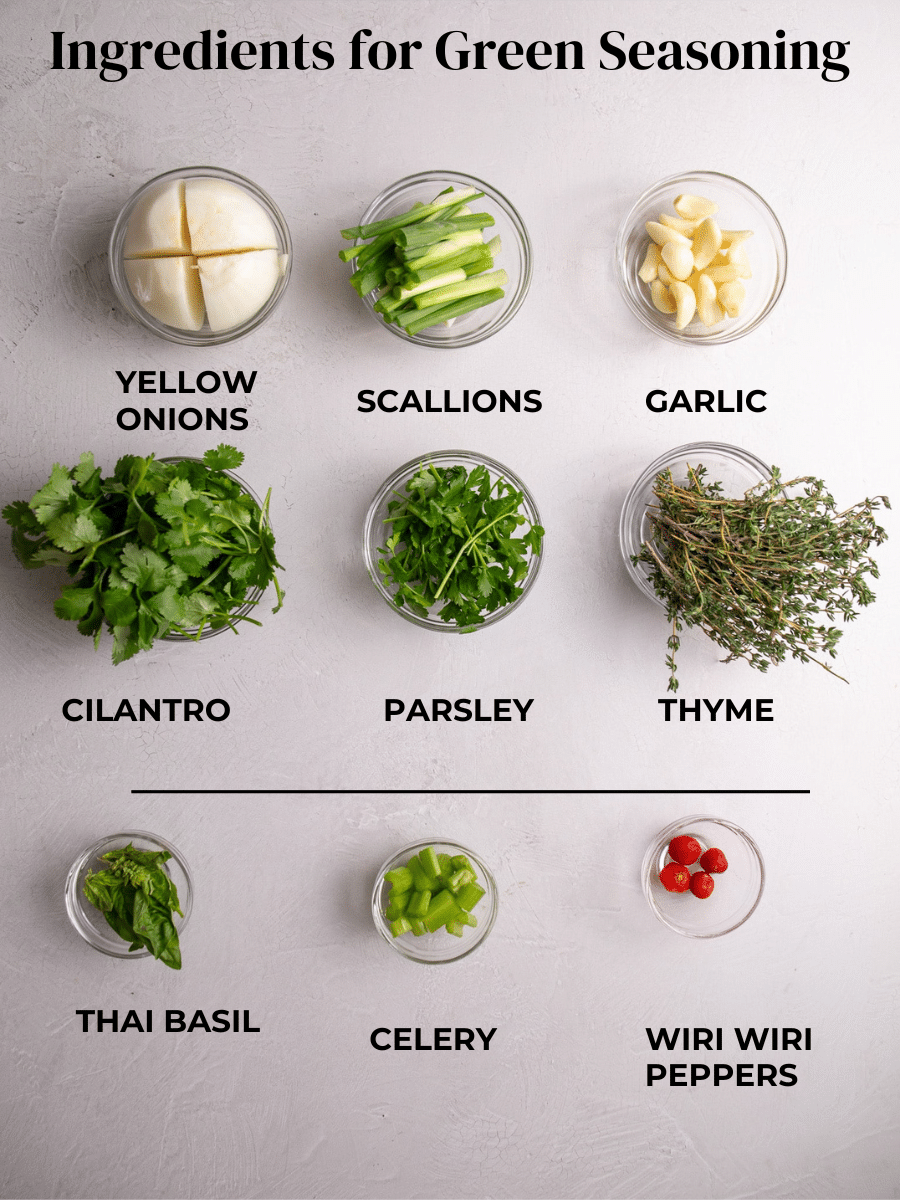
- Yellow onion: This gives the green seasoning its body and a subtle sweetness that rounds everything out once it hits heat. It helps anchor the herbs so the flavor feels full and not sharp.
- Scallions: I use scallions for their mild onion flavor and freshness. They add depth without the heaviness you’d get from using only onions.
- Garlic: Garlic brings that unmistakable savory backbone. It’s what makes green seasoning feel savory and grounding rather than just herb-forward.
- Cilantro (or Culantro): Culantro is a traditional Trinidadian ingredient in green seasoning. It is more pungent and is an acquired flavor profile. Cilantro works well and is milder and if you don’t like cilantro. Skip it.
- Italian parsley: Parsley adds a clean, herbaceous note that keeps the seasoning tasting fresh. It also helps balance out the stronger herbs so nothing takes over.
- Thyme leaves: Thyme is essential here. It adds an earthy depth that carries through marinades, stews, and rice dishes, especially once everything cooks down.
- Thai Basil (or Guyanese marrid-man poke)(optional): Adds a bit of sweetness to the green seasoning and is great for marinating meats for rice dishes or curries.
- Celery (Optional): I don’t specifically add celery to my green seasoning but if I have it in my fridge, I’ll add a stalk or two.
- Wiri Wiri Peppers (or other chilis) (optional): Add some chili to bring some heat to your Caribbean green seasoning.
See recipe card for quantities.
How to Make Easy Green Seasoning
Before I start, I wash and prep all of the herbs and vegetables so everything blends smoothly. I roughly chop the onion, trim the scallions, peel the garlic, and remove the thyme leaves from the harder stems. This small bit of prep makes a big difference and helps the food processor work quickly without over-processing.

Once everything is ready, I add the onion, scallions, garlic, culantro or cilantro, parsley, and thyme to the food processor and blend until smooth, which usually takes about a minute. The goal is a thick, spoonable paste with no large pieces left behind.


My Grandmother’s Grind Seasoning
My grandmother made her grind up (green) seasoning on a large mortar of pestle called a sil and lorha. The mortar (sil) was a square stone with another rounded stone used as the pestle. Over time the sil had a grove in the center for where my grandmother did most of her grinding.
This method of grinding green seasoning produces a deeper flavored marinade. I think it is because the herbs are pressed to release their natural oils and come together in a smooth paste, while making it in a food processor chops the herbs into tiny pieces. When I am making a small batch of green seasoning this is the method I use!

Storing & Freezing Green Seasoning
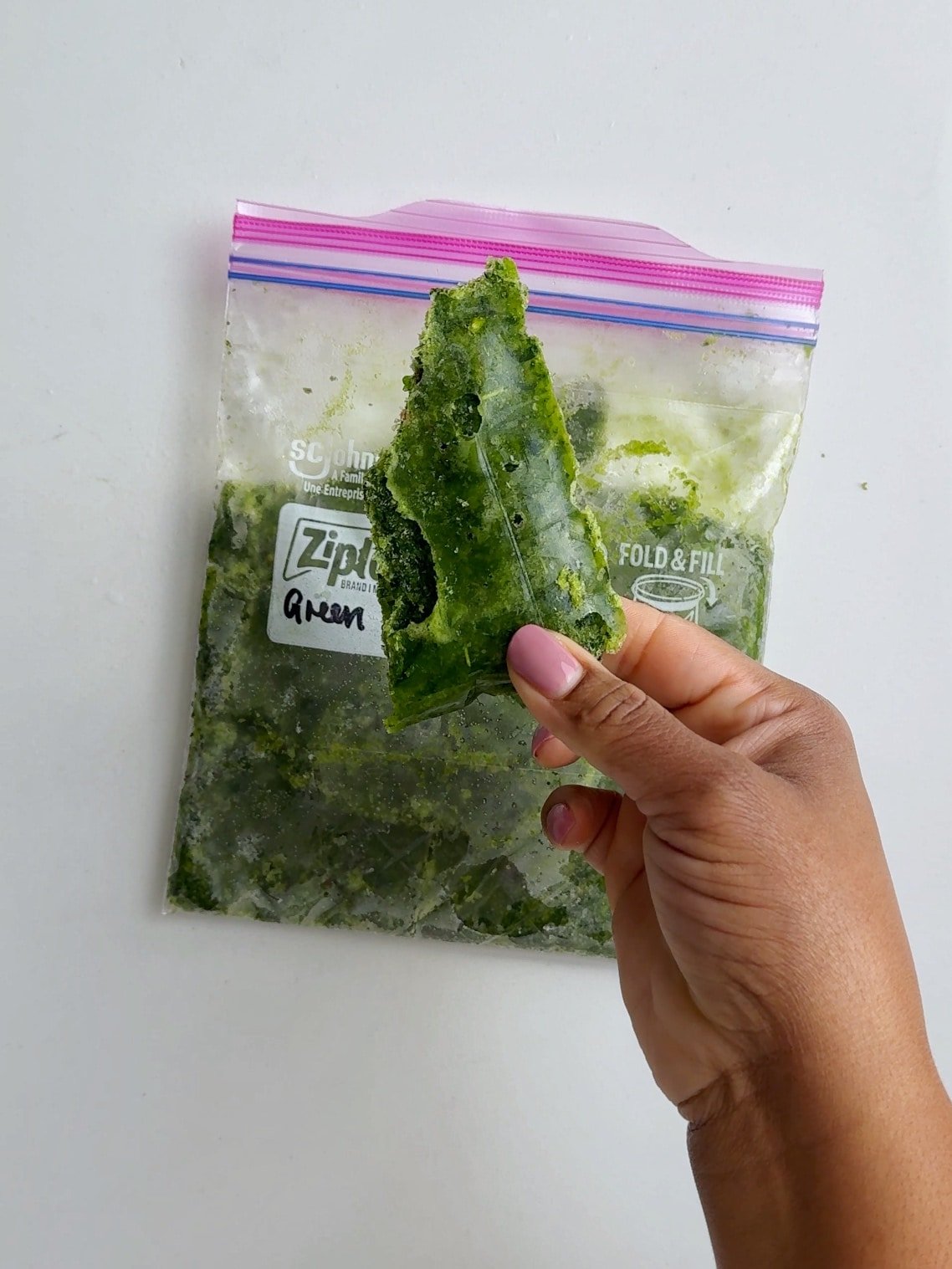
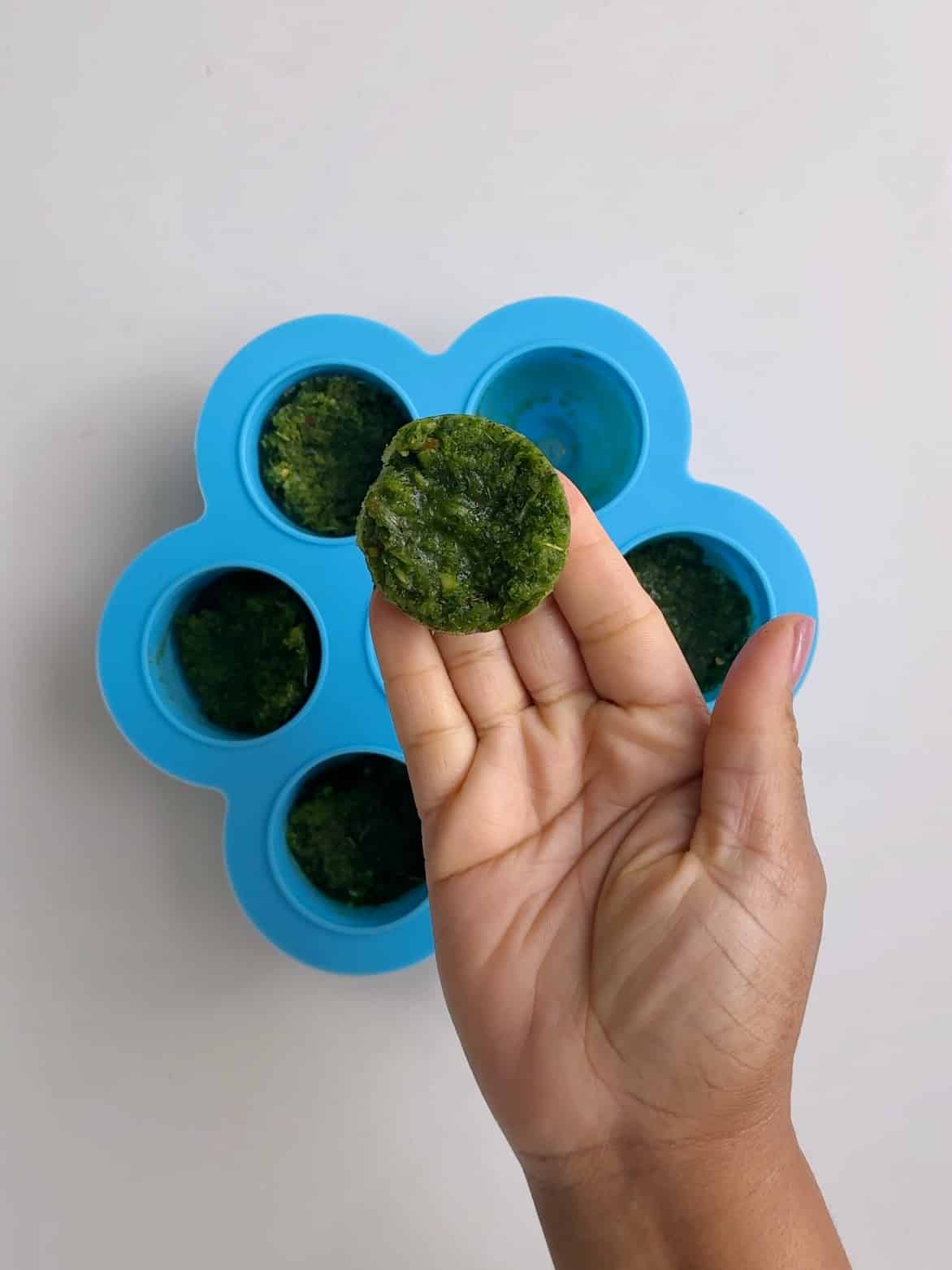
I transfer the seasoning to an airtight container or glass jar and store it in the refrigerator, where it keeps well for up to one week. If I’ve made more than I need, I spoon the extra into ice cube trays or small freezer-safe bags so it freezes in easy-to-use portions.


Once frozen, I move the cubes to a sealed freezer bag, where they’ll keep their flavor for up to three months and can be added straight to a dish as needed.
Recipe Variations
- Spicy Green Seasoning: For a version with heat, I add fresh ginger and chili peppers to the base green seasoning before blending. This variation works especially well for meats and heartier stews where you want a little extra bite.
- Green Seasoning for Rice Dishes: When I’m cooking rice, I blend the base green seasoning with marrid man poke (or thai basil) and tomato. It creates a lighter, more aromatic version that adds flavor to rice dishes without overpowering them.
Recipe Tips
- Prep everything before blending. Washing the herbs, peeling the garlic, and roughly chopping the vegetables helps the food processor work quickly and evenly, giving you a smooth paste instead of uneven bits.
- Do not over-process. Blend just until the mixture is smooth and cohesive. Overblending can heat the herbs and dull the fresh, herbaceous flavor you want in green seasoning.
- Freeze in small portions. Spoon the seasoning into ice cube trays so you can grab only what you need. This keeps the flavor fresh and makes it easy to add to meats, stews, rice, and curries without thawing a whole batch.
How to Use Easy Caribbean Green Seasoning
- Roasted Chicken: I use green seasoning to marinate the chicken ahead of roasting so the flavor penetrates all the way through, not just the skin. It adds depth and keeps the meat tasting seasoned from the first bite to the last.
- Oxtail: The seasoning is essential in this recipe because it builds the base flavor before the long simmer. It layers into the sauce as the oxtail cooks down, giving the dish that rich, slow-developed taste it’s known for.
- Yellow Rice: A spoonful of green seasoning adds subtle herbaceous flavor without overpowering the rice. It gives the dish more character and keeps it from tasting flat or one-dimensional.
- Curries (duck curry, lamb curry, chicken curry): I start my curries with green seasoning to lay the foundation before adding spices. It helps balance the richness of the meat and allows the curry flavors to develop more fully as everything cooks together.

Frequently Asked Questions
Green seasoning and sofrito are both herb-based blends used as a base for cooking, but they are not the same. Sofrito often includes peppers and tomatoes and comes from Latin American and Spanish cooking. Green seasoning, on the other hand, is more herb-forward and rooted in Caribbean kitchens.
Green seasoning originates in the Caribbean. It has deep roots in Trinidad and Guyana, where it is used as a foundational base for everyday cooking. While it is used across the region, it is most closely associated with Trinidadian and Guyanese traditions.
A food processor makes green seasoning quick to prepare and gives it a smooth texture. A high-powered blender can also work. The best green seasonings I’ve ever made were done with a mortar and pestle.

Easy Caribbean Green Seasoning Recipe
Equipment
- Food Processor
- cutting board
- sharp knife
- Airtight container or Mason jar
- Ice cube tray optional, for freezing
Ingredients
- 1 large yellow onion (roughly chopped)
- 4 scallions
- 1 head garlic (peeled)
- 1 bunch cilantro (culantro)
- ½ cup Italian parsley
- 1 bunch thyme leaves removed from the stems
Optional Ingredients
- 10 Basil Leaves
- 2 Celery Stalks
- 3-5 Wiri-wiri Peppers (or other chilis)
- 2 inches ginger
Instructions
- Combine the yellow onion, scallions, garlic, cilantro, parsley, thyme leaves and optional ingredients (if using) in a food processor. Pulse until smooth, about 10 pulses.
- Transfer the green seasoning to an airtight container, such as a Mason jar, and store in the refrigerator for up to 1 week. You may also freeze the seasoning in an ice cube tray for ready-to-use, flavor-packed cubes.
Notes
Nutrition
The information listed in the recipe card is an estimate provided by an online nutrition tool. The tool evaluates ingredient names and amounts then makes calculations based on the number of servings listed for the recipe. It is provided as a general guideline and not as a precise calculation. For precise nutrition information please feel free to add the ingredients to your preferred nutrition calculator or consult a doctor or licensed nutritionist.
 Guyanese Cheese Straws
 Creamy Farine (Cassava) Grits
 Spaghetti Squash Mac and Cheese (Paleo, Whole30, Keto)
 Gluten Free and Grain Free Guyanese Roti (Paleo)
Leave a Rating and a Comment