
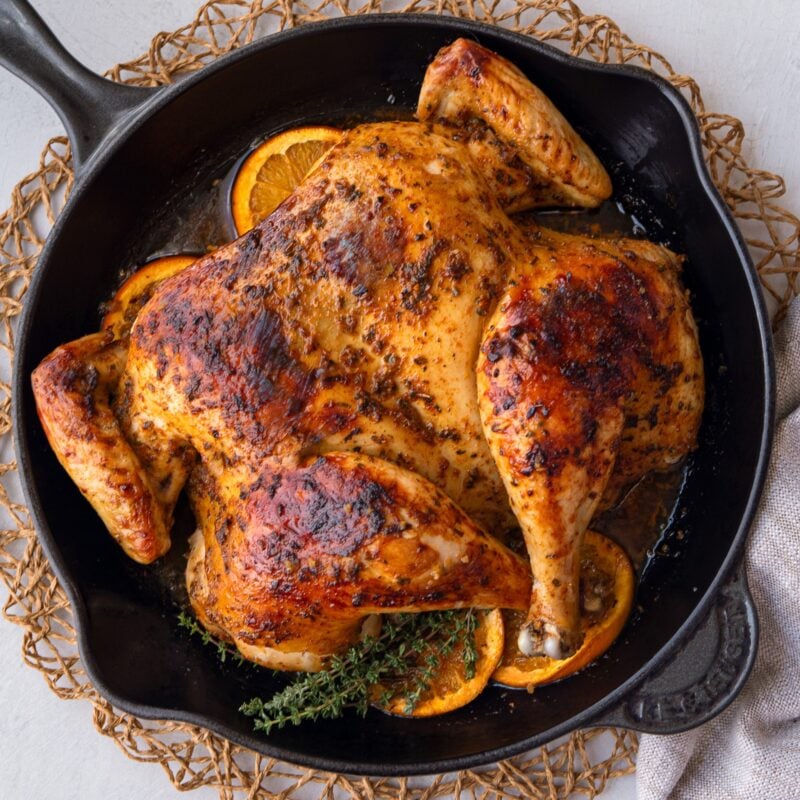
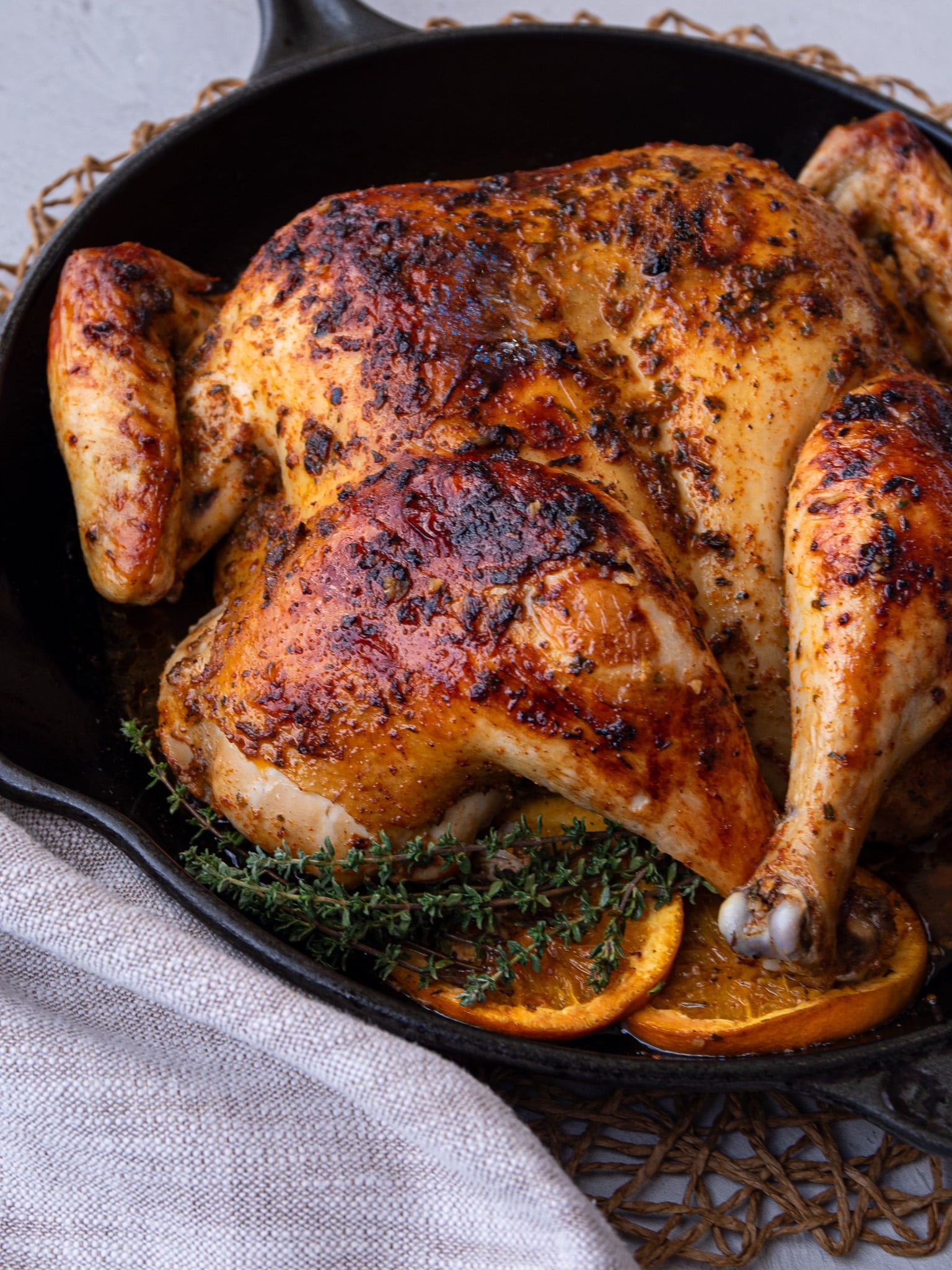
Caribbean roast chicken is what I make for Sunday dinner, and in a lot of Guyanese homes it’s on the holiday table instead of a turkey. Some families call it Guyanese baked chicken or Caribbean baked chicken. The flavor comes from green seasoning, the herb-packed blend of thyme, scallion, garlic and wiri wiri pepper that we use on almost everything.
Recipe update (October 2026): I’ve refreshed this recipe with new photos, a simpler marinade made with pantry spices, tested roasting times and tips for roasting two chickens at once.
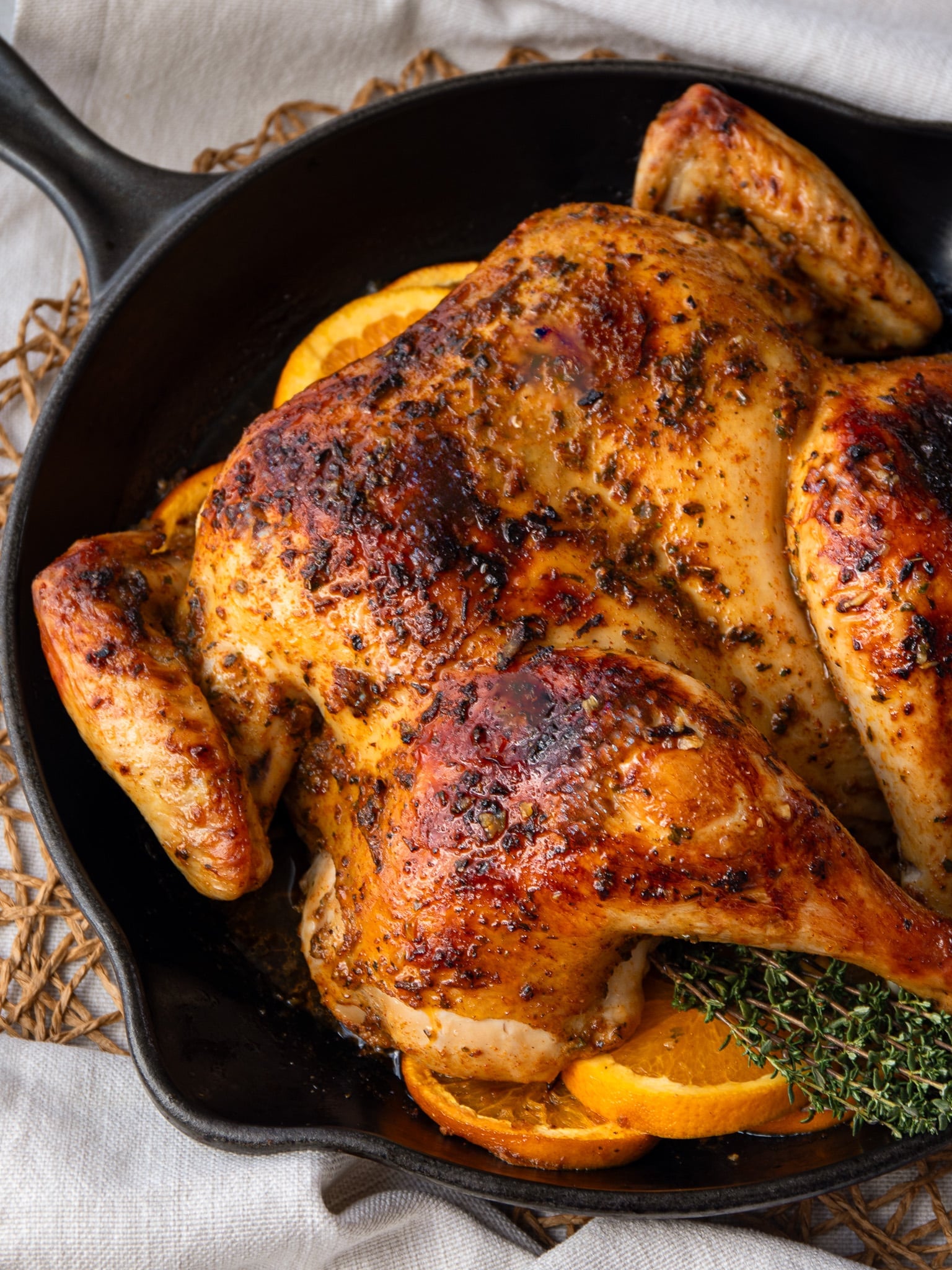
Why You’ll Love This Caribbean Roast Chicken
- Faster, more even roasting: spatchcocking cuts the cooking time to about an hour and cooks the chicken evenly, so the breast stays juicy while the thighs finish.
- Big flavor from simple ingredients: fresh green seasoning, orange juice and pantry spices you probably already have. No broth or wine needed; the chicken makes its own pan juices.
- Made for gatherings: it’s our Sunday dinner, and in many Guyanese homes it’s on the Thanksgiving or Christmas table instead of turkey. Serve it with my 5 cheese mac and cheese.
- Great leftovers: save the breast for strip chicken fried rice later in the week.
What Makes Caribbean Roast Chicken Different?
It’s the process as much as the flavor. A Caribbean roast chicken starts the way many of our cooks were taught: clean it with lemon juice or vinegar. Then it’s rubbed inside, outside and under the skin with a marinade of green seasoning, fresh orange juice and pantry spices. Last comes the part you can’t rush: letting it marinate overnight, so the flavor goes all the way to the bone.
- Why You’ll Love This Caribbean Roast Chicken
- What Makes Caribbean Roast Chicken Different?
- Green Seasoning for Chicken
- Prepping the Chicken Before Roasting (Optional)
- Should You Wash the Chicken?
- How to Spatchcock a Chicken
- Ingredients for Caribbean Roast Chicken
- How to Make Caribbean Roast Chicken
- Roasting a Whole Chicken
- Storage
- Tips for the Best Caribbean Roast Chicken
- Frequently Asked Questions
- Caribbean Roast Chicken
Green Seasoning for Chicken
Caribbean green seasoning is a blended herb marinade of scallion, thyme, garlic, cilantro and hot pepper, named for its bold green color. It’s similar to sofrito, epis and recaito from other islands. Many Caribbean cooks keep a jar in the fridge for chicken, fish and stews.

Prepping the Chicken Before Roasting (Optional)
This is how I prep a whole chicken before seasoning it:
- Remove stray feathers. Check the back, wings and drumsticks especially; they’re notorious for small feathers.
- Scrape the drumstick tips. Use a paring knife to remove the hard yellow skin left over from the claw.
- Trim. Cut off the tail (the butt) and any extra fat or loose skin.
- Clean it. Rub the chicken inside and out with about ¼ cup lemon juice or white vinegar, and let it sit for 5 minutes in a bowl in the sink. Then rinse it thoroughly and pat it dry.
Some people soak the chicken in lemon or vinegar water for 10–15 minutes. For roasting, I find that can make the chicken a bit waterlogged and affect how it browns.
Should You Wash the Chicken?
I know washing chicken is a hot topic. The CDC recommends against it because splashing water can spread salmonella around your kitchen. But in most Caribbean kitchens, we’ve been carefully washing chicken and meat for generations, and it’s how I was taught. If you do wash yours, do it in a bowl set in the sink, not under running water. Then clean and disinfect the sink, counters and anything the raw chicken touched. If you’d rather skip it, that’s fine too. Do what works for you.
How to Spatchcock a Chicken
Spatchcocking (butterflying) a chicken means cutting through the backbone so it lies flat. It roasts faster and more evenly, and every piece gets crispy skin.
- Set the chicken breast-side down on a cutting board.
- With kitchen shears, cut along one side of the backbone. Cut along the other side too if you want to remove it, or leave it on if someone in your house loves the back like my husband does.
- Flip the chicken and press firmly on the breastbone until it cracks and the chicken lies flat.
- Tuck the wing tips behind the breast.
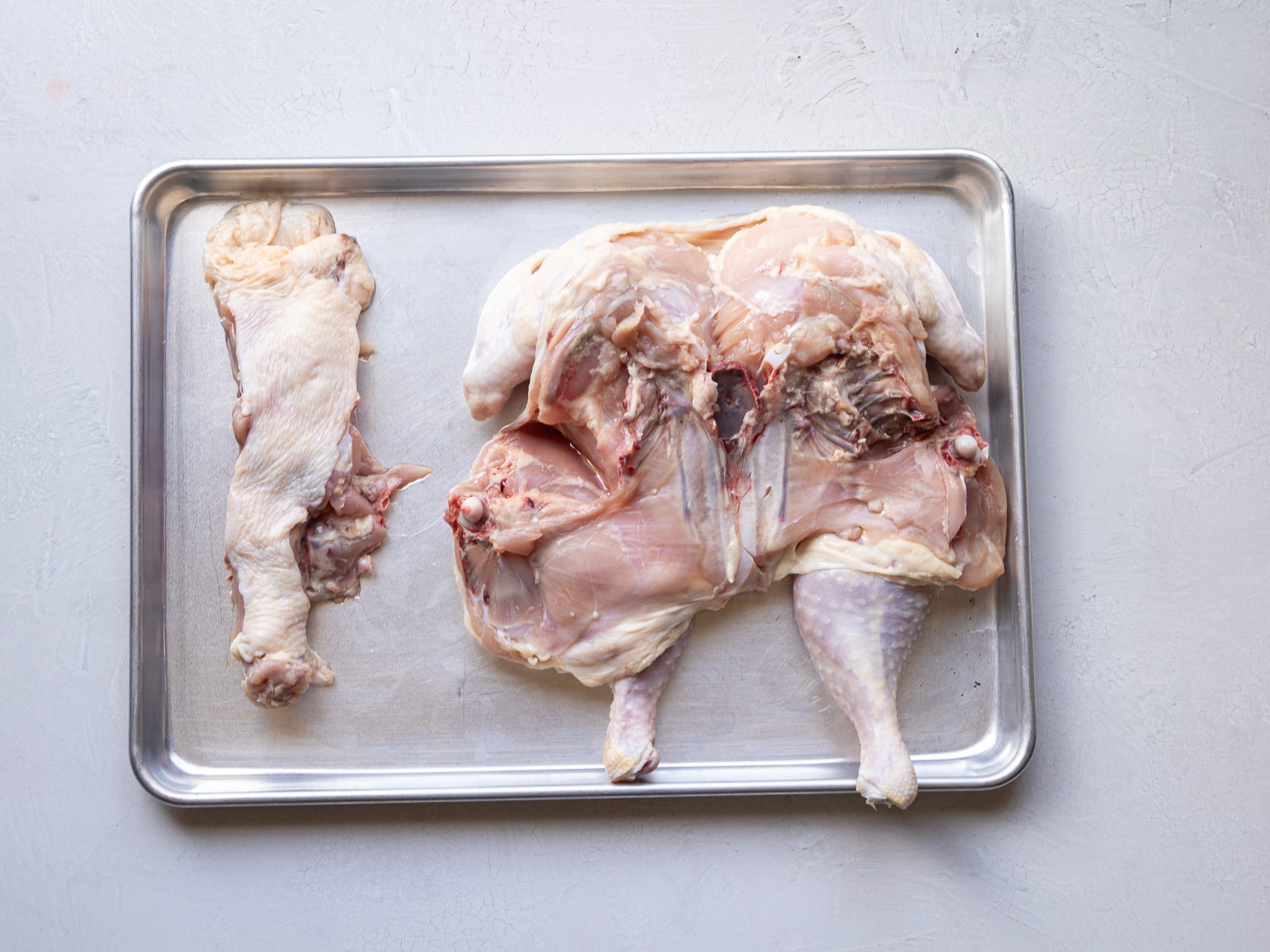
If I’m going to carve it up anyway, sometimes I cut the chicken completely in half down the breastbone. The halves roast in about the same time, so start checking the thigh temperature a little early.
When I first wrote this recipe, I cut down the breastbone instead of the back. It still cooks better, but it makes for an ugly plated whole chicken, so now I go down the back like most cooks.
Ingredients for Caribbean Roast Chicken
This Caribbean roast chicken comes together with a whole chicken, green seasoning, fresh oranges and pantry spices you probably already have.
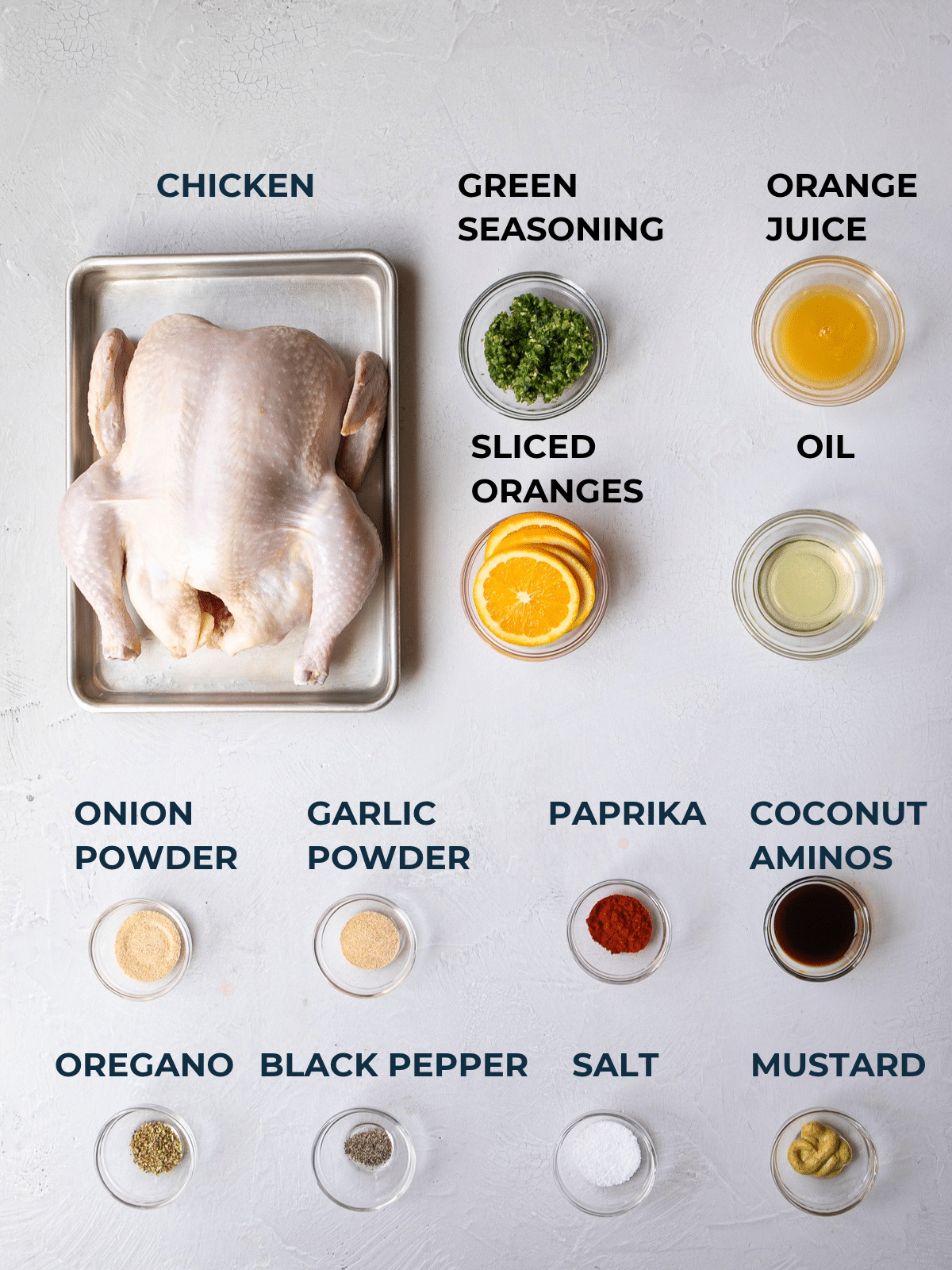
- Whole chicken: a 5–6 lb chicken feeds about 6.
- Green seasoning: the heart of the marinade. I always make my own, because store-bought tastes artificial to me. If that’s what you have, though, it works in a pinch. Here’s my homemade green seasoning, which takes about 10 minutes. Make a batch and use it while it’s fresh.
- Navel oranges: one juiced for the marinade, one sliced into rounds for the chicken to sit on. The juice adds a little sweetness and helps the skin brown.
- Coconut aminos: adds savory depth and color. Soy sauce works too; just cut the salt.
- Spicy brown mustard: a small amount for tang that helps the marinade cling.
- Pantry spices: onion powder, garlic powder, paprika, dried oregano, black pepper and coarse kosher salt. Or use 2 tbsp all-purpose seasoning plus 1 tsp salt.
- Oil: helps the marinade spread and the skin crisp.
See recipe card for quantities.
How to Make Caribbean Roast Chicken
Caribbean roast chicken takes about 15 minutes of hands-on prep. Most of the work is done by the marinade overnight and the oven the next day.
Make the Green Seasoning
Blend a batch of my homemade green seasoning in a food processor until it forms a smooth paste. You’ll need 3 tablespoons per chicken.

Prep the Chicken
Remove the giblets and neck. Sometimes I save them for broth, but most times I roast them in the pan alongside the chicken. Clean the chicken if you like (see above), pat it dry and spatchcock it.


Season the Chicken
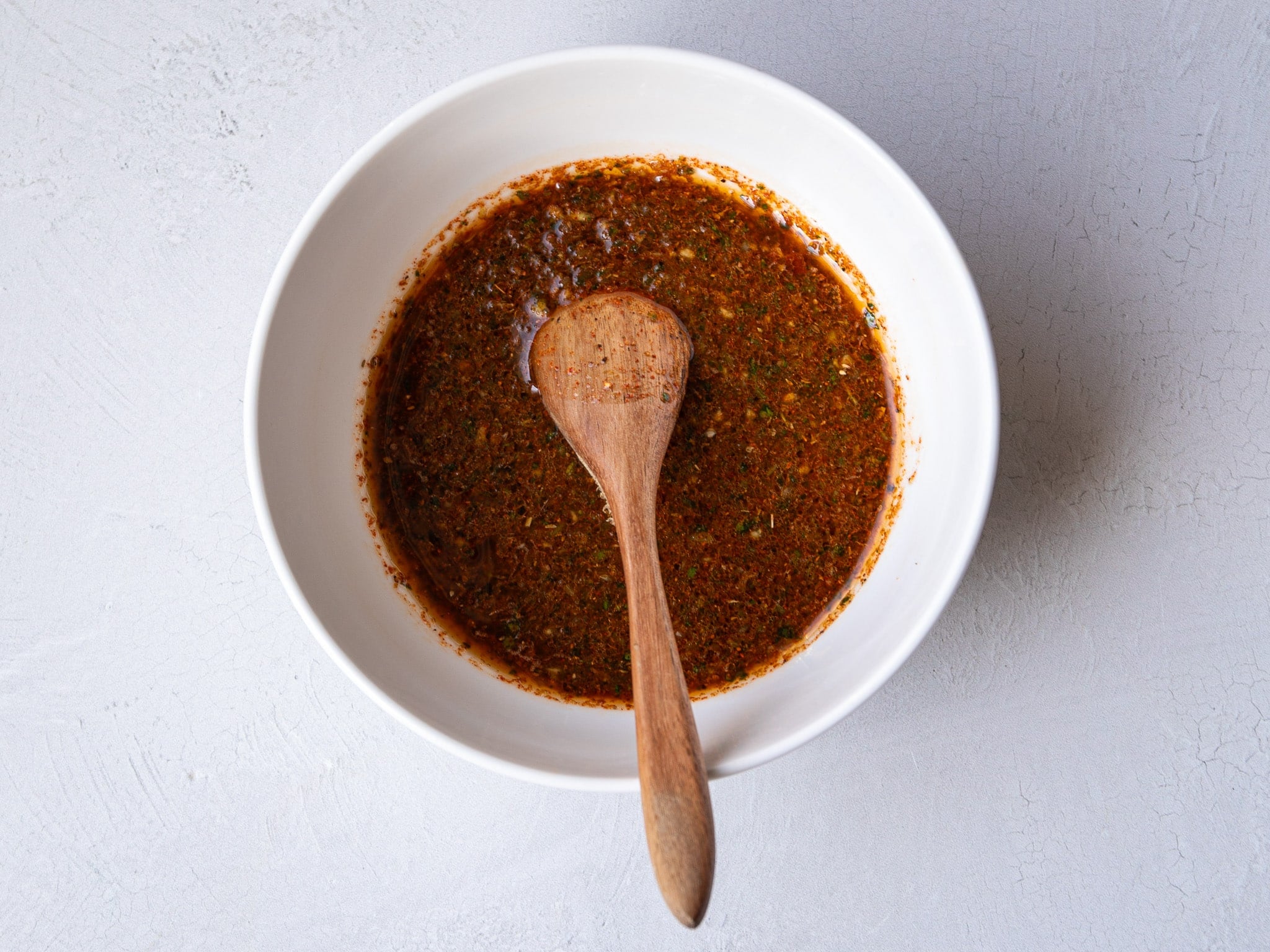
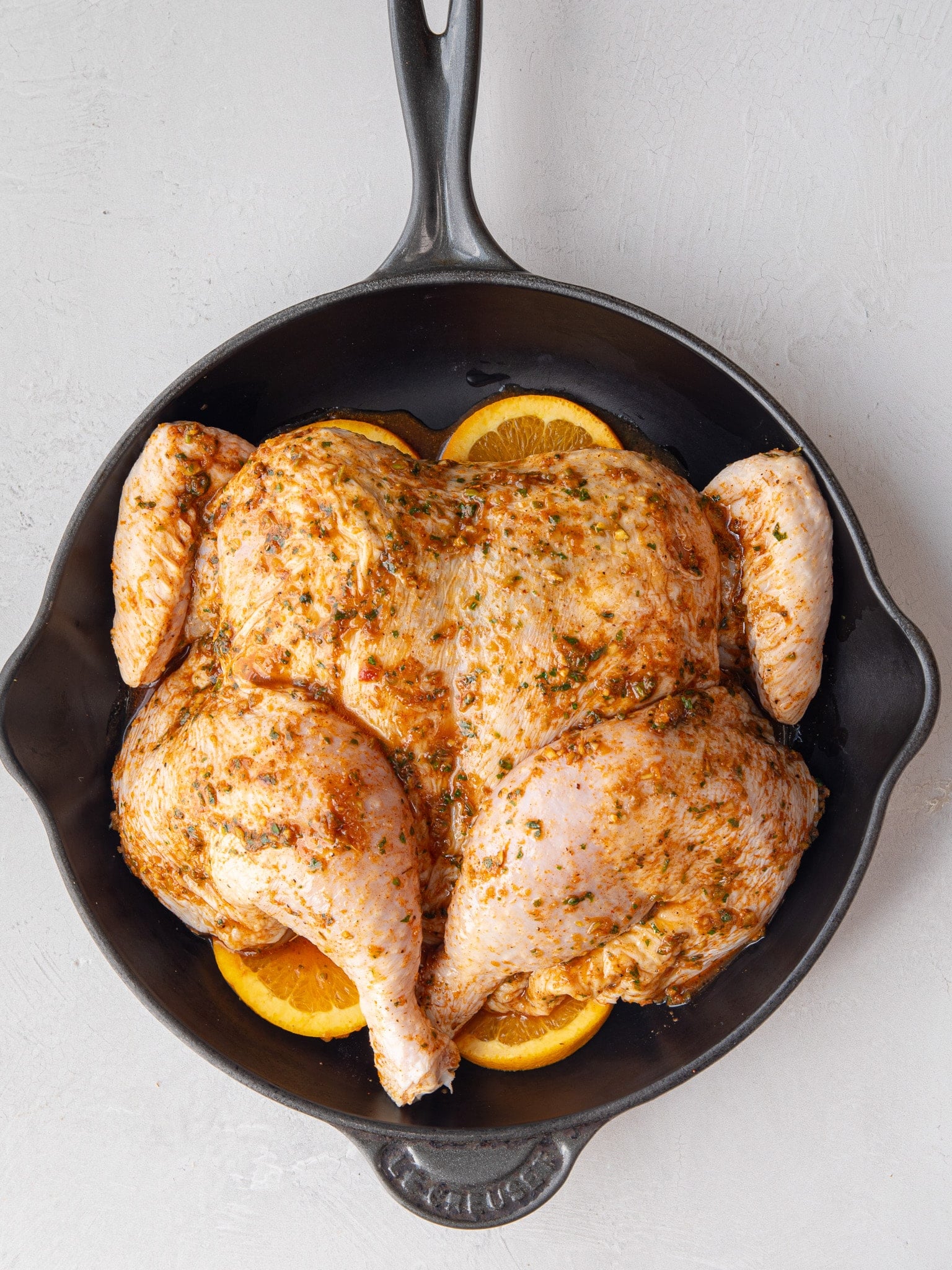
In a bowl, mix the orange juice, mustard, green seasoning, oil, coconut aminos and spices.
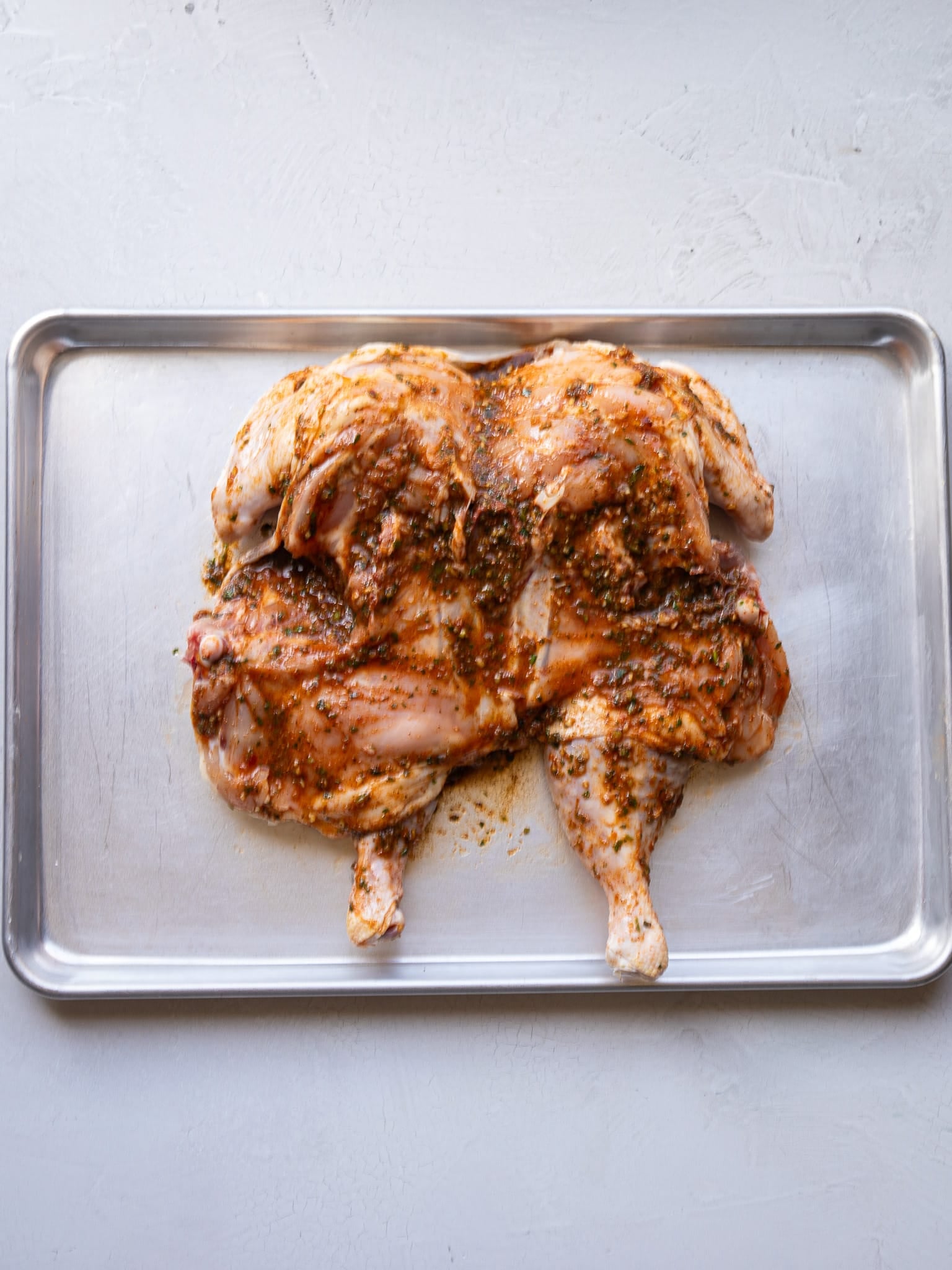
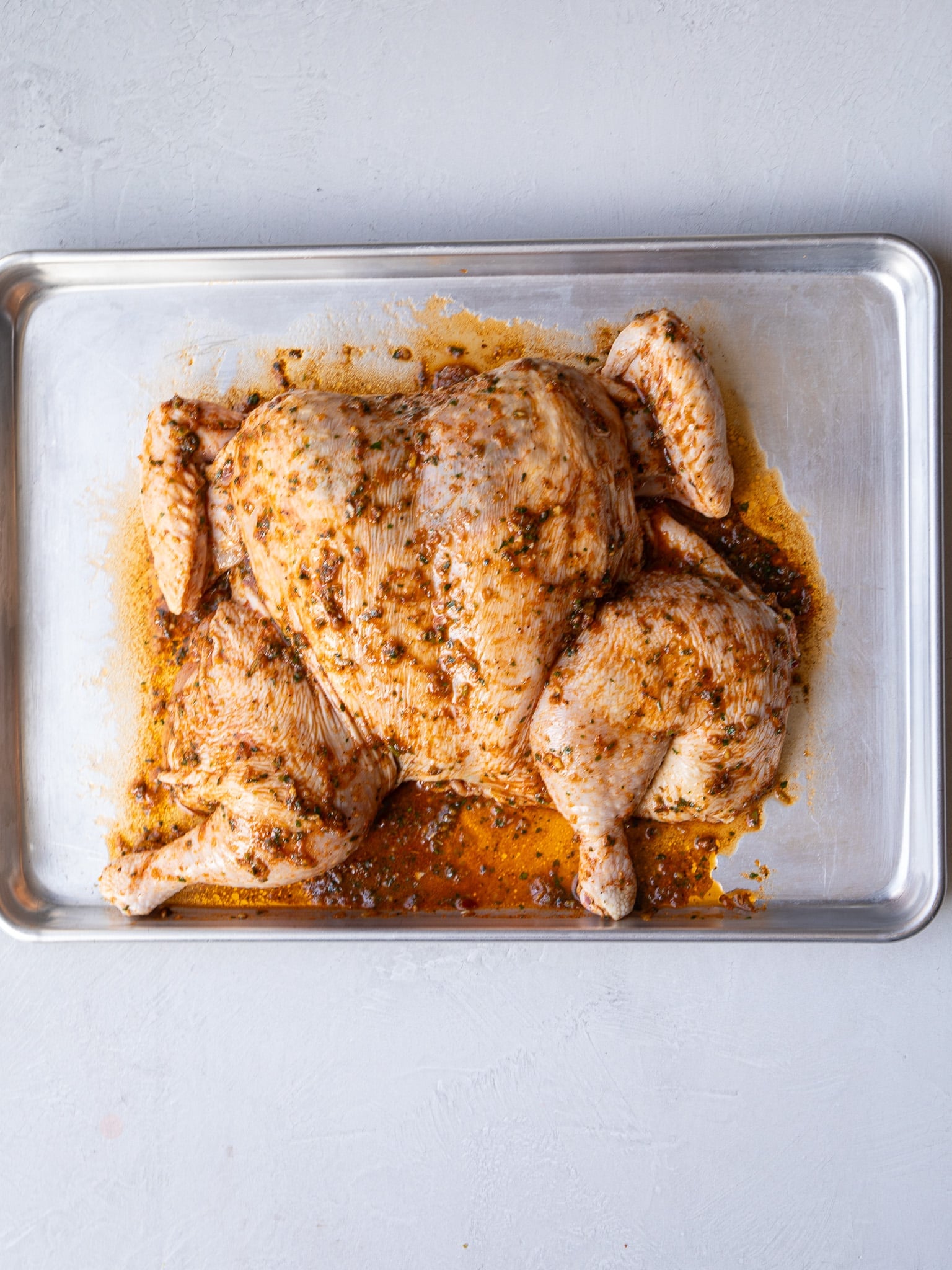
Rub the marinade all over the chicken, inside and out, getting into all the nooks and crannies and under the skin wherever there’s a pocket. Cover and refrigerate overnight.
Roast the Chicken
Take the chicken out of the fridge 1 hour before roasting and preheat the oven to 450°F. Lay the orange rounds in a 12-inch cast iron skillet or roasting pan, and set the chicken on top, skin-side up. Roast uncovered on the middle rack for 20 minutes.
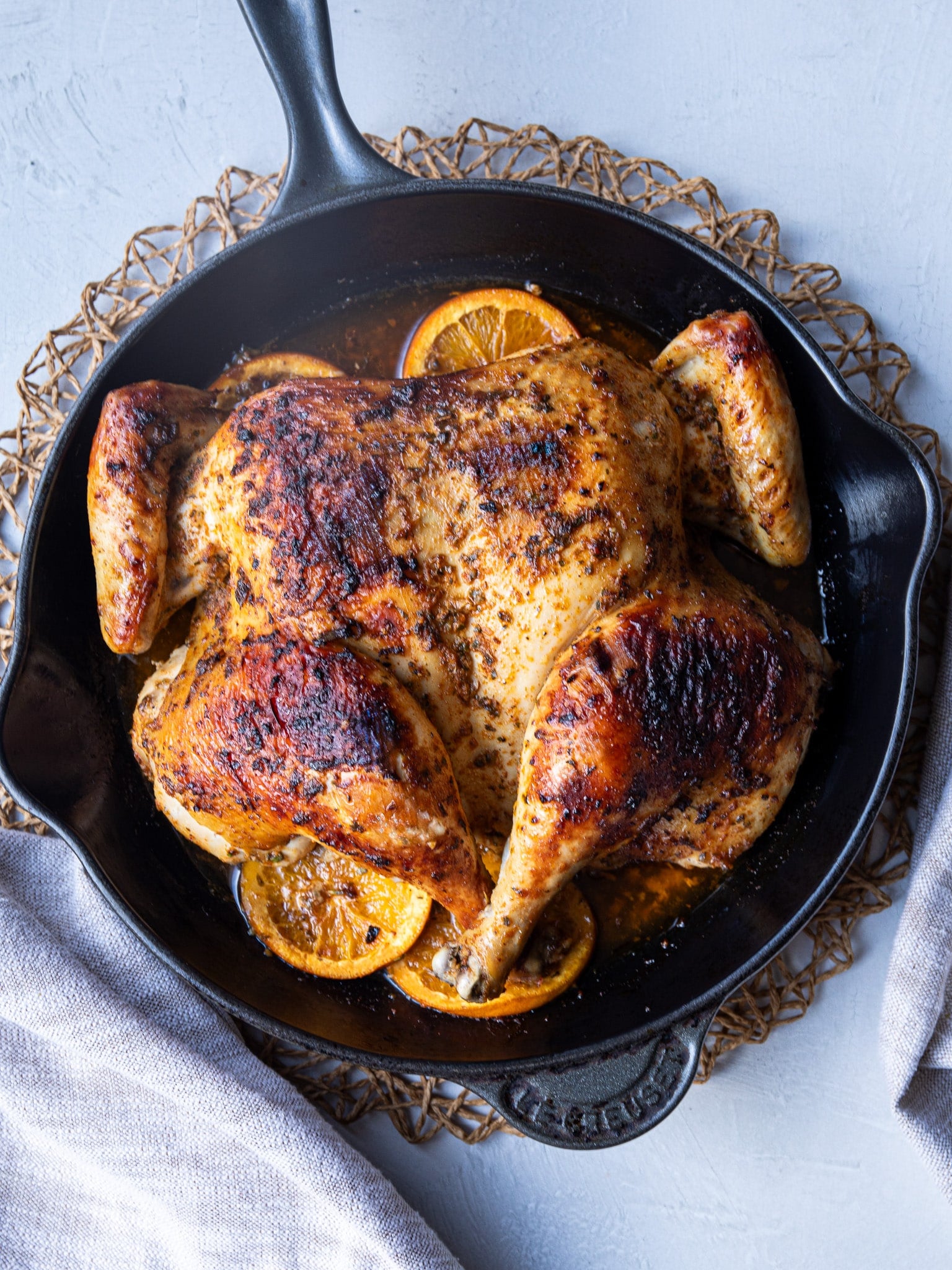
Then lower the oven to 375°F and roast about 40 minutes more, until the skin pulls back from the drumsticks and the juices run clear, or the thigh reads 165°F.
Rest and Serve
Let the chicken rest for 15 minutes, then spoon the pan juices over it before carving.
Roasting a Whole Chicken
Prefer to roast it whole, the way most Caribbean homes do? Use the same seasoning and oven temperatures. Roast at 450°F for 20 minutes, then lower to 375°F for about 55 minutes more. It is done when the skin pulls back from the drumsticks and the juices run clear, or 165°F in the thickest part of the thigh. That’s about 1¼ hours in total. A whole chicken browns more on top, so tent just the breast loosely with foil once it’s deep golden. Don’t cover the whole pan, or the juices pool and the back steams instead of roasting.
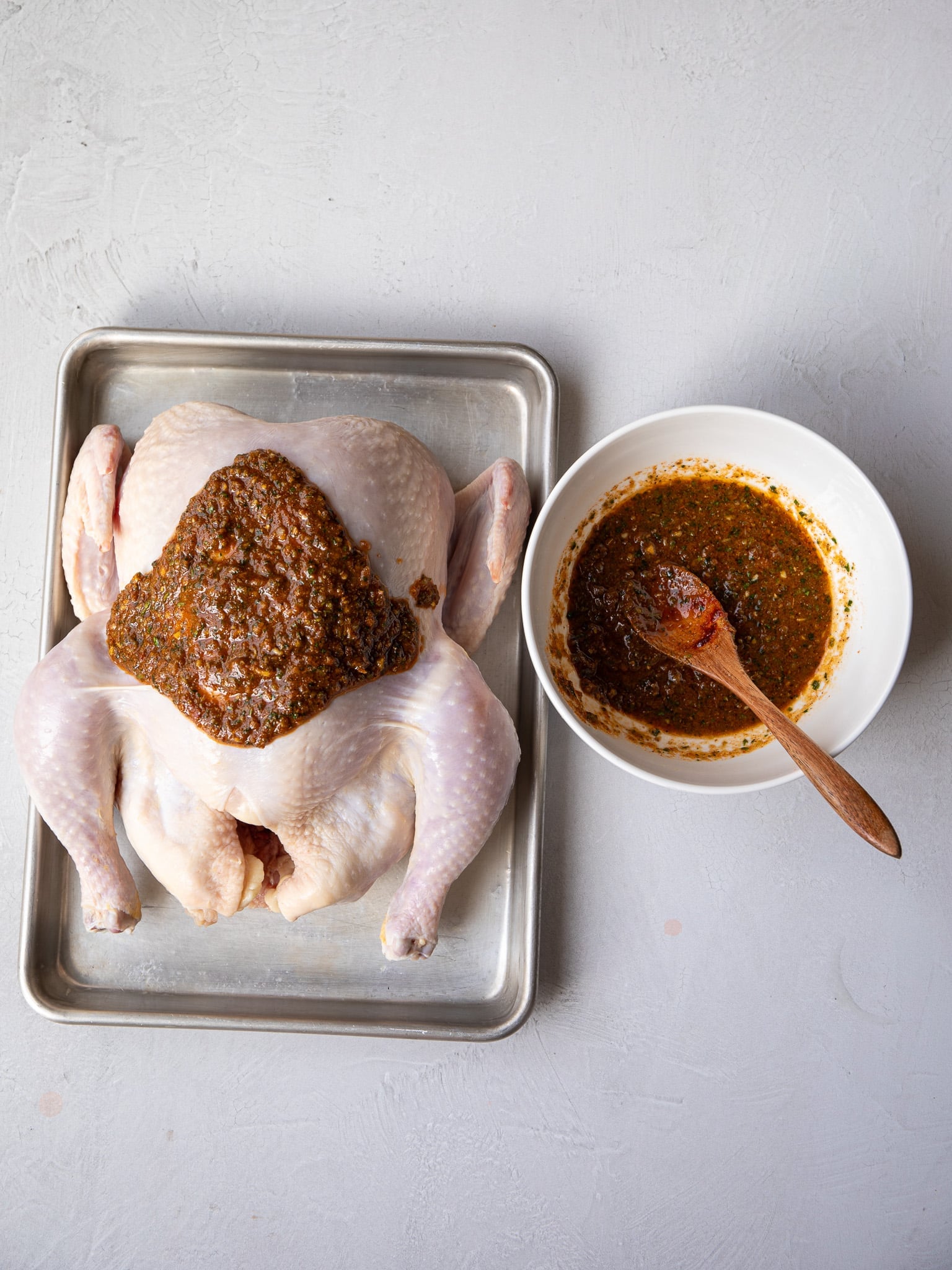
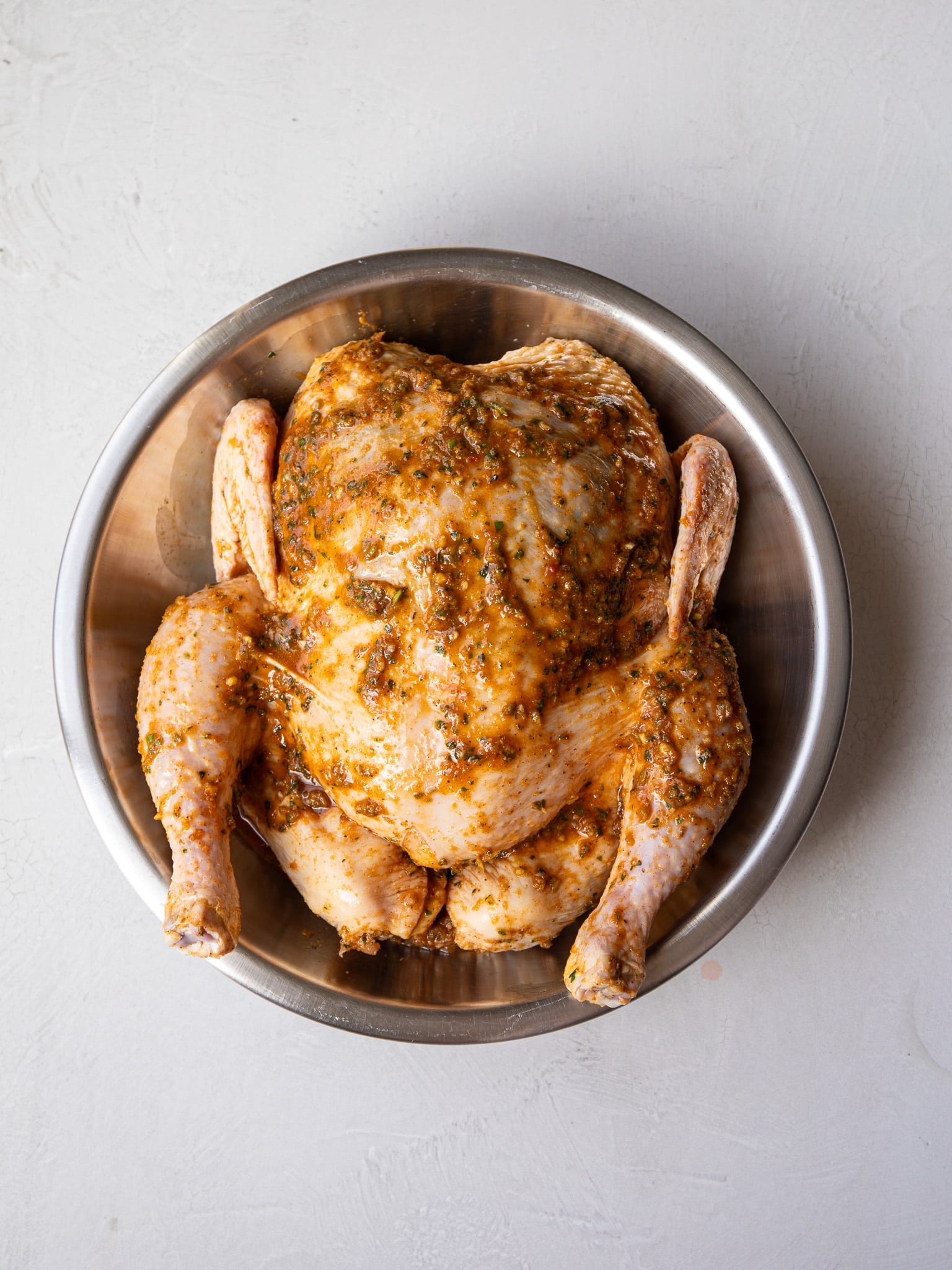
I prefer spatchcocking because it cooks about 15 minutes faster and more evenly, and every piece gets crispy skin.
Roasting Two Chickens
A whole chicken serves 6 to 8, but in my house one chicken doesn’t stretch for five. Axel eats an entire leg quarter, Andrew wants a thigh, Amelia takes a leg, and Sean claims the back. I take the wings. No one fights over the breast, so I save it for strip chicken fried rice later in the week. That’s why I always roast two.
I spatchcock both chickens and roast them side by side on a rimmed full sheet pan. The rim catches all the pan juices. Season them at the same time, give them a little space on the pan, and roast on the middle rack using the same temperatures. They’re done when the skin pulls back from the drumsticks and the juices run clear, or 165°F in the thickest part of the thigh.
Storage
Once it has cooled completely, store leftover Caribbean roast chicken in an airtight container in the fridge for up to 4 days, or freeze it for up to 3 months. Store the pan drippings in a separate container to make gravy later.
Leftovers make great meal prep. Add the chicken to salads, bowls, soups, quesadillas or my strip chicken fried rice.
Tips for the Best Caribbean Roast Chicken
- Pat it dry. After cleaning, pat the chicken dry with paper towels. Dry skin roasts up crispy.
- Marinate overnight. Two hours works, but overnight gives the best flavor.
- Take the chill off. Let the chicken sit out for 1 hour before roasting so it cooks evenly.
- No roasting pan? A 12-inch cast iron skillet or a rimmed baking sheet works. The rim keeps the pan juices in.
- Don’t cover the whole chicken. Foil traps steam, and the back steams instead of roasting. Tent only the breast, loosely, if it browns too fast.
- How to tell it’s done: the skin pulls back from the ends of the drumsticks, the juices run clear (not pink) when you pierce the thickest part of the thigh, and the leg wiggles loosely in its joint. A meat thermometer is the surest check: 165°F in the thickest part of the thigh. A little pink near the bone is normal at that temperature. If your family doesn’t like any pink, roast to 175°F; dark meat stays juicy.
Frequently Asked Questions
Yes. In the Caribbean, “roast chicken” and “baked chicken” mean the same thing: a seasoned chicken cooked in the oven. Many Guyanese families call this Guyanese baked chicken.
165°F in the thickest part of the thigh. No thermometer? It’s done when the skin pulls back from the ends of the drumsticks, the juices run clear when you pierce the thigh, and the leg wiggles loosely in its joint.
It’s normal for the meat near the bone to stay a little pink, even when the chicken is fully cooked. Trust the thermometer or the clear juices, not the color. If your family doesn’t like any pink, roast until the thigh reads 175°F.
Overnight gives the best flavor, and at least 2 hours works if you’re short on time. Don’t go past 2 days; the orange juice starts to soften the meat.
A blended paste of fresh herbs, scallion, garlic and hot pepper that Caribbean cooks use on almost everything. Here’s my green seasoning recipe.
No. Pot roast chicken is a different dish: chicken leg quarters cooked on the stovetop in a Dutch oven.
The method is similar across the Caribbean, but the color and sweetness change. In Guyana, some cooks add cassareep and brown sugar. Elsewhere, cooks use browning, or soy sauce and sugar.

Caribbean Roast Chicken
Equipment
- Food Processor
- Cast Iron Skillet 12 inch round
Ingredients
- 1 whole chicken 5–6 lbs
- 2 navel oranges (1 juiced, about ¼ cup; 1 sliced into rounds)
- 3 tbsp green seasoning (homemade is best, store-bought works in a pinch)
- 3 tbsp oil
- 2 tbsp coconut aminos (or soy sauce)
- 1 tsp spicy brown mustard
- 1 tbsp onion powder
- 1 tsp garlic powder
- 1 tsp paprika
- 1 tsp dried oregano
- 2 tsp coarse kosher salt
- ¼ tsp black pepper
Instructions
- Optional: clean the chicken (see notes), then pat it dry. To spatchcock it, set it breast-side down, cut along the backbone with kitchen shears, then flip it and press firmly on the breastbone to flatten it. Or leave it whole (see notes).
- In a bowl, mix the orange juice, mustard, green seasoning, oil, coconut aminos, onion powder, garlic powder, paprika, oregano, salt and pepper.
- Rub the marinade all over the chicken, inside and out, and under the skin where you can.
- Cover and marinate in the fridge overnight for the best flavor (at least 2 hours, up to 2 days).
- Take the chicken out of the fridge 1 hour before roasting. Preheat the oven to 450°F.
- Lay the orange rounds in a 12-inch cast iron skillet or roasting pan and set the chicken on top, skin-side up.
- Roast uncovered for 20 minutes. Then lower the oven to 375°F and roast for about 40 minutes more, until the thickest part of the thigh reads 165°F. No thermometer? It’s done when the skin pulls back from the ends of the drumsticks, the juices run clear when you pierce the thigh, and the leg wiggles loosely. If the breast is deep golden before it’s done, tent it loosely with foil.
- Rest 15 minutes, then spoon the pan juices over and carve.
Notes
- Optional cleaning: washing the chicken with lemon juice or white vinegar is how many Caribbean cooks start. Rub about ¼ cup inside and out, let it sit 5 minutes in a bowl in the sink, then rinse well and pat dry. Clean the sink and counters well afterward. Skipping it is fine too; do what works for you. Either way, you don’t need to add any liquid to the pan.
- Marinating: overnight gives the best results. Keep it to 2 days at most.
- Roast it whole: use the same seasoning. Roast 20 minutes at 450°F, then about 55 minutes at 375°F (about 1¼ hours total). Tent only the breast, loosely, once it’s deep golden. Don’t cover the whole chicken, or the back steams instead of roasting.
- Roasting two: spatchcock both and roast them side by side on a rimmed full sheet pan.
- Shortcut: if you’re shopping for this recipe, one jar of all-purpose seasoning saves buying four spices. Swap the onion powder, garlic powder, paprika, oregano, salt and pepper for 2 tbsp all-purpose seasoning plus 1 tsp coarse kosher salt (the blend already has salt). In my side-by-side test, both chickens tasted the same.
- Salt: using soy sauce instead of coconut aminos? It’s saltier, so cut the salt to 1 tsp.
- Guyanese-style: add a little cassareep and 1 tablespoon brown sugar to the marinade for color and flavor. Other islands use browning, or soy sauce and sugar.
- Pink near the bone: this is normal, even when the chicken is fully cooked. If your family doesn’t like any pink, roast until the thigh reads 175°F.
- Crispy underside: once it’s done, flip the chicken breast-side down, raise the oven to 450°F and roast 20 minutes more, until the back is crisp. My husband loves the back, so I always do this for him (and my kids fight over the skin).
- Storage: fridge up to 4 days, freezer up to 3 months.
Nutrition
The information listed in the recipe card is an estimate provided by an online nutrition tool. The tool evaluates ingredient names and amounts then makes calculations based on the number of servings listed for the recipe. It is provided as a general guideline and not as a precise calculation. For precise nutrition information please feel free to add the ingredients to your preferred nutrition calculator or consult a doctor or licensed nutritionist.
 Guyanese Seven Curry (A Guide to the 7 Curries)
 Instant Pot Chicken Curry
 Guyanese Duck Curry
 Vegan Plantain Shepherd’s Pie
marlene Says
Thanks for this wonderful recipe! Family love it
Louis Corbin Says
Tried this recipe over the holidays for an alternate to the Thanksgiving turkey. My son and I whipped up the family meal.
Easy to follow recipe, and absolutely delicious and succulent outcome. Family loved it!! I did too, a lot!!
Althea Brown Says
Thank you so much for trying my recipe and sharing. So glad it was a hit
Micheal mahabeer Says
Althea, this was the best baked chicken I have ever made in my life. Super tender and juicy! The drumstick bone pulled right out. Thank you!!! Definitely a keeper recipe! Only addition to the green seasoning was a stalk of cilantro and quarter bell pepper.
Althea Brown Says
I’m so glad you tried it and made it your own. Yes!!!