
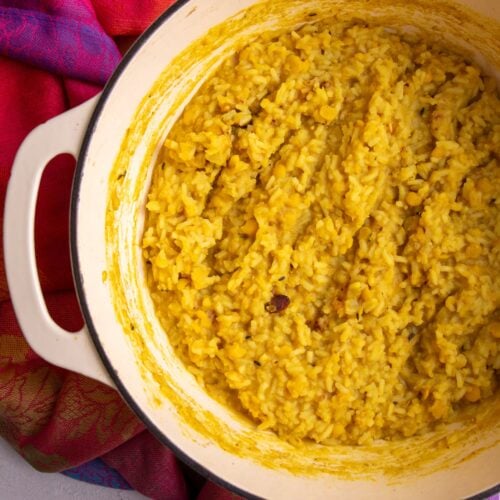
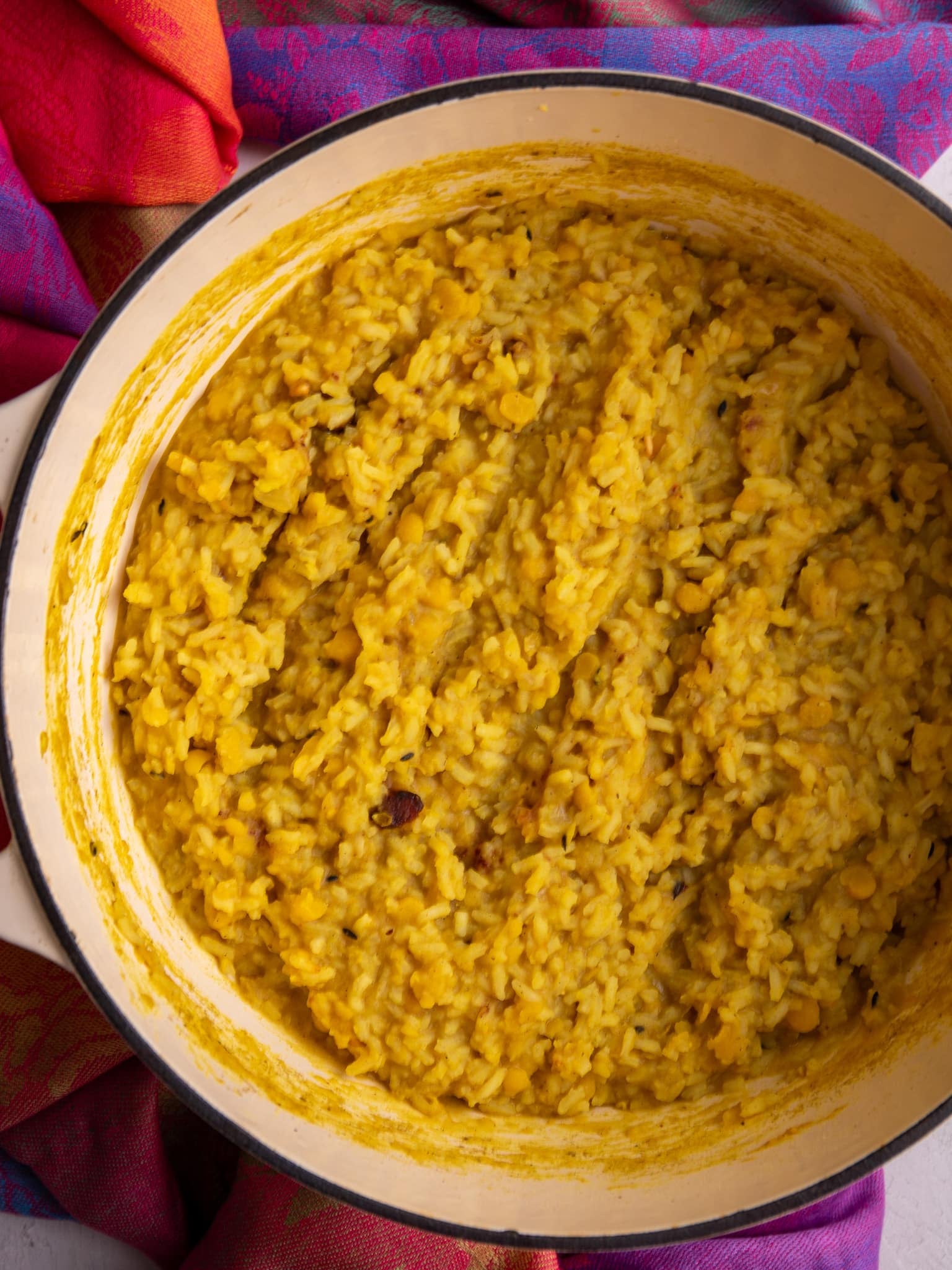
Guyanese Kitchri, also known as kichiri or kichari, is a cozy, one-pot dish made with split peas, rice, and a blend of aromatics and spices. Sometimes with tender spinach folded in and finished with hot cumin and garlic-infused oil, this recipe is a nod to its Indian roots.
Guyanese Kitchri
Guyanese kitchri is a comforting rice and split peas dish with Indian roots, often finished with a cumin and garlic chunkay.
Kitchri is my comfort meal; a cozy mix of dhal and rice. My mom made it often, much to my dad’s playful dismay. He preferred his dhal and rice separate, or maybe in a split peas cook-up with salt beef. My mom, raised in Clonbrook, East Coast of Guyana, held onto the traditional Berbice recipes from her childhood. When I make it, it’s served as is or paired with fried smelt, saltfish, or bunjal shrimp.

Growing up, kitchri was often considered “poor people food” since it’s simply dhal and rice cooked together. But I remember one Saturday when I was invited to lunch by a friend whose family was known for their thriving business. I expected a fancy spread, but when her mother served a simple plate of kitchri and fried fish, I was surprised at how warm and creamy it was. Later, I learned that my friend’s mom was also from Clonbrook and saw kitchri as a special family dish, made only for close family gatherings.
For me, kitchri was always a warm, cozy hug in a bowl, and I hope you feel that way when you make this.
Why You’ll Love This Kitchri Recipe
- Easy One-Pot Meal: With everything cooking together in one pot, this recipe saves time on cleanup without sacrificing flavor. It’s a straightforward process that makes it perfect for weeknights or cozy weekends.
- Versatile: Serve it as a main course or a comforting side. I promise it’s delicious either way! Plus, you can make it on the stove or use the Instant Pot for an even quicker option.
- Delicious Vegan Dish: This kitchri is packed with plant-based protein from split peas, and the rich blend of spices and garlic adds bold, satisfying flavors. It’s hearty, flavorful, and nourishing, making it great as a vegan option that everyone can enjoy.
Kitchri in Guyana
In Guyana, families often use the words “kitchri” and “split peas cook-up” interchangeably, joking that a soft split peas cook-up is practically kitchri. Many also add coconut milk, a nod to the cultural blending in Guyana’s culinary traditions. Influenced by Black and Indian communities, kitchri has evolved into a fusion of flavors and textures, rooted in tradition yet embracing new influences.
What is the difference between kitchri and split peas cook-up?
Kitchri and split peas cook up has similar ingredients, but different history and cooking methods. Kitchri is an Indo Guyanese dish, brought by Indian Indentured laborers from Indian. In Guyana it is typically made with yellow split peas, whereas in India it can be made with many different legumes. Kitchri always has curry powder and/or turmeric and other spices typically used in curry dishes, like garam masala and geera. And in my family kitchri is always chunkayed similar to how we chunkay dhal.
Split peas cook-up rice on the other hand is a version of cook-up rice which was influenced by enslaved Africans brought to work on sugar plantations in then British Guyana. Although the ingredients are similar to kitchri, we never add curry, turmeric or curry spices to split peas cook up rice. Split peas cook-up rice also always includes coconut milk and meat, like chicken or beef and most popularly salt beef and pig tail. Some people make vegetarian versions of split peas cook up rice, called ital cook-up. To this version, they add steamed okras, spinach and pumpkin.
Ingredients for Guyanese Kitchri
This dish doesn’t take many ingredients. If you’re familiar with Guyanese cooking, you probably have everything you need.

- Yellow Split Peas: Soaking and rinsing these ahead of time helps them cook faster and improves digestion. They add a soft, creamy texture to the kitchri.
- Water: I start with 8 cups and add more if needed during cooking. This keeps the dish from drying out as the rice and peas cook.
- Aromatics: A small, finely diced onion blends well with the split peas and rice. Half the garlic is chopped for cooking, while the rest is sliced thin for that flavorful chunkay at the end.
- Spices: I love using Indi Madras curry powder for warmth, with turmeric for color and earthiness. Whole cumin seeds add depth, and a pinch of garam masala gives extra sweetness and complexity if desired.
- Wiri Wiri Peppers: These are optional but add an authentic kick and unique heat. Scotch bonnet is a good substitute if needed.
- Kosher Salt: I start with a teaspoon, adjusting to taste as it cooks. Kosher salt dissolves well and seasons the dish evenly.
- Basmati Rice: Rinsed basmati keeps the grains separate and fragrant. It’s the perfect balance to the creamy texture of the split peas.
- Whole Leaf Spinach (optional): Optional but adds a nice touch of green and extra texture. If I have poi bhaji, I use that for a more traditional feel.
- Oil: A neutral oil like avocado or light olive oil is best for the infusing. It lets the cumin seeds and garlic get dark and toasty without adding extra flavors.
See recipe card for quantities.
How to Make Kitchri
Prep the Split Peas
When I have time, I like to start by rinsing and soaking the split peas overnight. This helps them cook faster and makes them easier to digest, so it’s worth the extra step if you can plan ahead.
Start the Base
When it’s time to cook, I grab a large, deep pot (a Dutch oven works perfectly) and add the soaked split peas, water, diced onion, finely chopped garlic, curry powder, turmeric, and salt. For extra depth, I toss in garam masala and wiri wiri peppers for a touch of warmth.

I give everything a good stir, set it over medium heat, and bring it to a boil, uncovered. As it cooks, I skim off any foam that rises to the surface to keep the broth clear.

I let it boil for about 30 minutes, or until the split peas are soft enough to crush between my fingers.

Add the Rice
With the split peas tender, it’s time for the rice. I rinse the rice well and stir it into the pot with the other ingredients. Then, I lower the heat, cover the pot, and let it all simmer for another 20 minutes until the rice is fully cooked.


If I’m adding spinach, I fold it in at this point, letting it wilt into the kitchri for a boost of greens.
Make the Chunkay
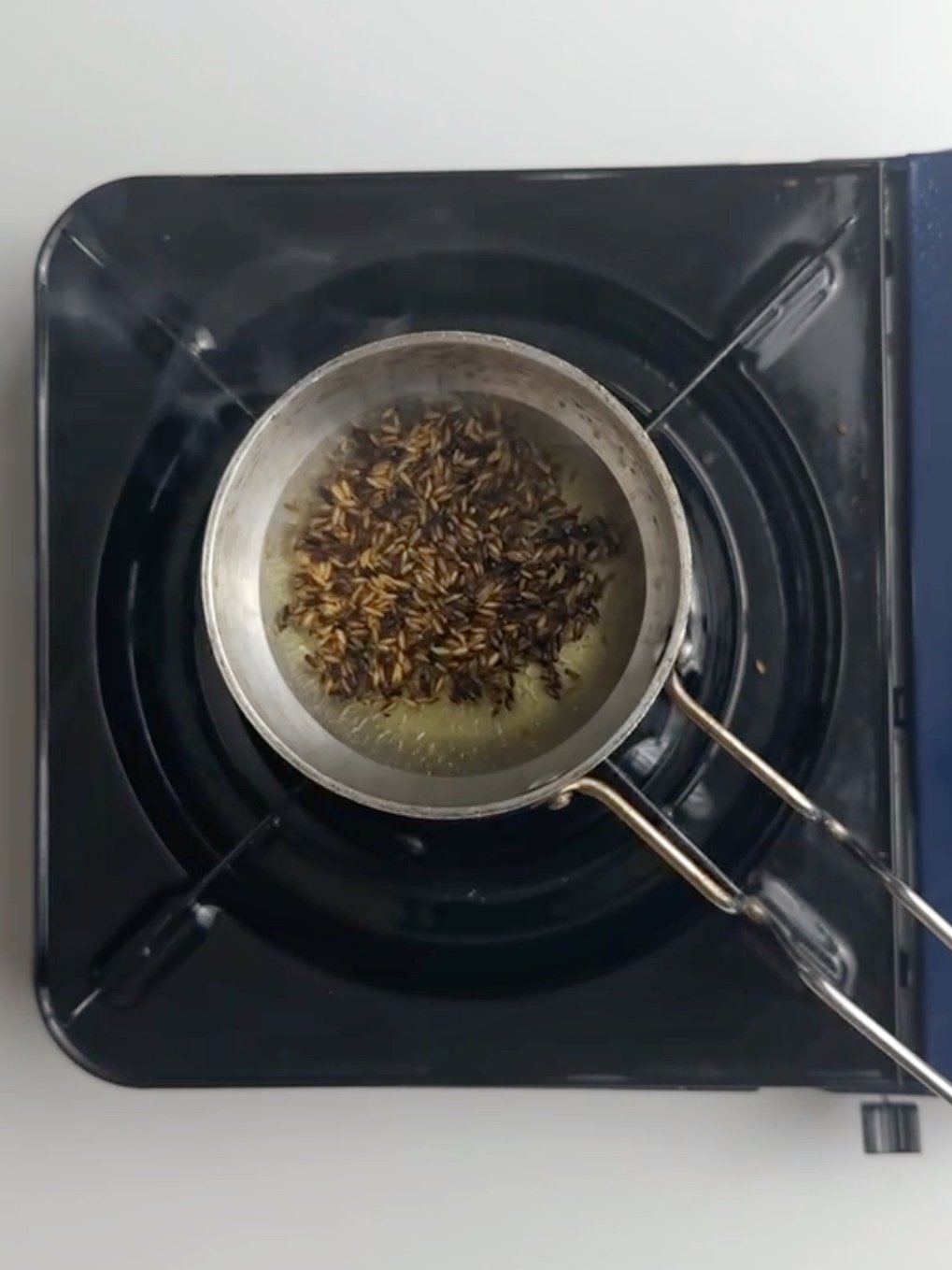
Now comes my favorite part—the chunkay. The aroma is mouthwatering and the taste it adds is even better! I heat a couple of tablespoons of oil over medium heat in a small frying pan. When the oil is hot, I add the cumin seeds and thinly sliced garlic. I cook them until they’re a deep brown, almost black; this gives the kitchri a nutty, bold flavor that really brings it all together.

Finish and Serve Guyanese Kitchri
Finally, I pour the sizzling garlic and cumin oil over the kitchri, letting it infuse the whole dish with that rich, aromatic warmth. After a final stir, it’s ready to serve, warm and inviting.
Recipe Variations
- Rice: Swap the basmati rice with parboiled rice for a slightly firmer texture that holds its shape well in the dish.
- Coconut Milk: For a richer, creamier kitchri, add a splash of coconut milk to the cooking liquid. It adds a subtle sweetness and a velvety texture.
- Vegetable Broth: Substitute water with vegetable broth for a deeper, savory base flavor that enhances the spices.
- Legumes: Try using lentils instead of split peas for a softer, quicker-cooking option. Red lentils work well and blend smoothly into the kitchri.
Storage
To store leftovers, let the kitchri cool completely, then transfer it to an airtight container and refrigerate for up to 3 days. When you’re ready to reheat, add a splash of water to loosen it up. Then warm it on the stove over low heat or in the microwave, stirring occasionally until heated through.
Tips for the Best Guyanese Kitchri
- Soak the split peas. If possible, soak the split peas overnight to reduce cooking time and achieve a creamier texture.
- Rinse the rice thoroughly. Rinsing the rice helps remove excess starch, keeping the grains separate and light in the final dish.
- Adjust the spice to taste. Start with the recommended spices, but feel free to adjust based on your preference for heat and depth. Adding more curry powder or a bit of garam masala can give extra warmth.
- Watch the garlic closely as it fries. When tempering the garlic and cumin, let the garlic turn a deep brown (almost black) for a rich, nutty flavor, but be careful not to let it burn.
- Add spinach last. If you’re using spinach or poi bhaji, fold it in at the end to keep the greens vibrant and prevent overcooking.
- Keep it Creamy or Dry: Kitchri can be cooked to a thicker or soupier consistency based on your preference. Adjust the water as needed near the end to reach your desired texture.
Frequently Asked Questions
Soaking the split peas isn’t mandatory, but it helps them cook faster and creates a creamier texture. If you’re short on time, you can skip this step, but expect a longer cooking time.
It’s not kitchri if you don’t chunkay it. OK, you can, but the extra step adds a rich, nutty flavor that elevates the dish. If you want to keep it simple, the dish will still taste good without it, just a bit milder.
Kitchri has a mild heat level, especially if you skip the wiri wiri peppers. For more spice, feel free to add an extra pepper or a pinch of cayenne to your taste.

Guyanese Kitchri Recipe

Equipment
- Large Pot/Dutch Oven or Instant Pot for alternative method
- Small frying pan or tadka pan
Ingredients
- 1 cup yellow split peas (soaked and rinsed)
- 8 cups water
- 1 small onion (diced)
- 8 garlic cloves (4 finely chopped, 4 thinly sliced)
- 1 tablespoon yellow curry powder (I love Indi Madras Curry Powder)
- ¼ teaspoon turmeric
- ½ teaspoon garam masala (optional)
- 2 wiri wiri peppers (optional)
- 1 teaspoon kosher salt (or salt to taste)
- 2 cups basmati rice (washed)
- 1 cup whole leaf spinach or poi bhaji (optional)
- 2 tablespoons oil (suitable for cooking)
- 1 teaspoon whole cumin seeds
Instructions
- If time allows, rinse and soak your split peas over night. This speeds up the cooking process and aids in digestion. To a large and deep pot (like a dutch oven) add the rinsed split peas, water, onion, the finely chopped garlic, curry powder, turmeric, garam masala (if using), wiri wiri peppers (if using) and salt. Mix well and add to medium heat.
- Bring the pot up to a boil, uncovered and continue to boil until the split peas can be easily crushed when pressed between your fingertips (about 30 minutes). Skim and discard any foam that develops on the top while boiling.
- As an added step I use my whisk or dhal ghutney to crush up the split peas before adding the rice.
- Add the washed rice and mix well with the other ingredients, then reduce the heat to low, cover and let simmer until the rice is fully cooked (about 20 minutes). Then mix in the spinach, if using.
- Finally, add a small frying pan or a tadka pan (I like this one) to medium heat. Then add the oil. When the oil is hot add the cumin seeds and sliced garlic. Cook until the cumin seeds and garlic slices are dark brown (almost black). Then pour the hot oil, garlic and cumin seeds over the kitchri. Mix to combine and serve hot.
Instant Pot Method:
- Add all of the ingredients, except the wiri wiri chilis, sliced garlic, spinach (if using) oil and whole cumins plus 4 cups water to the instant pot. Cover and cook for 20 using the multigrains function. When the cooking process is complete, rapid release the pressure and add the spinach. Gently mix to combine. Then add a small frying pan to medium heat. Add the oil and when itl is hot add the whole cumin seeds, sliced garlic and wiri wiri peppers. Cook until the cumin seeds and garlic slices are dark then pour over the cooked kitchri and mix in.
Notes
- My mom makes her kitchri by making dhal first and then adding the rice. Some people add all of the ingredients together and let it simmer to a very soft dish.
- I don’t add coconut milk to my kitchri because my mom never did this. She only adds coconut milk to split peas cook-up rice, which is a different dish in my family.
Nutrition
The information listed in the recipe card is an estimate provided by an online nutrition tool. The tool evaluates ingredient names and amounts then makes calculations based on the number of servings listed for the recipe. It is provided as a general guideline and not as a precise calculation. For precise nutrition information please feel free to add the ingredients to your preferred nutrition calculator or consult a doctor or licensed nutritionist.
 Guyanese Milk Peera
 5 Must Try Guyanese Foods
 Best Guyanese Bake Recipes
 Roast Bake
Leave a Rating and a Comment