

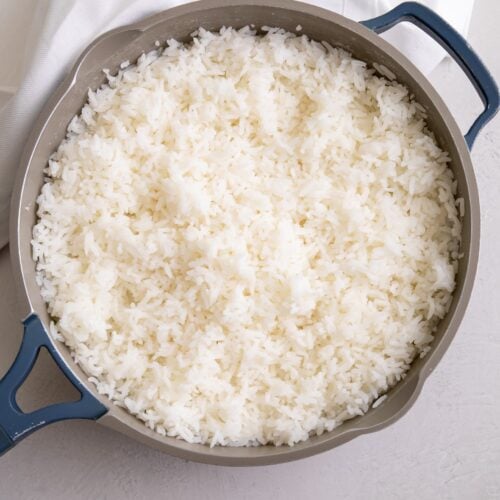
Learn how to cook rice with this easy, foolproof guide to achieving fluffy, perfect grains every time. Whether you’re working with jasmine rice, long-grain white rice, or basmati rice, my step-by-step instructions ensure your steamed rice turns out just right.
Once you’ve mastered the basics, try more of my rice recipes like this Guyanese Sweet Rice recipe, Guyanese Shine Rice, and Guyanese Cook-Up Rice.
What Makes Me the Rice Expert?
I’m from Guyana, where rice is a staple in our diet and a significant part of our daily meals. As a rice-producing country, we incorporate rice in various ways, with many households cooking it every day. Rice is a staple in my home and I have the recipes to prove it!
- What Makes Me the Rice Expert?
- How to Cook Rice on Stove
- Why this is the Best Way to Cook Rice
- Popular Types of Rice in Caribbean Cooking
- Ingredients Needed to Cook Rice
- To salt or not to salt your rice?
- Rice to Water Ratio
- How to Cook Rice
- Storage
- Tips for Cooking Perfect Rice
- 5 Must Try Guyanese Rice Dishes
- Frequently Asked Questions
- How to Cook Rice
In Guyana, some people cook rice like pasta. They bring a large pot of water to boil, add the rice, and boil until the grains are fully cooked (about 20 minutes). Then they remove it from the heat, strain, rinse, and return it to the pot to cover. This rice is served hot with stews and curries. Some even enjoy the starchy water as a broth by adding salt, pepper, scallions, and oil.
How to Cook Rice on Stove
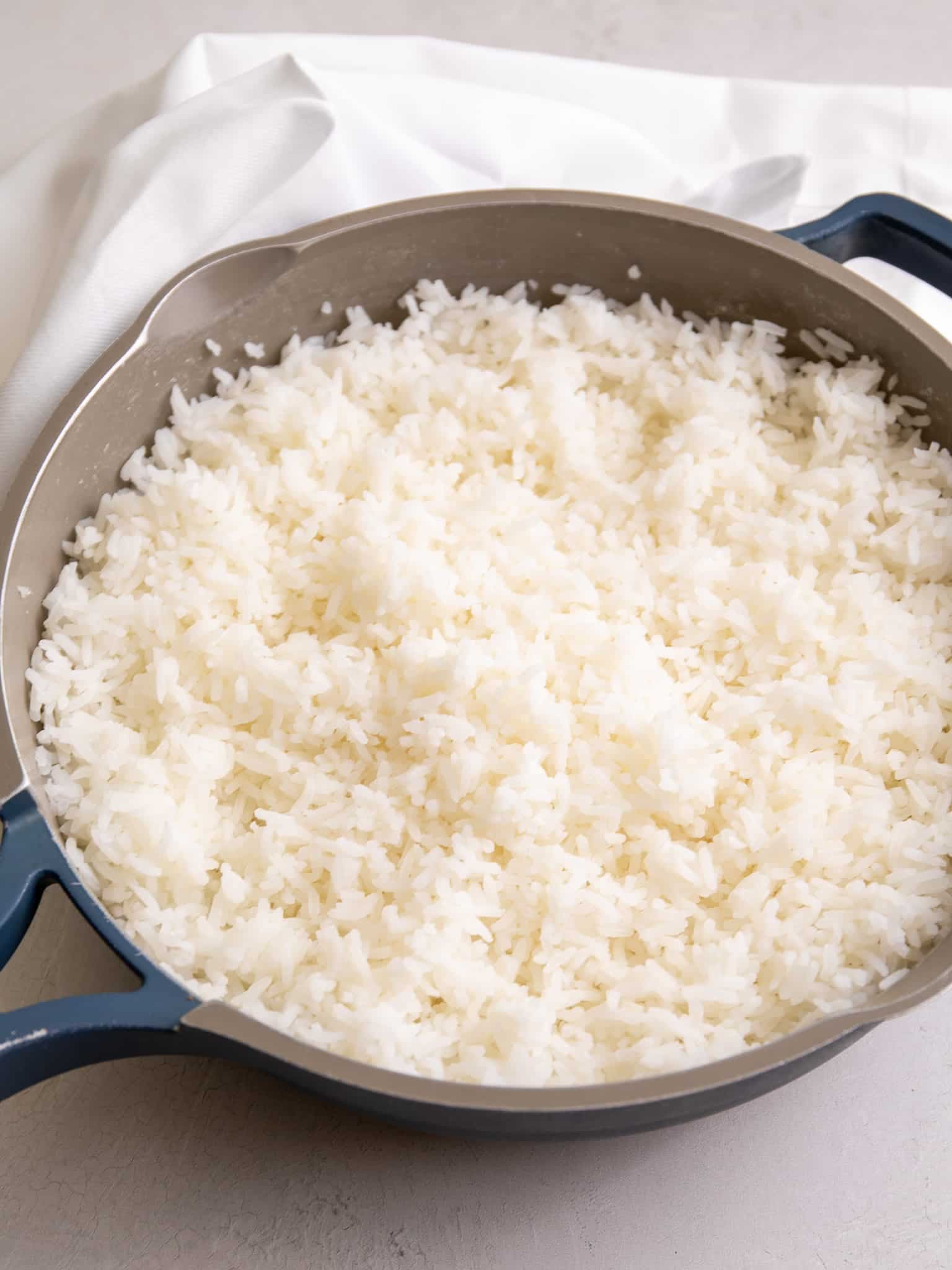
But today, I’m teaching you a different way: how to cook rice on the stove using the steam method. This approach involves rinsing the rice thoroughly to remove excess starch, then cooking it in a skillet with a precise water-to-rice ratio.
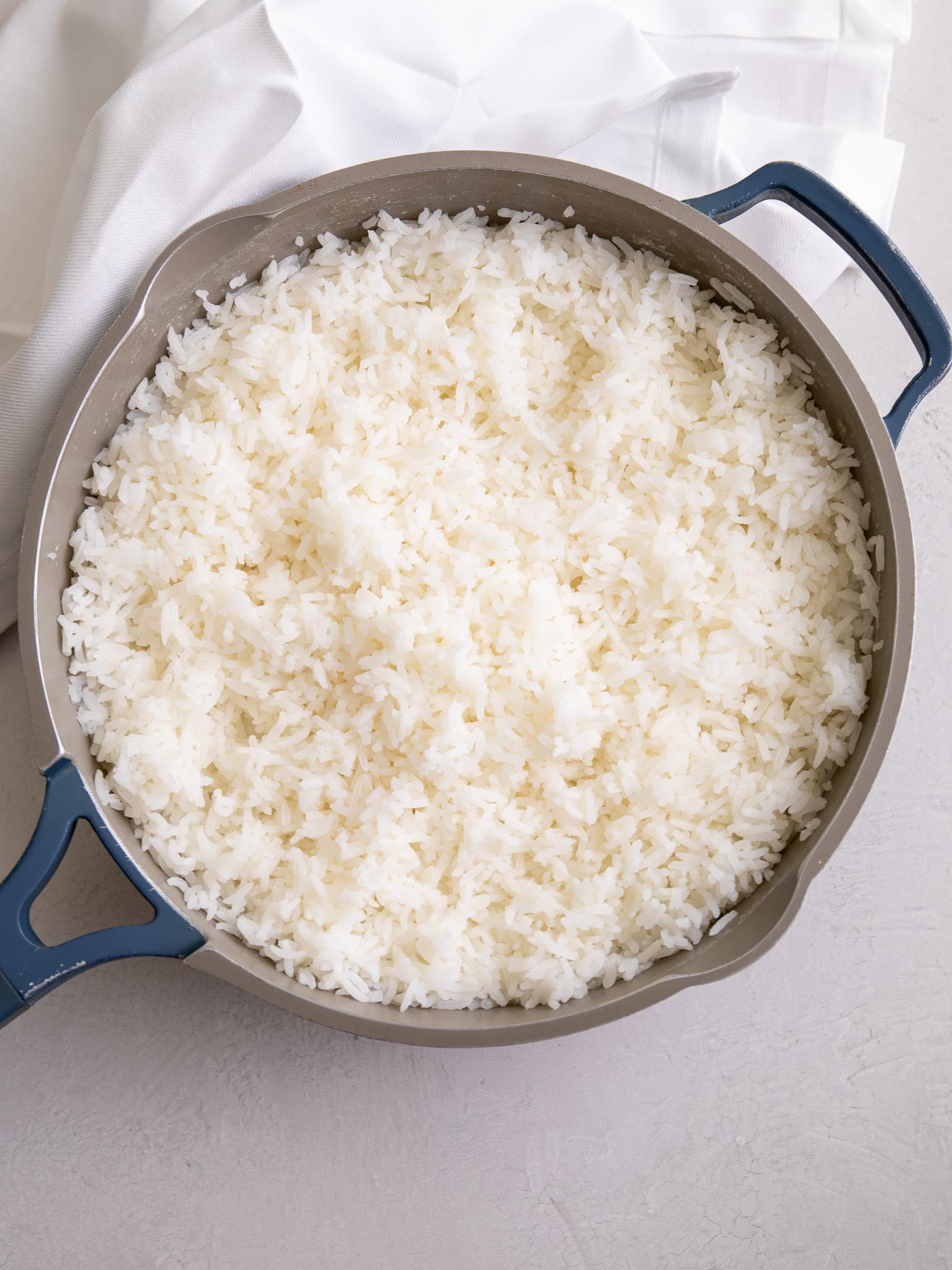
The result is perfectly fluffy, steamed rice that’s ready in about 25 minutes. This method is foolproof and works well with various types of rice, including jasmine, long-grain, basmati, and parboiled varieties.
Why this is the Best Way to Cook Rice
- Simple: Everyone can learn how to cook rice with just a bag of rice, water, and a pan on the stove. There are other methods like the rice cooker, oven, or microwave but with this recipe, we get back to basics.
- Versatile: Today we’re making jasmine rice but this recipe also works for long-grain white rice and basmati.
- Convenient: Rice pairs well with so many foods, making it a perfect side dish for a variety of meals. Whether you’re serving it with stews, curries, or grilled meats, this method ensures you have a reliable and versatile side ready in just 25 minutes.
Popular Types of Rice in Caribbean Cooking
- Long Grain Rice: Long grain rice is a staple in many Caribbean households. It’s prized for its ability to stay fluffy and separate when cooked, making it ideal for dishes like rice and peas.
- Parboiled Rice: Parboiled rice undergoes a unique steaming process before milling, resulting in grains that are firm, non-sticky, and perfect for dishes that require reheating, such as pilafs and fried rice. (This type of rice requires another method that we’ll cover in another recipe.)
- Brown Rice: Brown rice retains its nutritious bran and germ layers, offering a nutty flavor and chewy texture. It’s a healthier alternative that’s increasingly popular in Caribbean cuisine for those seeking whole grains. (This type of rice requires another method that we’ll cover in another recipe.)
- Basmati Rice: Basmati rice, with its long, slender grains and aromatic fragrance, is perfect for Caribbean dishes influenced by Indian cuisine, such as biryanis and pulaos.
- Jasmine Rice: Jasmine rice, known for its delicate floral aroma and soft texture, is a versatile option that complements a wide range of Caribbean stews and curries. It adds a subtle fragrance to the meal. (The method used in this recipe is the best way to cook jasmine rice.)
Ingredients Needed to Cook Rice
Cooking white rice requires just two simple ingredients.
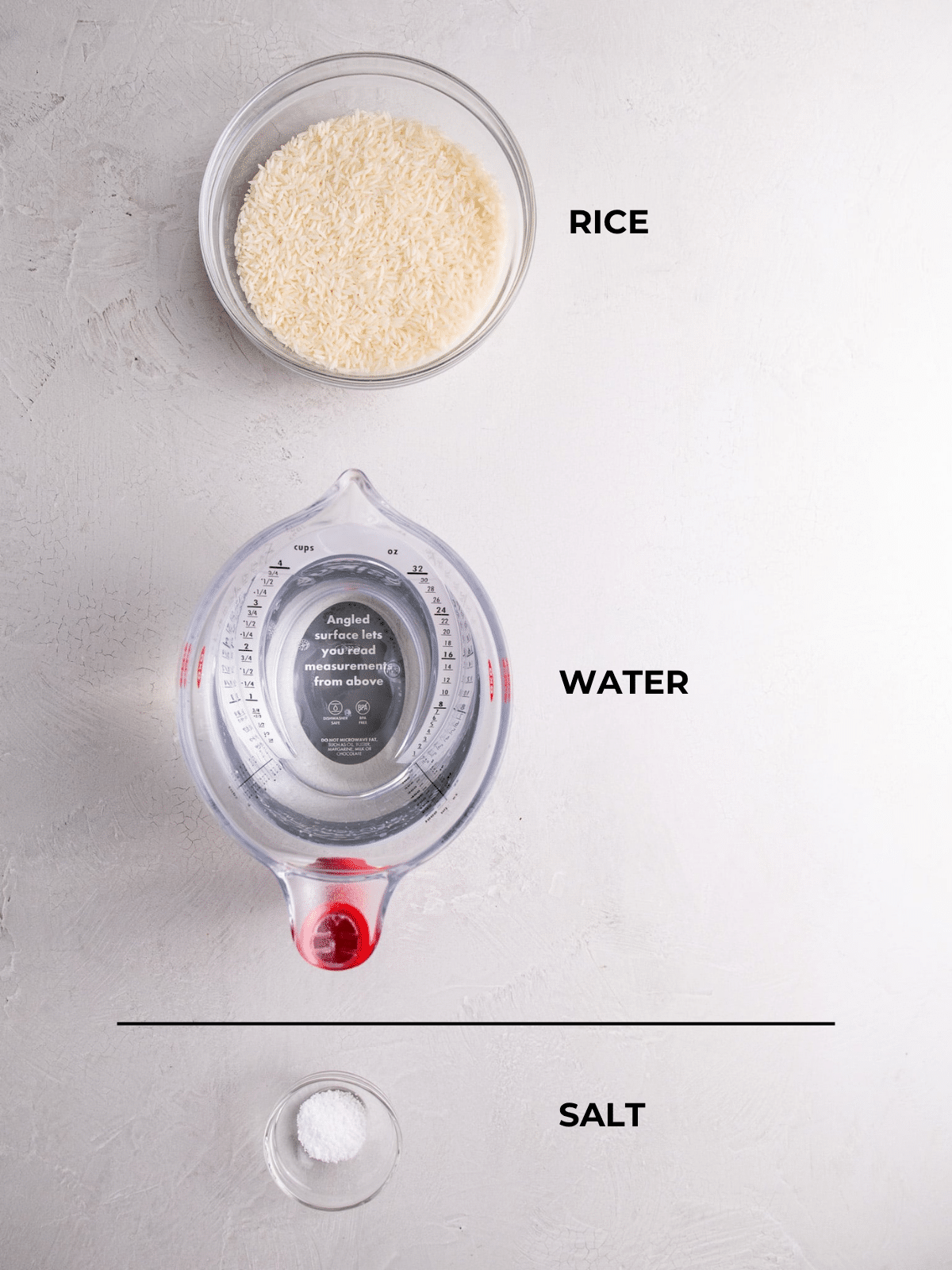
- Jasmine Rice: A fragrant and long-grain variety that cooks up soft and slightly sticky, ideal for various dishes.
- Water: Essential for cooking the rice, maintaining a 2:1 water-to-rice ratio for the best texture.
- Salt: This is an optional ingredient for me, but feel free to add a pinch to your rice if you like.
See recipe card for quantities.
To salt or not to salt your rice?
I don’t ever salt my rice unless I am making fried rice or some other one pot rice dish. In my house white rice is plain and simply a vessel for the stew or curry. However, you may add salt, butter or seasoning to your rice if you wish.
Rice to Water Ratio
For fluffy stovetop rice, follow a 2:1 ratio of water to rice. Those who struggle when making rice, typically use way too much water. This simple rule ensures that your rice cooks evenly and absorbs the right amount of moisture, yielding perfectly tender grains every time.
It is the best way to ensure the rice isn’t undercooked, gummy, or burnt. Whether you’re using jasmine, long-grain, or basmati, maintaining this ratio is key to achieving the ideal texture.
How to Cook Rice
Rinse Rice Before Cooking
I always start by adding the rice to a large bowl and covering it with water. Using my hands, I rub the grains together to remove as much surface starch as possible.
Then I pour off the water (you can use a sieve or cup your hand to catch any stray grains) and repeat this process with fresh water until it runs clear. For creamy rice dishes where a bit of starch is needed, I rinse the rice only 2-3 times before cooking.
Cooking Rice
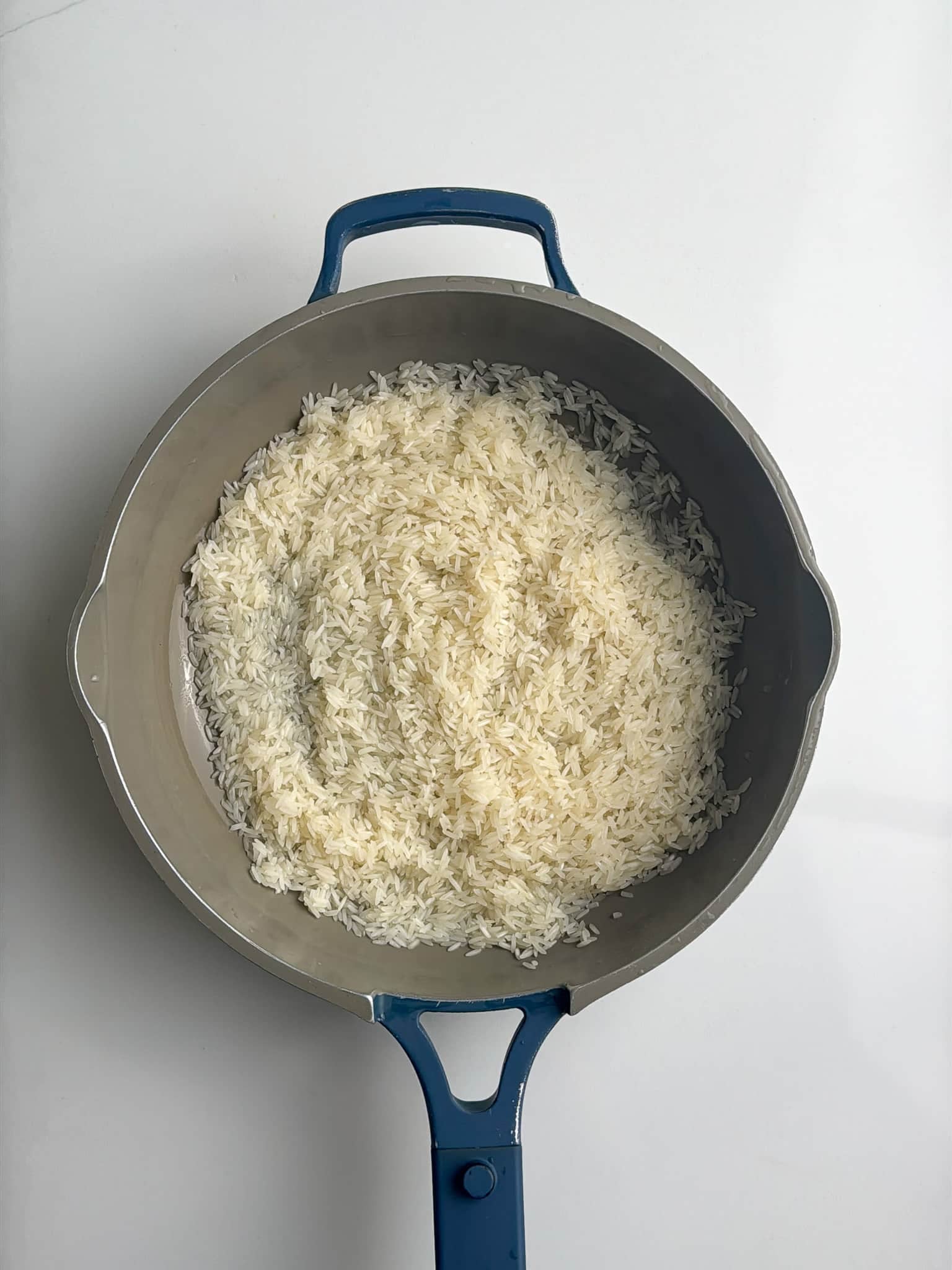
Once the rice is rinsed, I transfer it to a skillet and add 4 cups of water. Then I place the skillet on medium heat and bring it to a boil, which usually takes about 5 minutes.
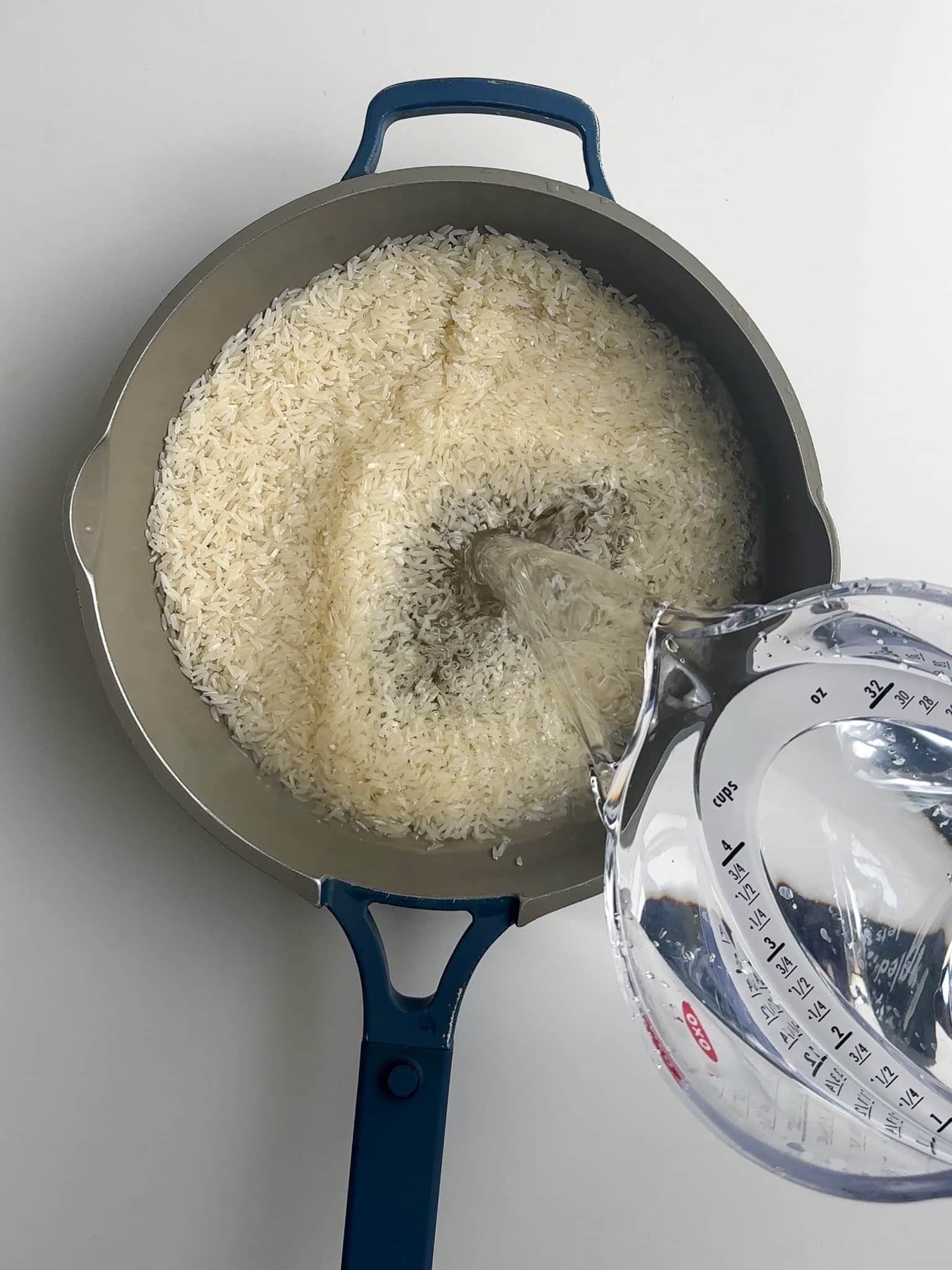
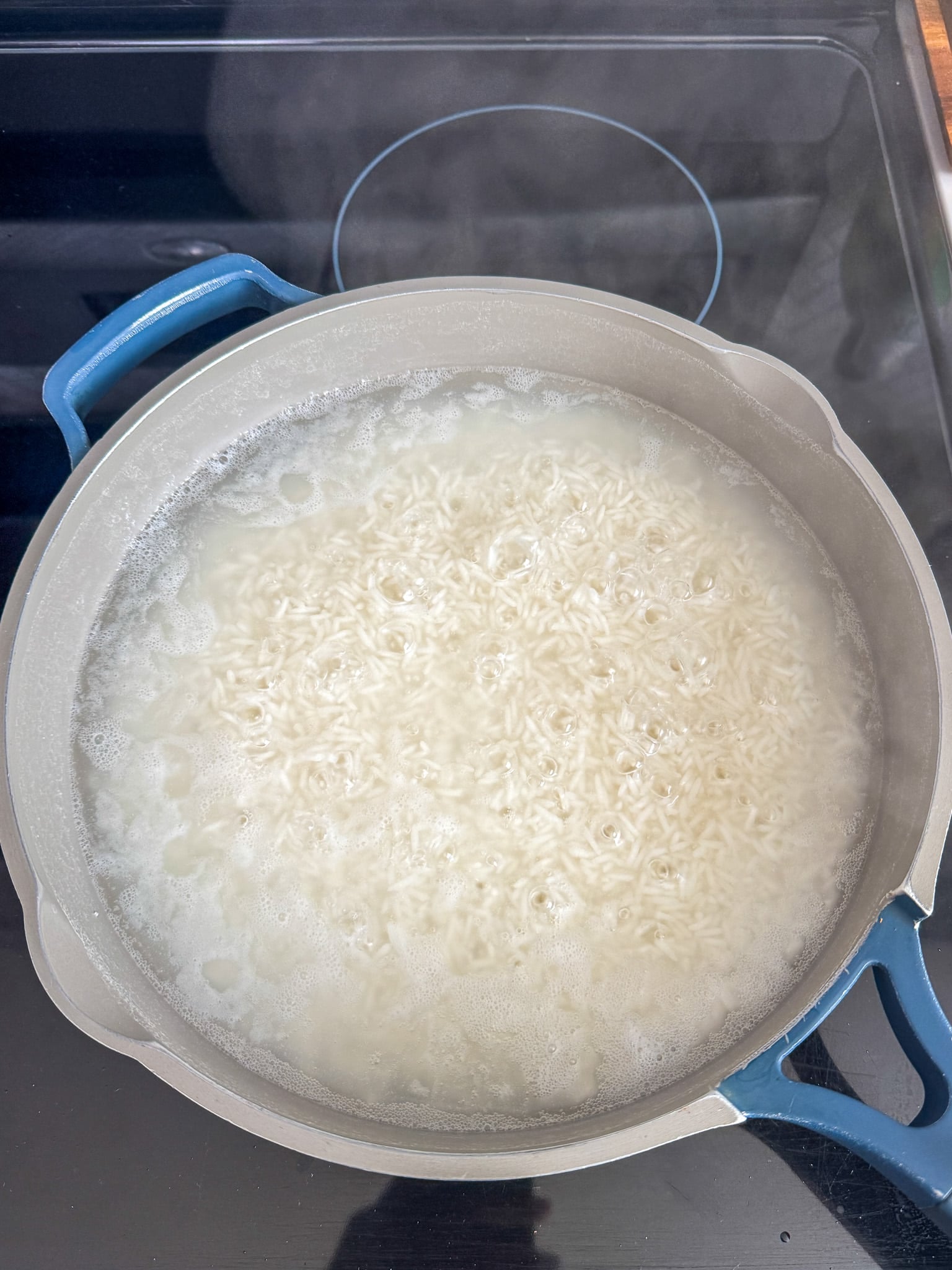
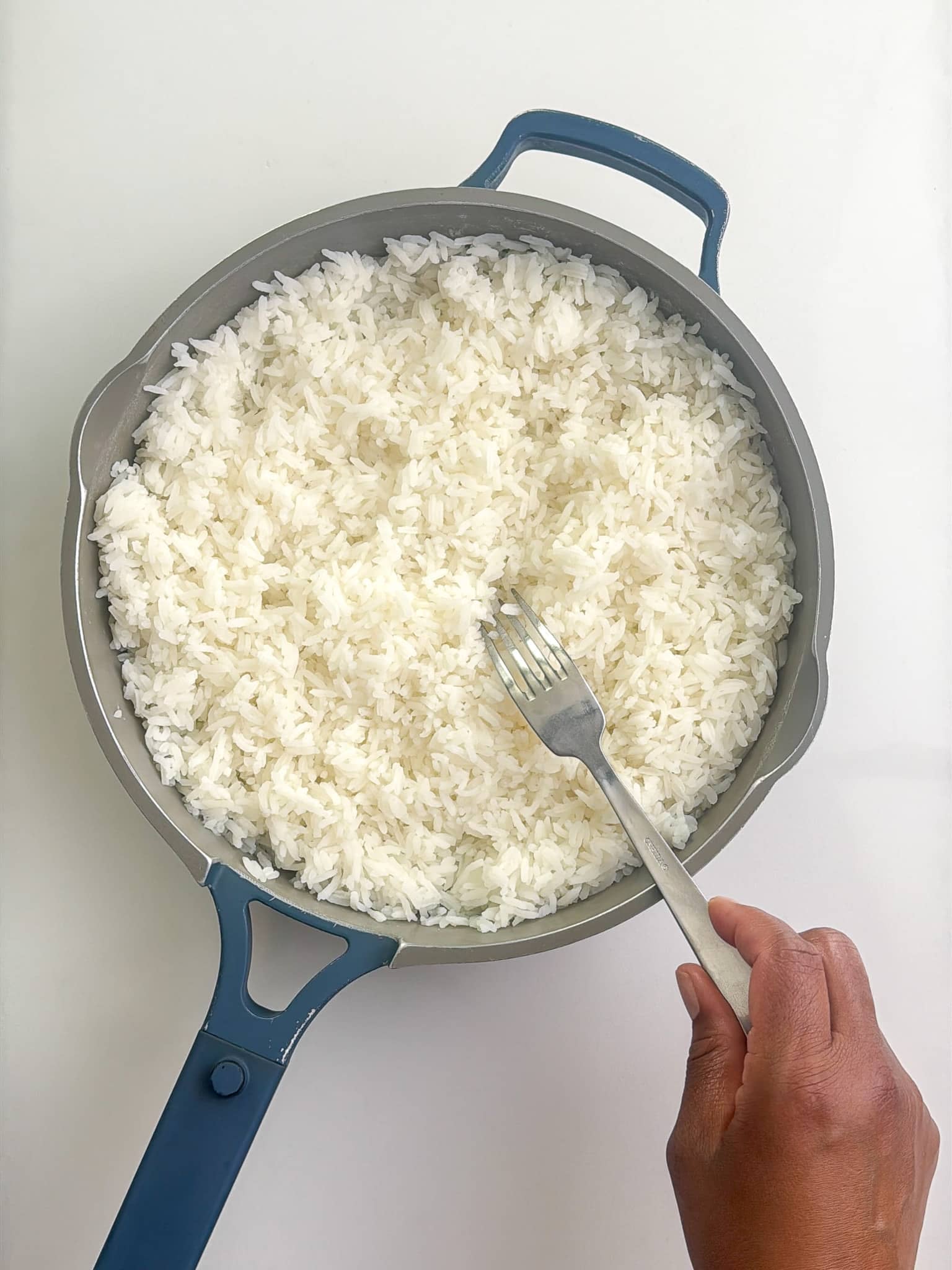
I give the rice a good stir, making sure to scrape the bottom to prevent any grains from sticking. After that, I reduce the heat to low, cover the skillet, and let the rice cook for another 20 minutes or until it’s fully cooked. Finally, I use a fork to fluff the rice, breaking up any clumped grains, before serving.
Storage
Store cooked rice in an airtight container in the fridge for up to 3 days. When reheating, you may need to add a splash of water to rehydrate it. Then add it to microwave for a minute or so and it is good as new!
Tips for Cooking Perfect Rice
- Always rinse your rice thoroughly. This removes excess surface starch that can make the rice sticky. Rinse the rice in a large bowl, using your hands to rub the grains together, and repeat until the water runs clear.
- Use the right water-to-rice ratio. Follow a 2:1 ratio of water to rice for fluffy rice. This ensures that the rice absorbs the right amount of moisture for perfect texture.
- Cook in a skillet for faster cooking. I love to cook my rice in a skillet versus a saucepan because the wider base allows for more even heat distribution, and since it is shallow, less heat escapes, making the rice cook faster (not backed by science, just my logic haha).
- Let the rice rest. After the cooking time is up, let the rice sit covered for a few minutes. This allows any remaining moisture to evenly distribute, resulting in perfectly fluffy grains.
- Fluff with a fork. Before serving, use a fork to fluff the rice and separate the grains. This prevents the rice from clumping together and keeps it light and airy.
- No peeking! Avoid lifting the lid frequently. Try not to lift the lid too often during cooking, as this releases steam and can interfere with the cooking process.
5 Must Try Guyanese Rice Dishes
- Cook Up Rice: This hearty one-pot dish combines rice, meats, beans, and vegetables, creating a flavorful and satisfying meal that’s perfect for any day.
- Shine Rice: A simple yet delicious rice dish, Shine Rice is cooked with coconut milk and a few seasonings, offering a rich, creamy flavor that complements a variety of main dishes.
- Stripped Chicken Fried Rice: This quick and easy fried rice recipe uses leftover chicken and a mix of vegetables to create a delicious, customizable meal in just 30 minutes.
- Rice Porridge: This creamy, spiced rice porridge is a comforting Caribbean breakfast dish, made with coconut milk and a blend of warm spices, perfect for a nourishing start to the day.
- Callaloo Cook-Up Rice: This vegetarian dish combines spinach, pumpkin, and rice cooked in flavorful coconut milk, creating a fresh, filling meal ready in just 30 minutes.
Frequently Asked Questions
Rinse the rice thoroughly to remove excess starch, then cook it in a skillet with a 2:1 water-to-rice ratio. Bring the water to a boil, reduce the heat to low, cover, and let it cook for about 20 minutes until the rice is fully cooked and fluffy.
The ratio of water to rice is 2:1, meaning you use 2 cups of water for every 1 cup of rice. This ratio ensures that the rice cooks evenly and achieves a fluffy texture.
For 1 cup of rice, you should boil 2 cups of water. This 2:1 water-to-rice ratio ensures that the rice cooks properly and comes out fluffy.
If the rice is still hard, you can add a little more water, cover the skillet, and continue to cook on low heat for a few more minutes until the rice is tender.
Stir the rice occasionally while it’s boiling to prevent sticking. Also, make sure to use a non-stick skillet or add a small amount of oil to the water.
If you add too much water, drain the excess water from the cooked rice, similar to the pasta method. Then, return the rice to the pot and let it steam covered for a few minutes.

How to Cook Rice

Ingredients
- 2 cups Jasmine Rice
- 4 cups water
- 1/2 teaspoon salt (optional)
Instructions
- Wash the Rice: Add the rice to a large bowl and cover with water. Use your hands to rub the grains together to remove as much surface starch as possible. Pour off the water (you can do this over a sieve or over a cupped hand to catch any stray grains). Add fresh water and repeat until the water runs clear.For creamier rice dishes where a bit of starch is helpful, rinse 2–3 times instead of rinsing until clear.
- Cook the rice: Add the rice to a saucepan or skillet and cover with 4 cups of water. Add the salt (if using) and stir to dissolve. Place over medium heat and bring to a boil (about 5 minutes). Stir the rice, scraping the bottom to loosen any grains. Reduce the heat to low, cover, and cook for about 20 minutes or until the rice is tender and the water is absorbed.Fluff with a fork to separate the grains before serving.
Nutrition
The information listed in the recipe card is an estimate provided by an online nutrition tool. The tool evaluates ingredient names and amounts then makes calculations based on the number of servings listed for the recipe. It is provided as a general guideline and not as a precise calculation. For precise nutrition information please feel free to add the ingredients to your preferred nutrition calculator or consult a doctor or licensed nutritionist.
 Coo Coo
Leave a Rating and a Comment