
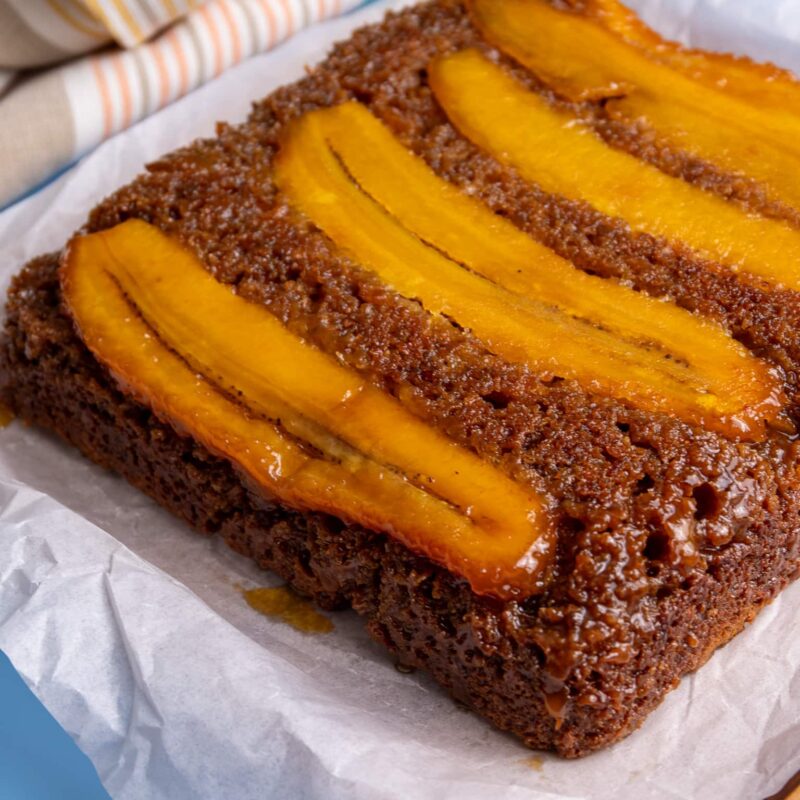
Plantain bread makes the most of overripe plantains, turning them into something soft, sweet, and full of flavor. The caramelized base adds depth, giving each moist bite a tasty, cake-like finish that’s easy to enjoy as a snack.
For a more classic quick bread, try my banana bread recipe.
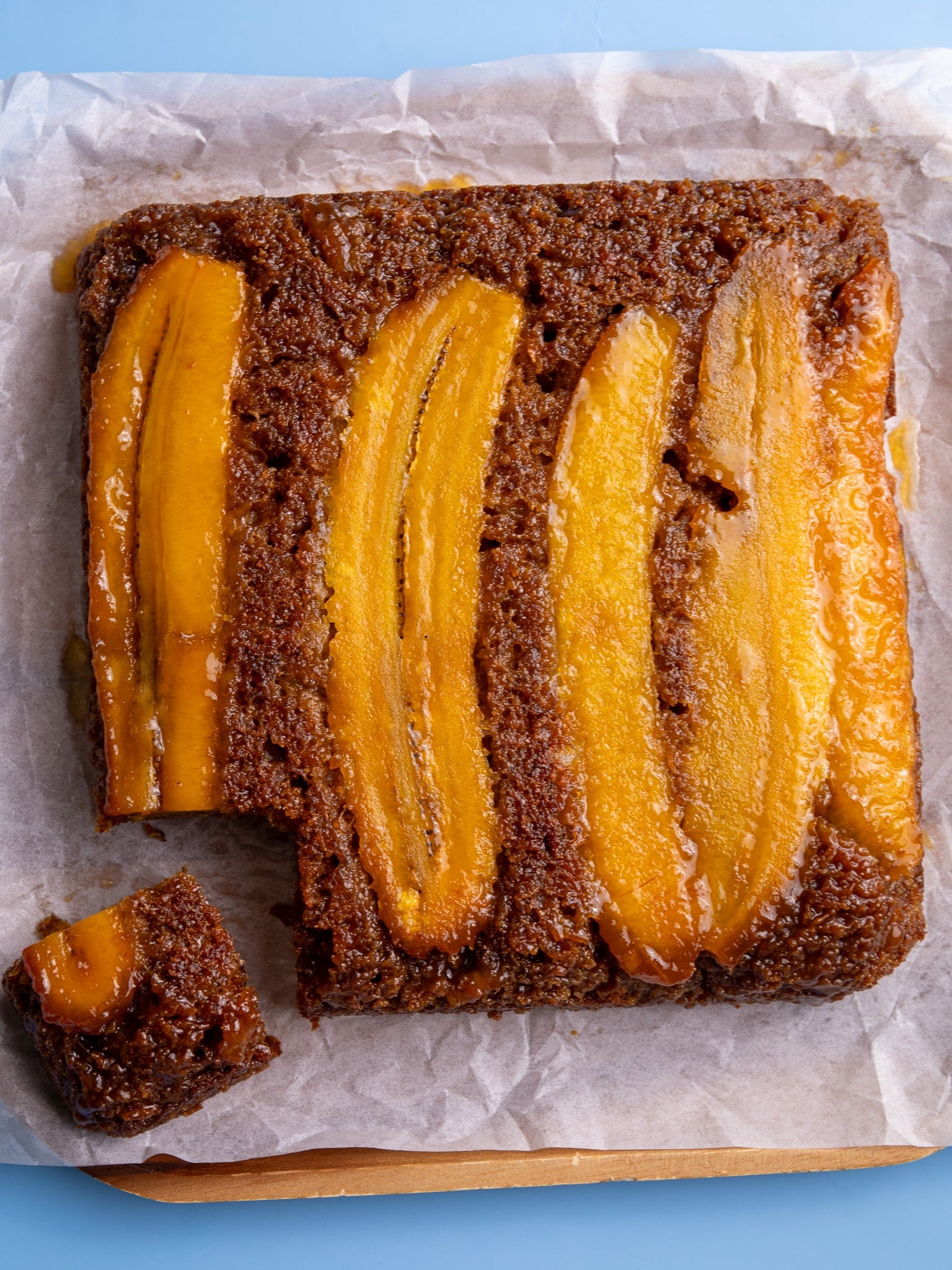
Baking Plantain Cake
As a Caribbean girl, I love plantains, and when they turn black and overripe, I’m already thinking about what I’m going to make next. Instead of tossing them, I use them at their sweetest to make this sweet plantain bread that feels just a little indulgent.
Cooking the plantains first, almost like a ripe fried plantain, brings out that deep, caramel-like flavor that really sets this recipe apart. It bakes up rich with warm spice and a soft texture that leans more like a cake. And if you take it a step further with the upside-down version, it becomes something even more special.
Why You’ll Love This Plantain Bread Recipe
- Rich Flavor: Cooking the plantains first brings out a deep, caramelized sweetness that you just don’t get from using them raw. Paired with warm spices, it gives this plantain bread a fuller, more layered flavor in every bite.
- Easy Recipe: The steps are simple and straightforward, with no complicated techniques or special equipment needed. Once the plantains are cooked and mashed, everything comes together quickly into a smooth batter.
- Anytime Snack: This works just as well for breakfast or brunch as it does for dessert. It’s soft, moist, and easy to slice, making it perfect to grab as a snack throughout the day.
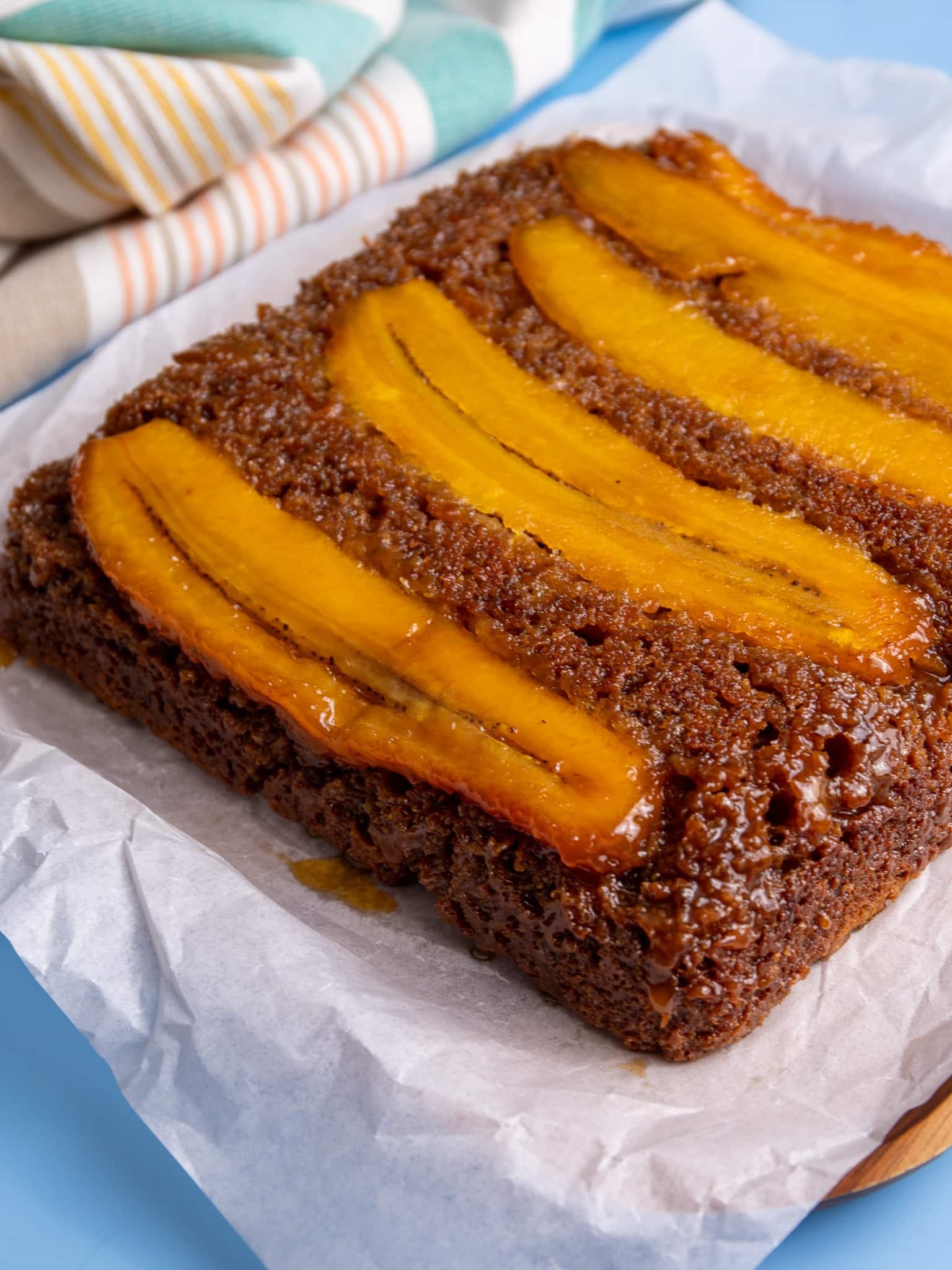
Why I Cook the Plantains First
A lot of plantain bread recipes treat plantains like bananas, adding them raw or simply layering slices on top. But plantains aren’t bananas, and when you use them that way, the flavor can come out a little too strong and almost savory. Cooking the plantains first is the key. It softens them, deepens their natural sweetness, and gives this bread its rich, balanced flavor. It also adds that deep, caramel-like taste that really sets this recipe apart.
Ingredients for Plantain Bread
This recipe keeps things simple, but each ingredient plays a role in building that rich, balanced flavor. From the cooked plantains to the warm spices, everything works together to give this bread its soft texture and depth.
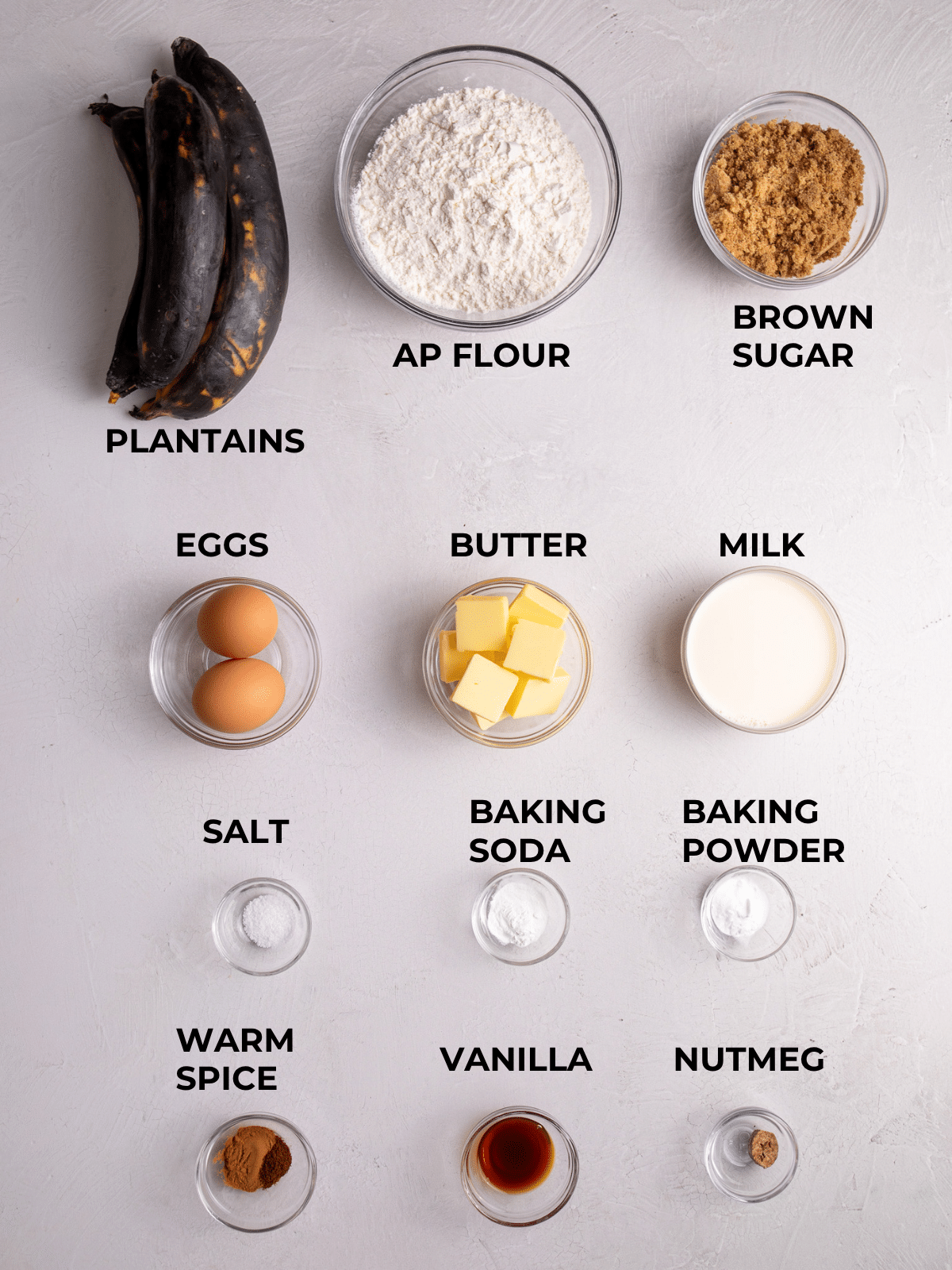
- Overripe plantains: These are the base of the recipe, and the darker and softer they are, the better. I’m looking for that natural sweetness that really comes through once they’re cooked.
- Brown sugar: This adds sweetness and helps deepen that caramelized flavor when the plantains are cooked down.
- Butter: Butter brings richness to both the plantains and the batter, giving the bread a soft, tender crumb.
- Evaporated milk: This adds a creamy texture and a slight richness without making the batter too heavy.
- Eggs: Eggs help bind everything together and give the bread its structure while keeping it soft.
- All-purpose flour: This provides the base structure for the bread so it holds together while still staying moist.
- Baking powder and baking soda: These help the bread rise and keep it from feeling dense.
- Salt: A small amount of salt balances the sweetness and brings out the flavor of the spices.
- Cinnamon, cloves, and nutmeg: These warm spices give the bread that deep, cozy flavor that pairs perfectly with the sweetness of the plantains.
- Caramel (butter and sugar for topping): If you’re making the upside down version, this creates that rich, sticky layer that takes the whole thing up a notch.
- Extra plantain for topping: Sliced plantains add texture and make the upside down version feel a little more special.
See recipe card for quantities.
How to Make Plantain Bread
Cook the Plantains
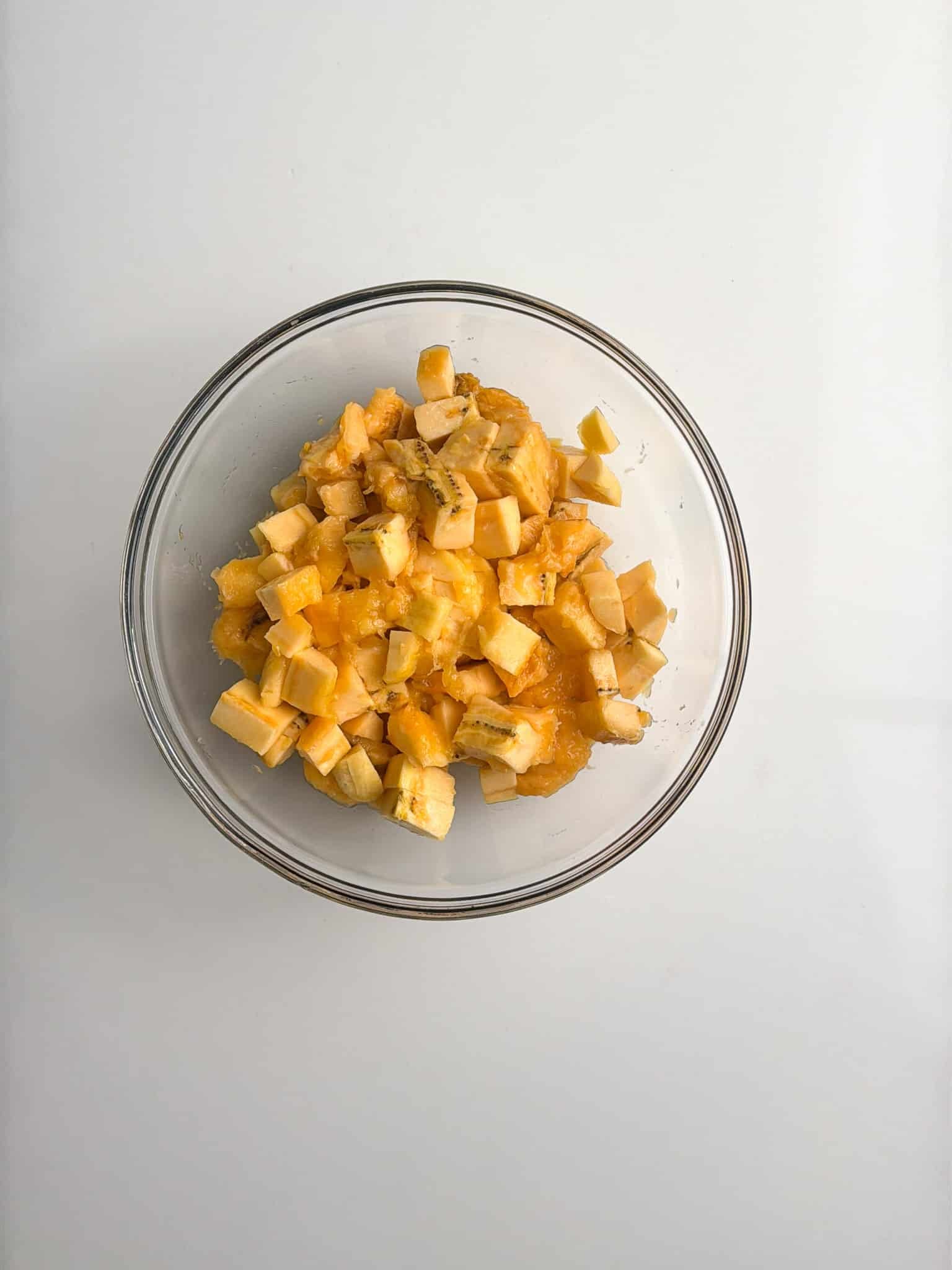
I start by peeling and dicing the overripe plantains.
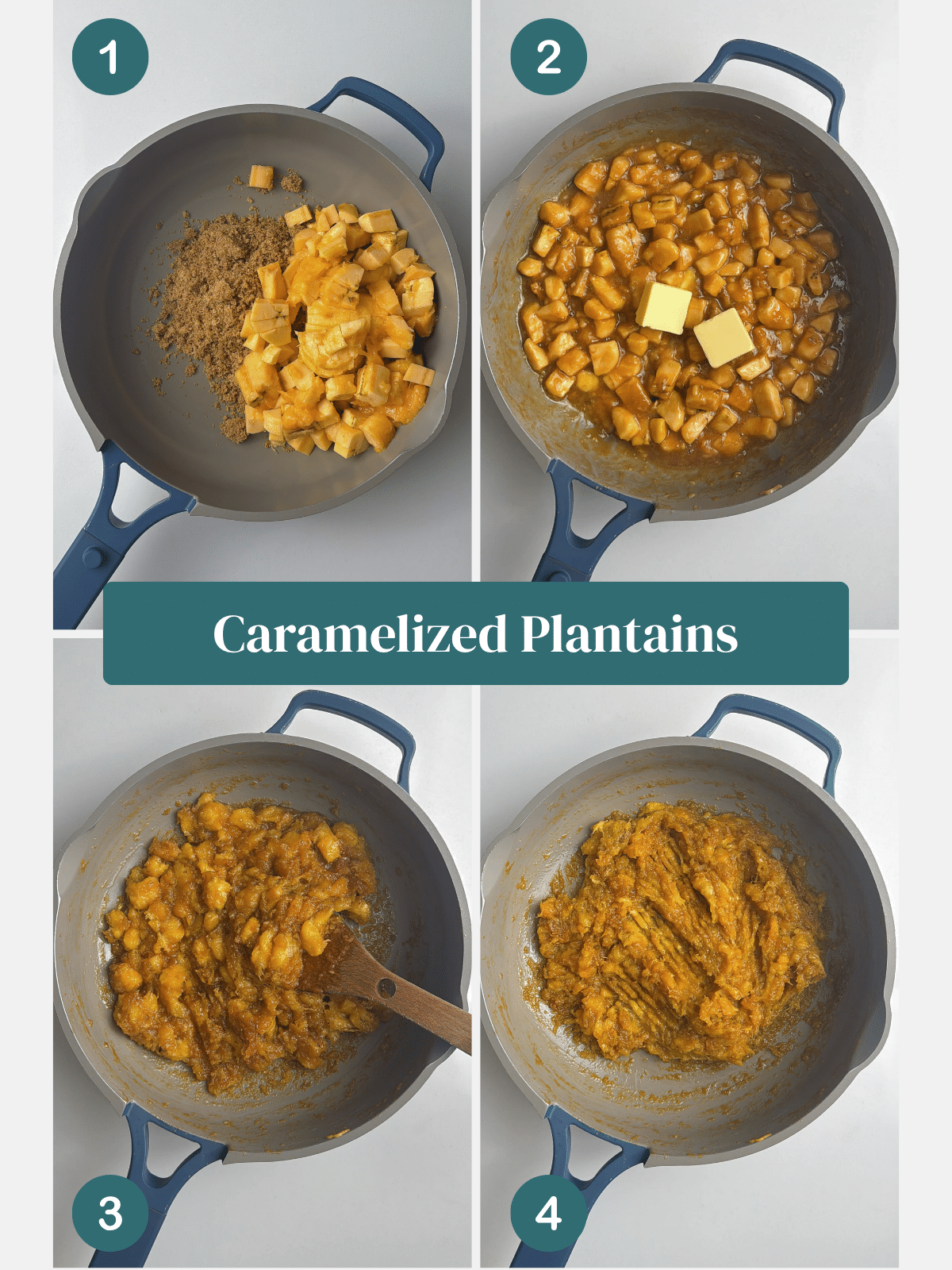
Then I cook them with butter and brown sugar over medium heat. I stir them often until they’re soft and fully cooked, about 10 minutes. This step is where all that deep, caramel-like flavor starts to build.
Mix the Wet Ingredients
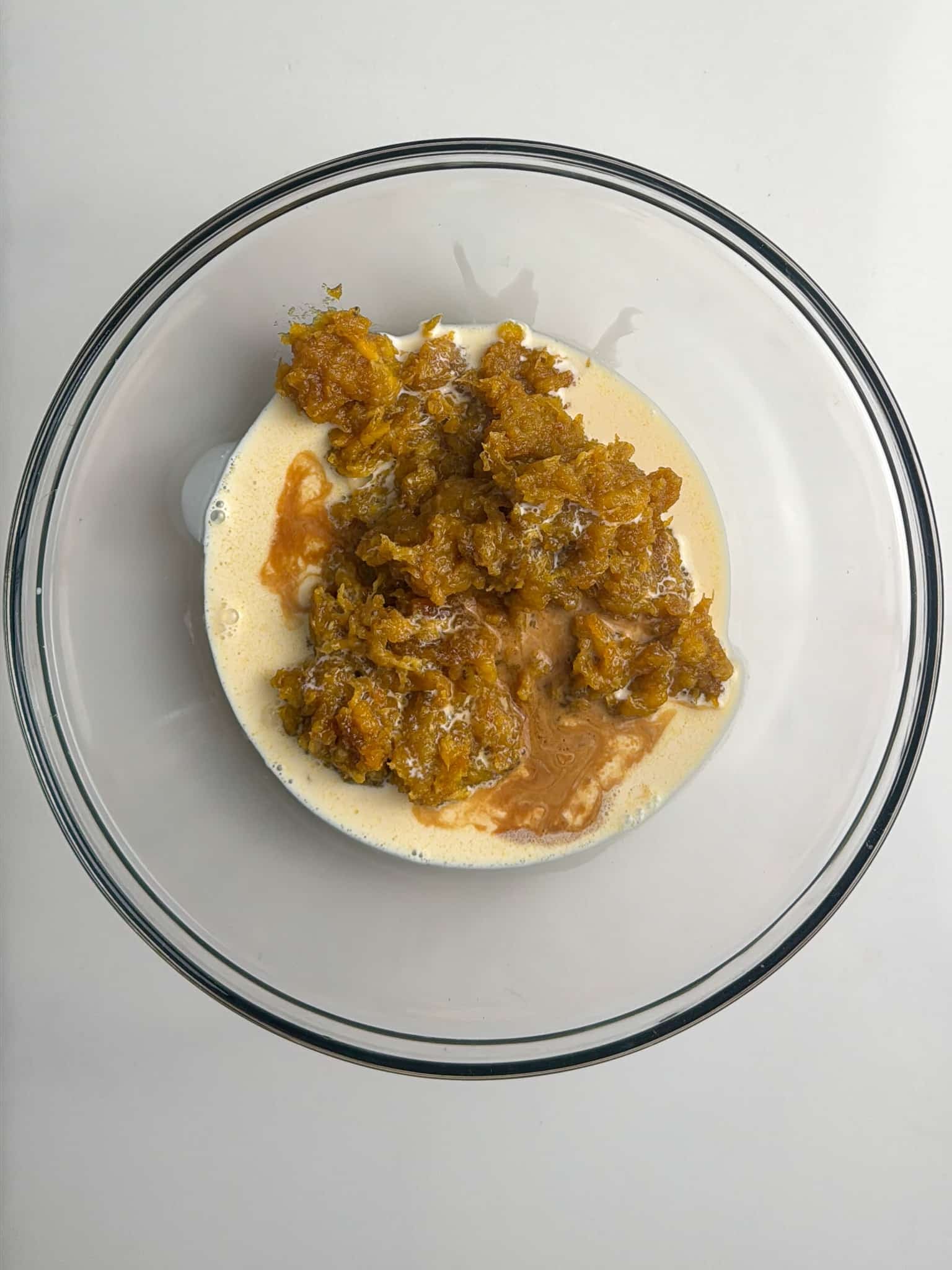
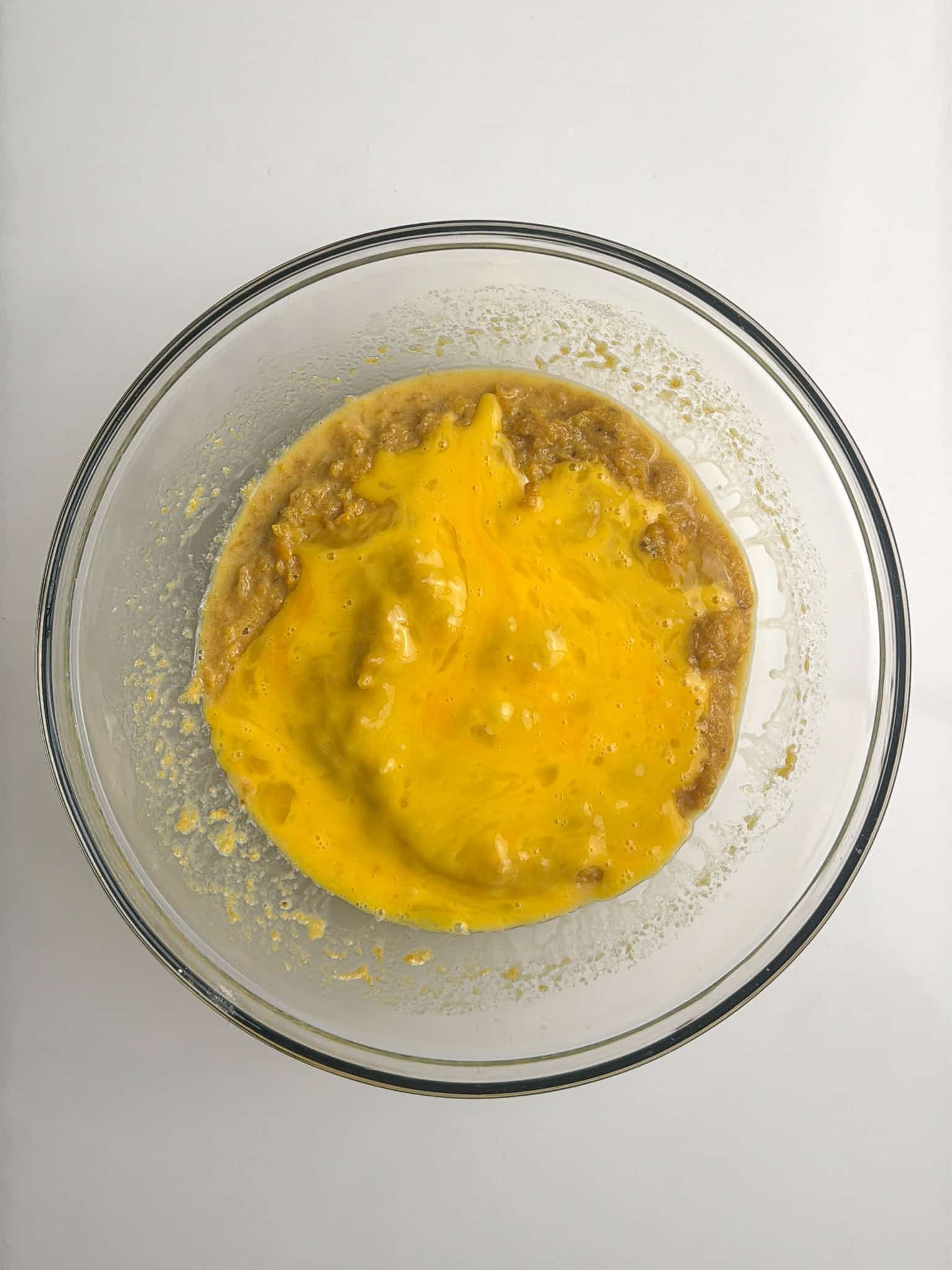
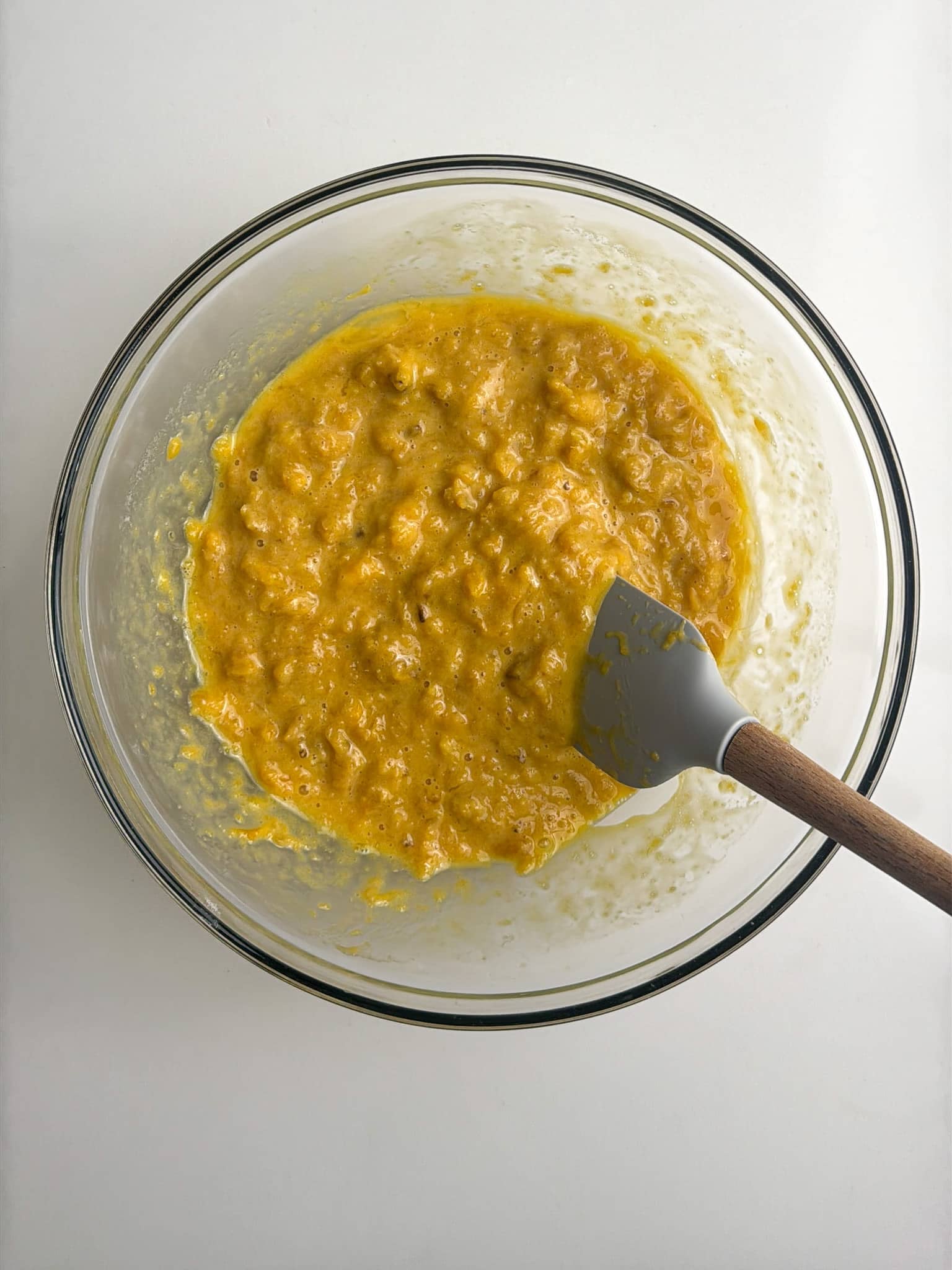
Once the plantains are cooked, I mash them until mostly smooth and let them cool slightly. Then I mix in the evaporated milk, vanilla, and whisked eggs until everything is well combined. The mixture should be smooth with a little texture from the plantains.
Combine the Dry Ingredients
In a separate bowl, I mix together the flour, baking powder, baking soda, salt, and spices. This helps make sure everything is evenly distributed before it goes into the batter. It also keeps the texture consistent throughout the bread.
Make the Batter
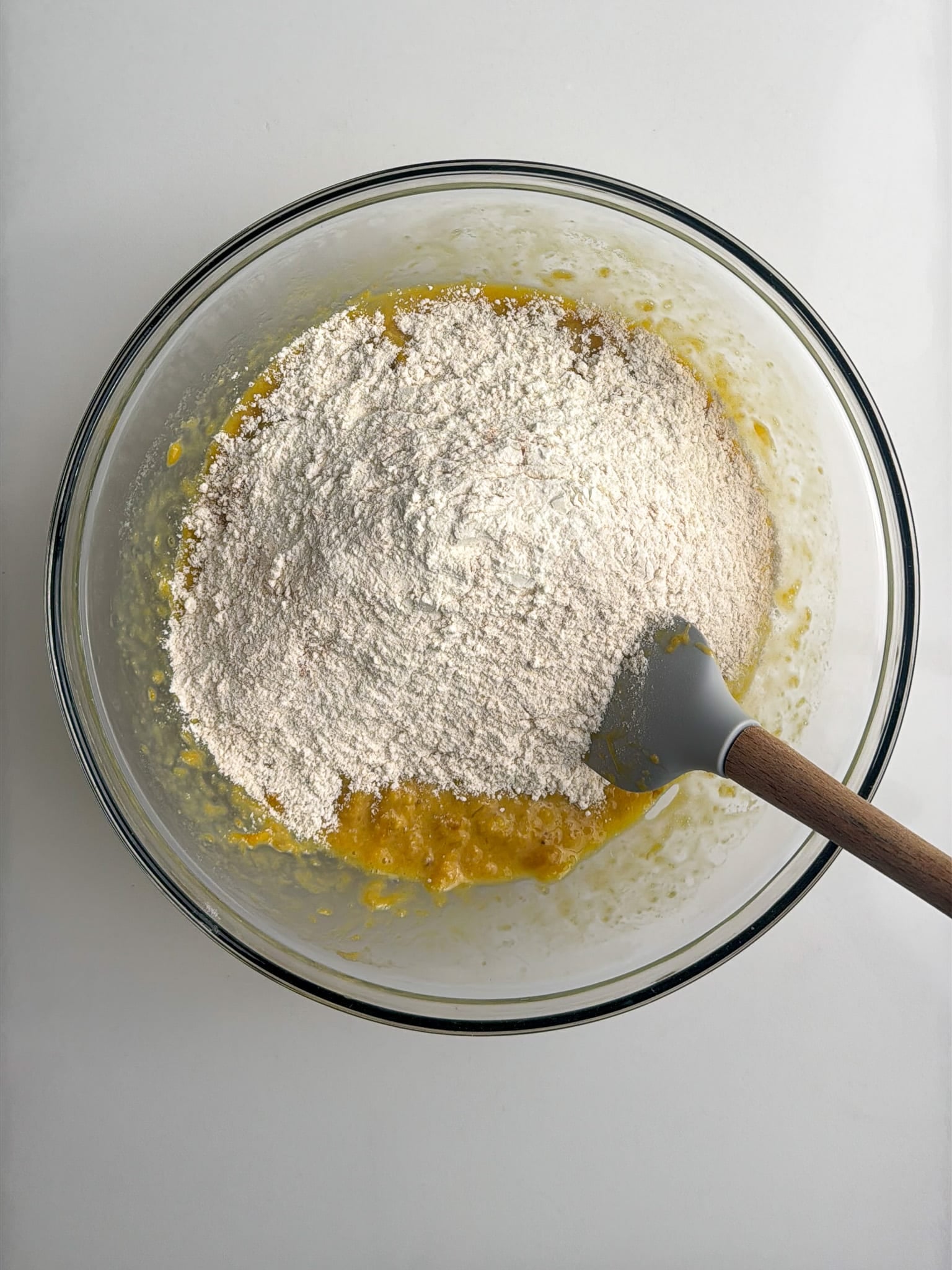
I add the dry ingredients into the wet mixture and gently mix until a smooth batter forms. I try not to over mix here, just enough to bring everything together. The batter should be thick but easy to spread.

Bake the Plantain Bread
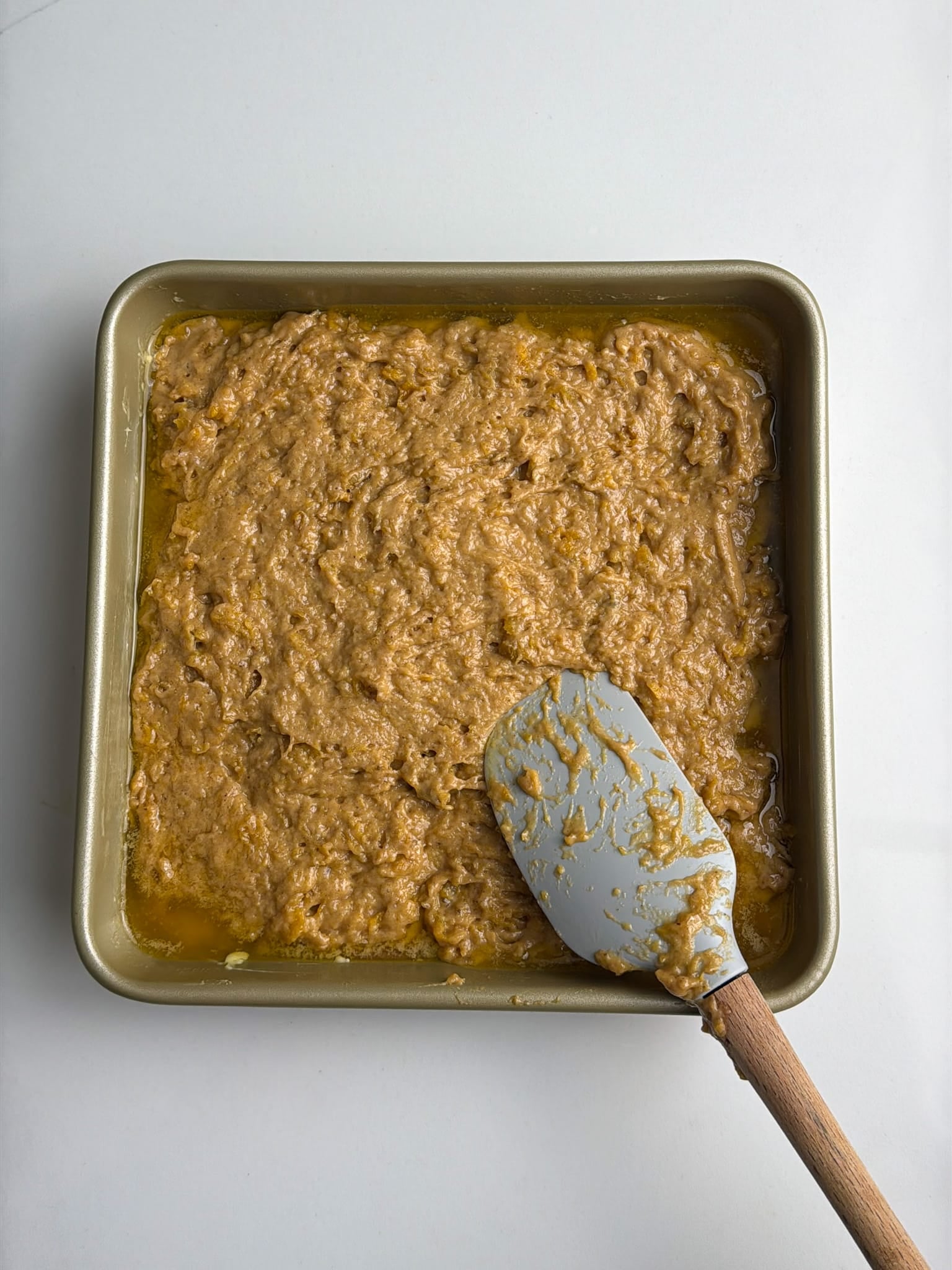
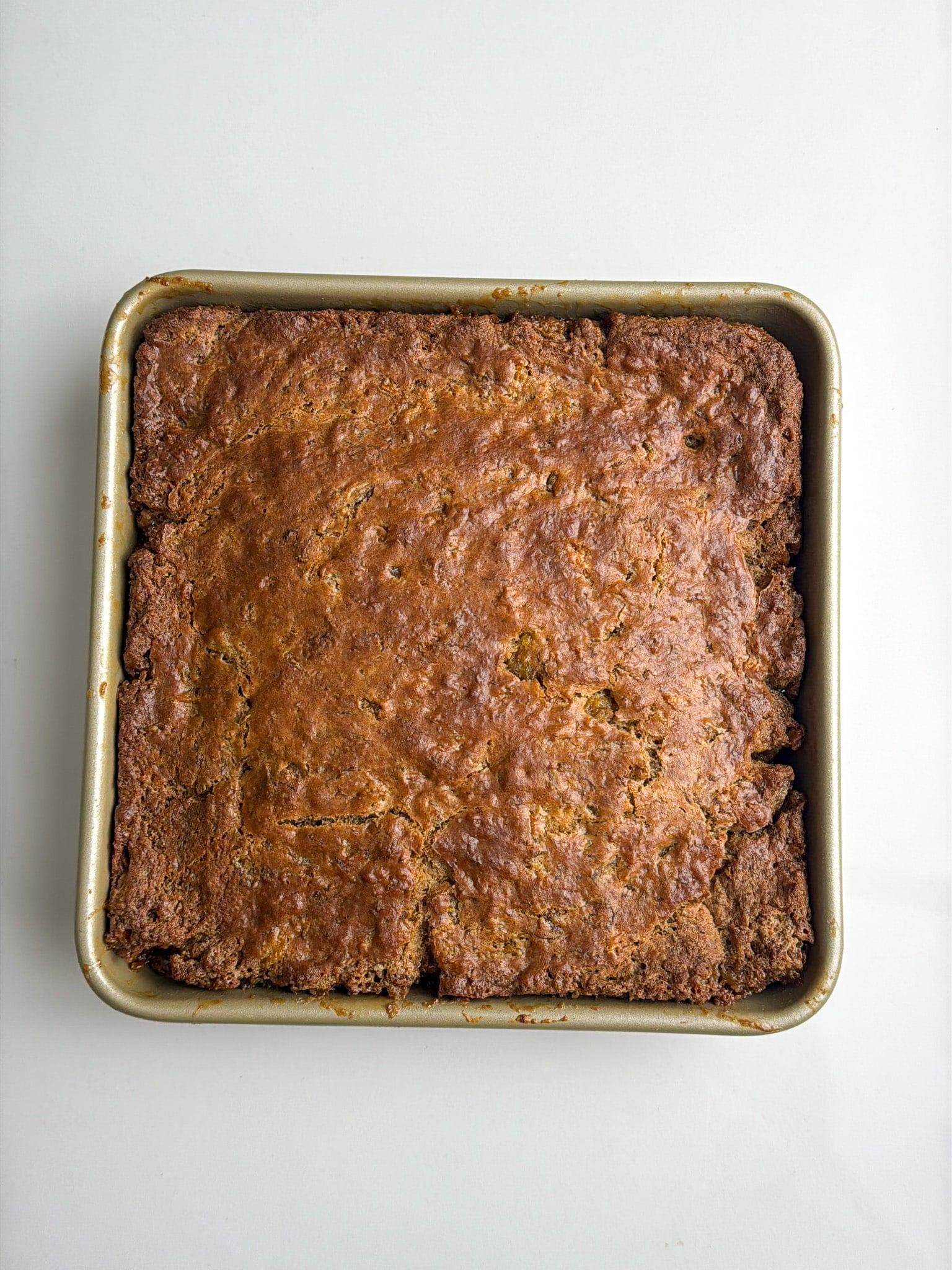
I pour the batter into a greased baking dish or divide it between two loaf pans. Then I bake it at 350°F until golden and a tester inserted in the center comes out clean. Once it’s done, I let it cool before slicing and serving.
Make the Upside Down Plantain Cake (Optional)
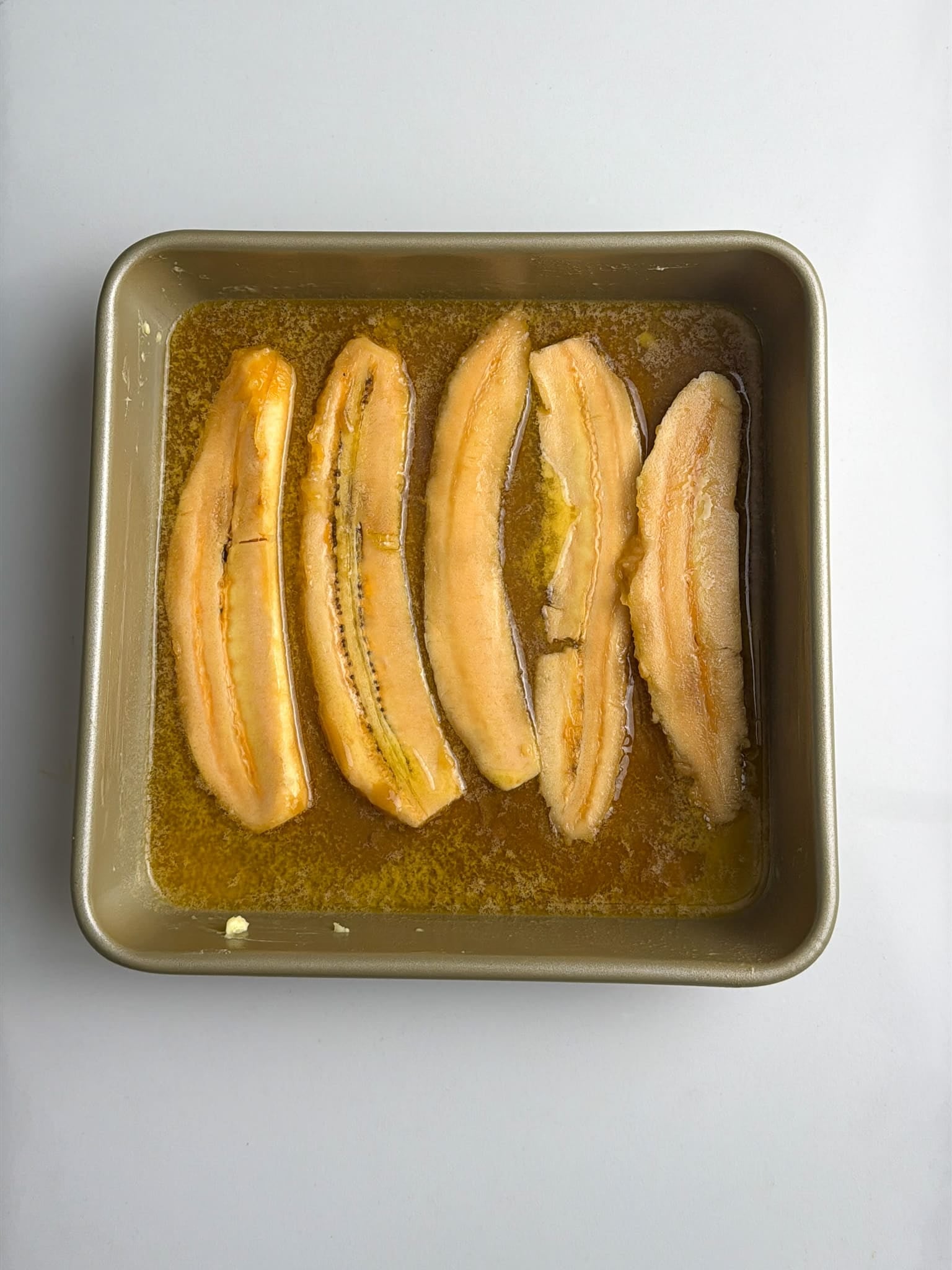
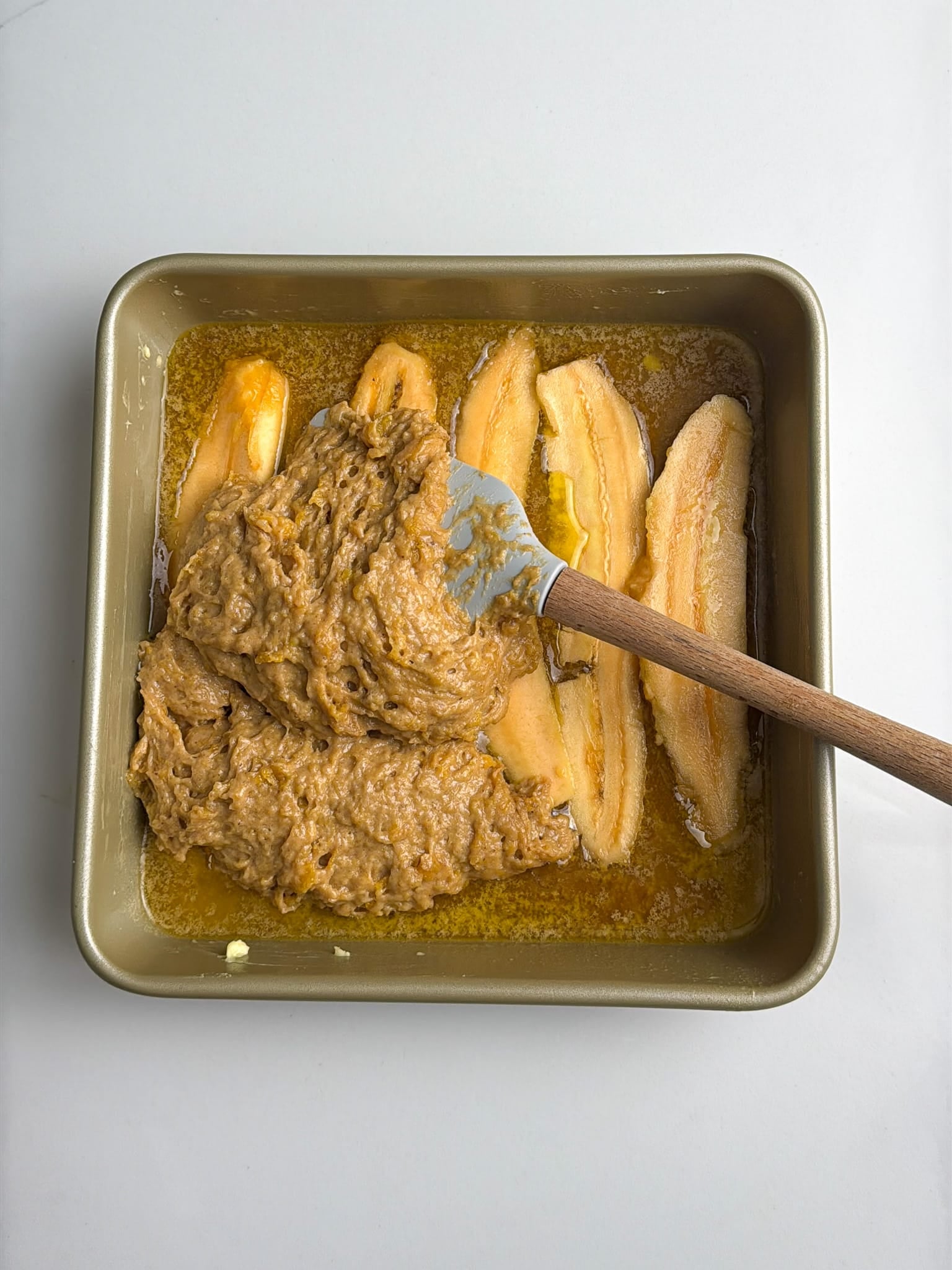
For this version, I melt butter and sugar together and pour it into a greased pan. Then I arrange sliced plantains on top before adding the batter and spreading it evenly.
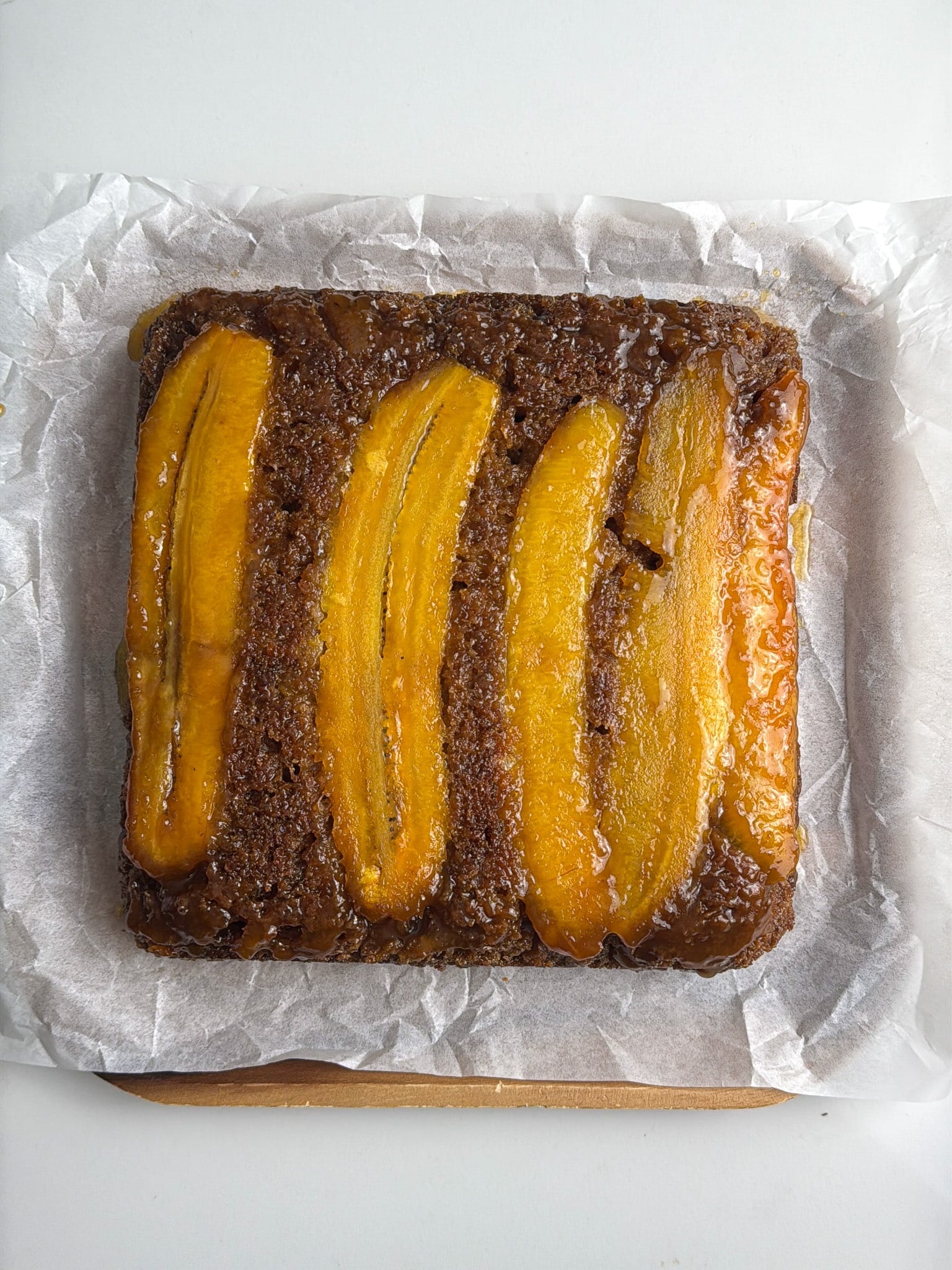
After baking, I flip it out while it’s still warm so the caramel doesn’t stick to the pan.
Storage
I usually let the plantain bread cool completely before storing it so it doesn’t trap moisture and get soggy. If I’m planning to eat it within a couple of days, I keep it in an airtight container at room temperature, where it stays soft and moist for up to 2 days. For longer storage, I move it to the refrigerator in a sealed container, where it will keep well for up to 5 days.
When I’m ready to enjoy it again, I either let it come to room temperature or warm up a slice in the microwave for about 10–15 seconds. If I want the edges a little crisp, I’ll reheat it in the oven at 300°F for a few minutes.
Tips for the Best Plantain Bread
- Use very overripe plantains. The darker and softer they are, the sweeter and more flavorful your plantain bread will be.
- Don’t skip cooking the plantains. This step brings out that deep, caramelized sweetness and improves the overall texture.
- Let the plantains cool before adding eggs. This prevents the eggs from scrambling and keeps the batter smooth.
- Don’t overmix the batter. Mixing just until combined helps keep the bread soft and tender instead of dense.
- Flip the upside-down version while warm. This keeps the caramel from hardening and sticking to the pan.
Plantain Cake Recipe Variations
- Keep it classic. Pour the batter straight into the pan for a simple, traditional plantain bread.
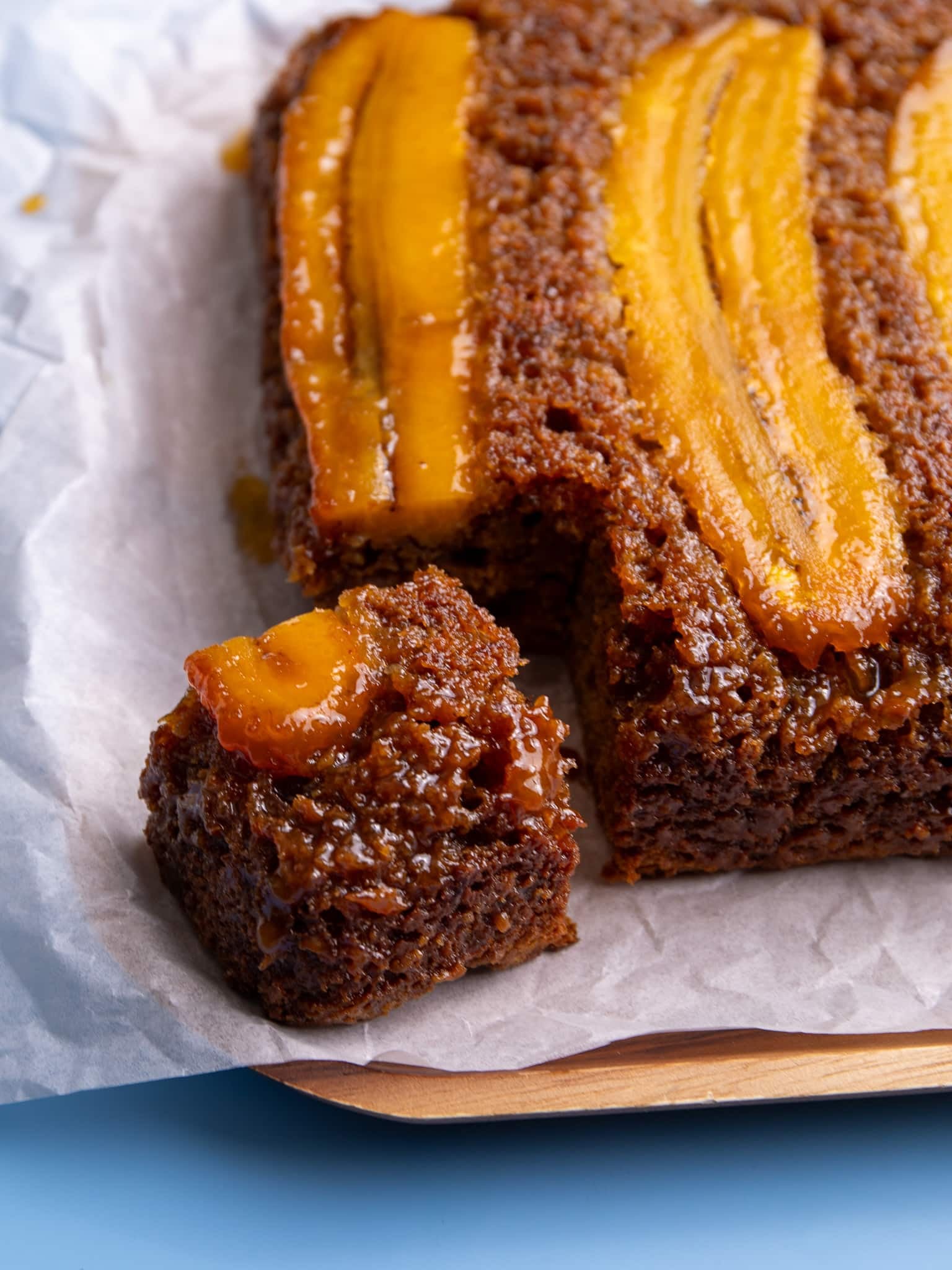
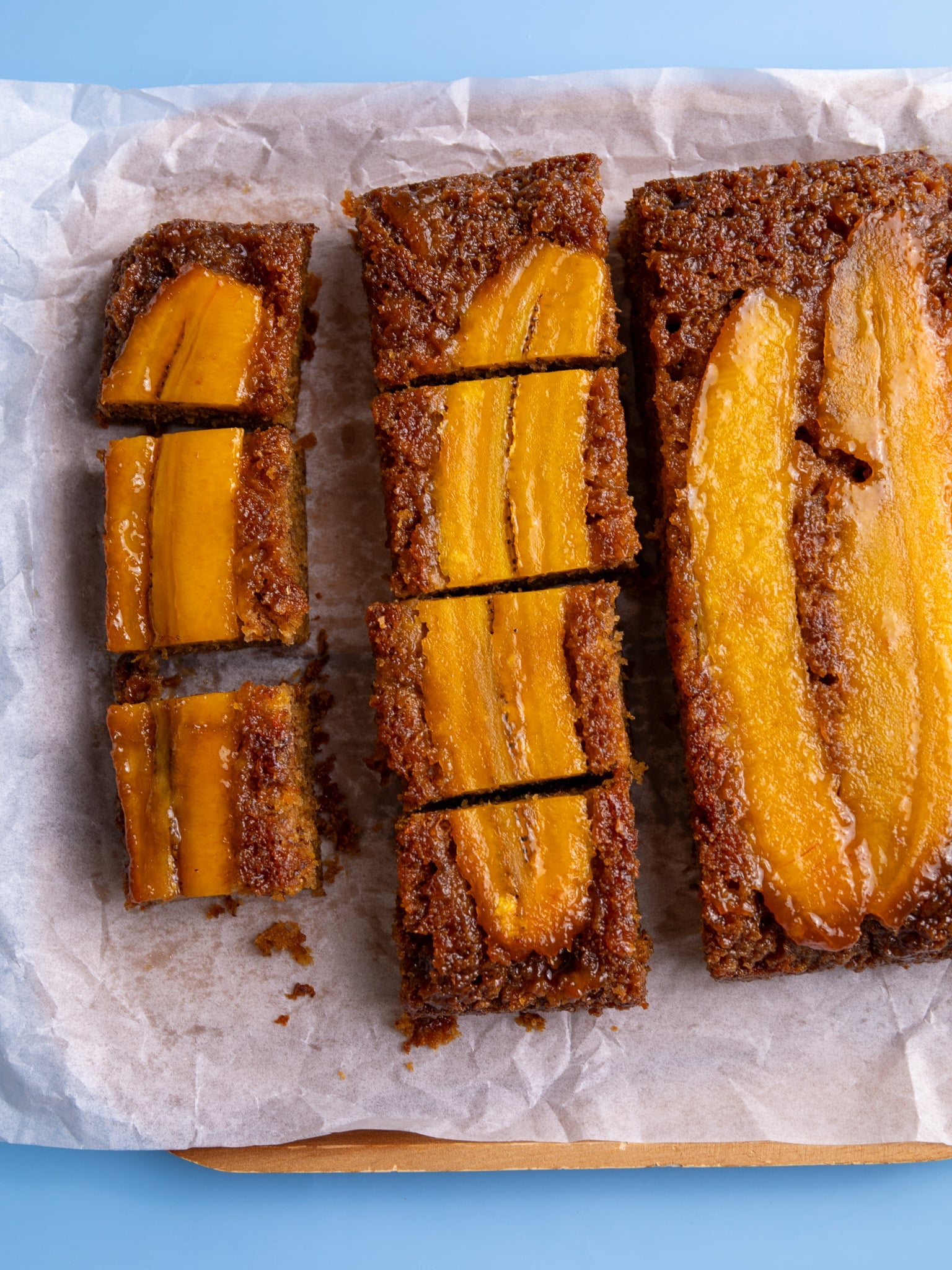
- Make it upside down. Add a caramel layer with sliced plantains for a richer, more indulgent version baked right into the top.
- Add more plantains. If you’re anything like me, more plantains is always the right choice for extra flavor and texture.
Frequently Asked Questions
No. Plantains are starchier, less sweet, and typically used for cooking, while bananas are softer and sweeter and are usually eaten raw.
Not exactly. While they’re similar in structure, plantain bread is slightly denser and has a different flavor, especially when using overripe plantains. In this recipe, cooking the plantains first brings out a deeper, more caramelized sweetness that sets it apart.
Yes. Let the bread cool completely, then wrap it tightly and store it in the freezer for up to 2 months; thaw at room temperature or warm before serving.
You can use either a loaf pan or a square baking dish, depending on what you have. A loaf pan will give you a more traditional slice, while a square pan creates slightly thinner pieces and works especially well if you’re making the upside-down version.
Different Ways to Use Plantains
If you have extra plantains on hand, here are a few more ways to use them:

Plantain Bread Recipe

Equipment
- 2 Mixing Bowls
- Greased 9×9 Square Pan (or 2 loaf pans)
- Parchment Paper
Ingredients
- 2 plantains (overripe and black)
- 1/2 cup light brown sugar
- ½ cup evaporated milk
- 1 teaspoon vanilla extract
- 1/2 cup butter
- 2 large eggs (whisked)
- 2 cups all purpose flour may use cup for cup or all purpose gluten free flour
- 1 teaspoon baking powder
- 1 teaspoon baking soda
- ½ teaspoon salt
- 1 teaspoon ground cinnamon
- 1/4 teaspoon ground cloves
- 1/2 teaspoon grated nutmeg
For the Caramel and Topping (Upside Down Option)
- 1/2 Cup butter
- 1/2 Cup sugar
- 1 plantain (overripe and black)
Instructions
For the Batter
- Peel and dice the plantains, then add to a small saucepan or skillet, with the brown sugar and butter. Place over medium heat and cook for 10 minutes, stirring often, until the plantains are soft and fully cooked.
- Add the cooked plantains to a large mixing bowl and mash with a fork until mostly smooth. Let cool slightly before adding the milk, vanilla, and whisked eggs. Mix until fully combined, then set aside.
- In a separate bowl combine the dry ingredients: the flour, baking powder, baking soda, salt, ground cinnamon, ground cloves and grated nutmeg and mix well.
- Add the dry ingredients to the plantain mixture and mix until just combines. Do not overmix.
- Preheat your oven to 350 °F. Pour the batter into a greased 9×9 baking dish or separate evenly between 2 greased loaf pans. Bake for 30 minutes, or until golden brown and a tester inserted in the center comes out clean. For the upside down version with the caramelized plantains see below.
- Remove from the oven and let cool before removing from the pan. Slice and serve warm.
Upside-down Plantain Bread/Cake
- Add the butter and sugar to a small saucepan or skillet over medium heat. Cook until the butter and sugar are completely melted. Then pour into a greased 9×9 pan.
- Peel and slice the plantain into 5-6 long slices, then arrange them in the baking pan on top of the melted butter and sugar. Add the batter in dollops and gently spread with a rubber spatula to evenly cover the bottom. Bake in a preheated oven for 30 minutes, or until golden brown and a tester inserted into the center comes out clean.
- Remove from the oven and (if needed) run a knife along the edges to loosen the bread. Carefully invert onto a plate or cooling rack while still warm. Do not let it cool before flipping or the brown sugar will harden and cause the bread to stick to the pan. Let cool slightly before slicing.
Video
Nutrition
The information listed in the recipe card is an estimate provided by an online nutrition tool. The tool evaluates ingredient names and amounts then makes calculations based on the number of servings listed for the recipe. It is provided as a general guideline and not as a precise calculation. For precise nutrition information please feel free to add the ingredients to your preferred nutrition calculator or consult a doctor or licensed nutritionist.
 Shrimp Ceviche with Mangoes and Avocados
 Jamaican Jerk Seasoning (Pantry Friendly Dry Rub)
 Fried Sweet Plantains
 Plantain Quiche
Leave a Rating and a Comment