

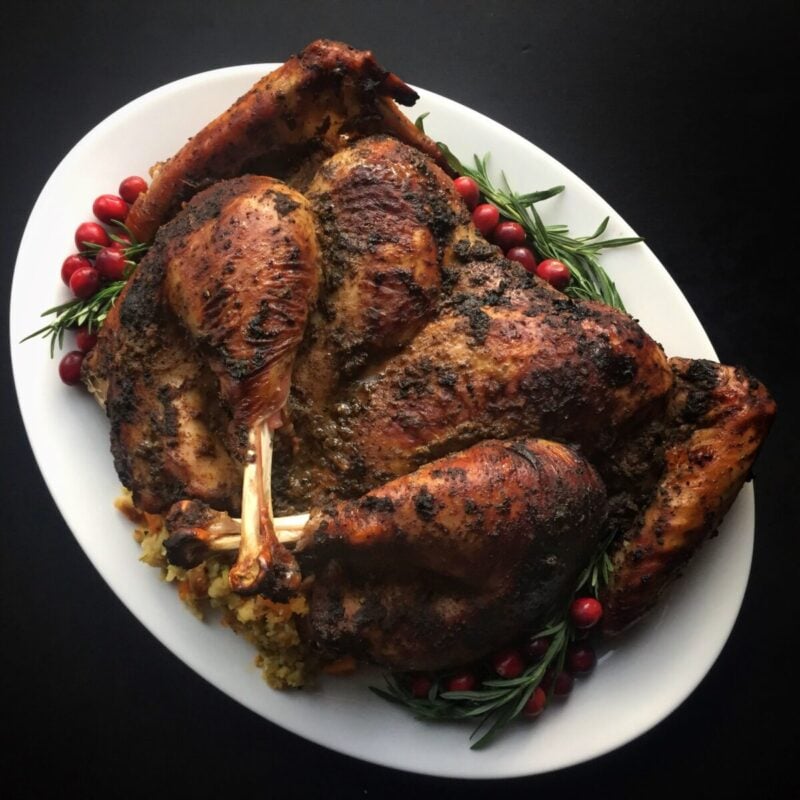
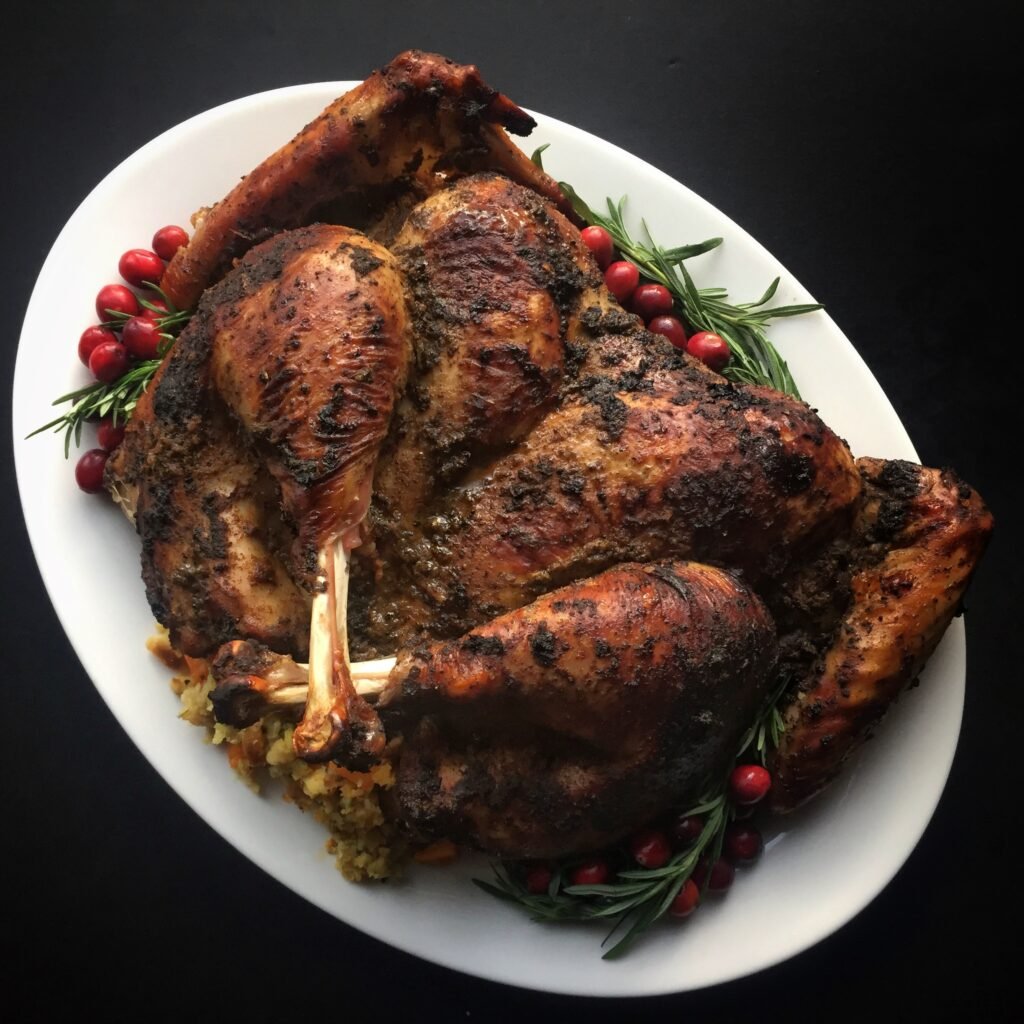
Jerk turkey has become my favorite way to make Thanksgiving turkey. I marinate the whole bird in my homemade jerk marinade, with its scotch bonnet, thyme and allspice, then spatchcock it so it roasts in about half the time of a traditional turkey. You get juicy meat, crispy, smoky-spiced skin, and a Caribbean centerpiece that frees up your oven for all the sides.
Recipe update (October 2026): I’ve updated this recipe with my latest tips, including step-by-step instructions for spatchcocking, coarse kosher salt in the rub, and an optional flour wash in the recipe notes. New photos coming soon!
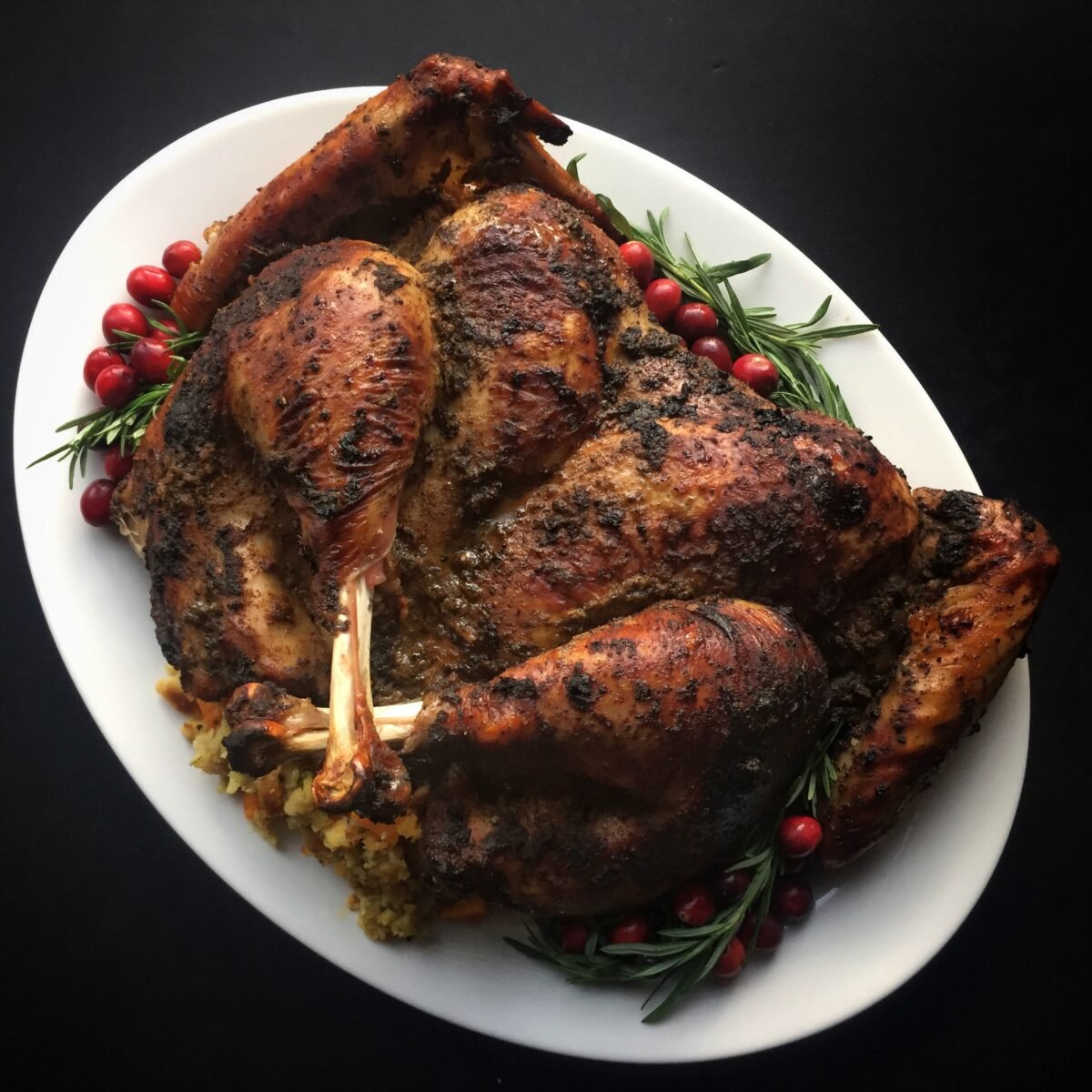
A Caribbean Thanksgiving Jerk Turkey
A few years ago, I decided to host a Caribbean-themed Thanksgiving: all the traditional Thanksgiving dishes, but with my Caribbean spin on them. That was the first time I made jerk turkey, and it was so flavorful that it’s now one of my Thanksgiving essentials!
- A Caribbean Thanksgiving Jerk Turkey
- Why You’ll Love This Jerk Turkey Recipe
- Ingredients for Jerk Turkey
- How to Make Jerk Turkey in the Oven
- How to Spatchcock a Turkey
- Marinate the Turkey
- Baking the Jerk Turkey
- Rest and Carve the Turkey
- Storage
- Tips for the Best Spatchcock Turkey
- Frequently Asked Questions
- Caribbean Jerk Turkey
What is a spatchcock turkey? Spatchcocking, also called butterflying, means cutting out the turkey’s backbone and pressing it flat. Because the bird lies flat, it cooks evenly, the skin crisps all over, and the breast stays juicy instead of drying out while the legs finish. Have you ever roasted a turkey this way? Once you try it, it’s hard to go back.
Why You’ll Love This Jerk Turkey Recipe
- Perfect for the holidays: I cook a whole turkey once a year, and this is my go-to flavor and method. It’s an easy way to give your Thanksgiving turkey a Caribbean twist.
- Half the cooking time: A whole roasted turkey in half the time? Sign me up! Spatchcocking flattens the bird so it roasts evenly in the oven, and every piece gets crispy, jerk-spiced skin.
- No brine needed: Instead of brining, the turkey sits in jerk marinade in the refrigerator for 24 hours or up to 2 days. All that flavor soaks into the meat, so there’s no extra brining step.
- Beginner-friendly: If this is your first time making a whole turkey, this is a great place to start. The step-by-step instructions keep it simple.
Ingredients for Jerk Turkey
This jerk turkey has double the flavor because it gets a dry rub and a jerk marinade.
- Turkey: Use a 10 to 12 lb turkey.
- Butter: Sliced and laid on the breast before baking.
For the dry rub:
- Brown sugar
- Garlic powder
- Paprika
- Onion powder
- Cayenne pepper
- Black pepper
- Salt: I use coarse Kosher salt
For the jerk marinade:
- Jerk marinade: Use one batch of my homemade Jamaican jerk marinade or store-bought jerk seasoning. My homemade version is gluten-free, paleo and loaded with bold scotch bonnet, thyme and allspice flavor. In my humble opinion, it’s better than any jar I’ve tried. If you’d rather use a jar, Walkerswood and Grace are my two favorites.
See the recipe card for quantities
How to Make Jerk Turkey in the Oven
How to Spatchcock a Turkey
Spatchcocking sounds fancy, but it only takes a few minutes.
- Place the turkey breast-side down on a cutting board, with the neck end facing you.
- Using kitchen shears or a sharp knife, cut along both sides of the backbone and remove it. Save it for stock or gravy.
- Using the same shears, make a small slit in the breastbone. This makes the turkey much easier to flatten.
- Flip the turkey breast-side up and press down firmly on the breast until it lies flat.
- Tuck the wing tips behind the breast.
Want to see it first? Watch this quick video on how to spatchcock a turkey.

Optional: Clean the Turkey the Caribbean Way
In many Caribbean homes, we clean meat before seasoning it, and I do it with turkey too. Turkey can have a gamey taste, which in my opinion is the number one reason Caribbean people don’t like it. I borrowed the flour method I use for goat and lamb.
After spatchcocking, I coat the turkey in ½ cup of flour, let it sit for 15 minutes, then wash it off completely. Next, I bathe it in the juice of two lemons for another 15 minutes and rinse again. I’m not going to lie, it’s a lot of washing. But my turkey had none of that gamey taste, so it was worth it. Try it next time and tell me what you think!
Make a Dry Rub for the Jerk Turkey

Add the brown sugar, garlic powder, paprika, onion powder, cayenne pepper, black pepper and kosher salt to a zip-top bag. Seal it and shake until everything is mixed. A small bowl works too. Have my Jamaican jerk seasoning in your pantry? Use 4 to 5 tablespoons in place of this rub for even more jerk flavor.

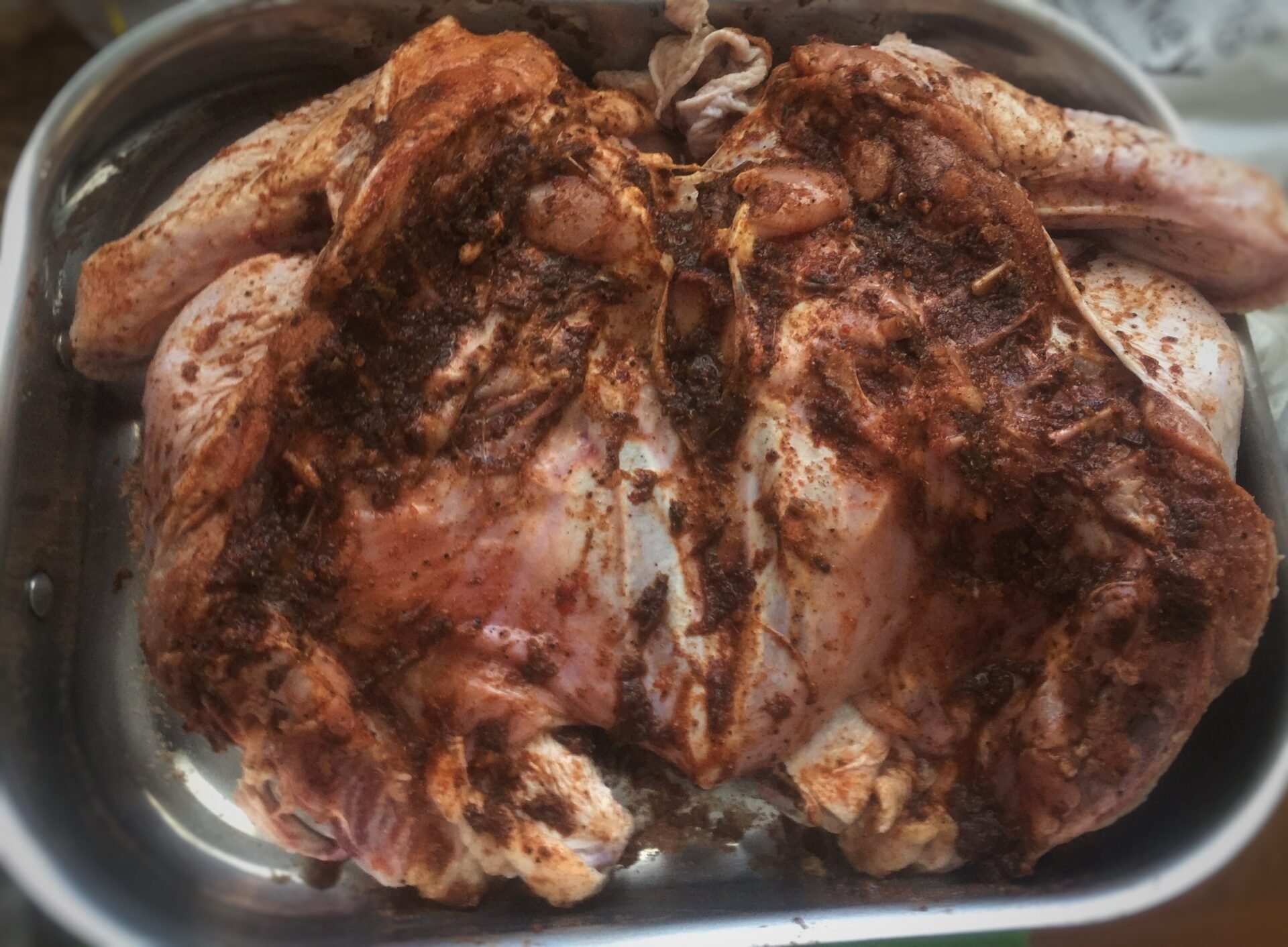
Pat the turkey dry with paper towels, whether you washed it or not. Dry skin helps the rub stick and the skin crisp up. Then rub about half of the dry rub all over the underside (bone side) of the turkey. Be generous!
Adding the Jerk Seasoning
Next, rub the jerk marinade over the underside of the turkey. You’ll use one batch of my homemade jerk marinade, or about ½ cup of store-bought, for the whole turkey. Rub about half of it over the underside, working it into every nook and cranny, including under the skin wherever you can reach.
Flip the turkey breast-side up and repeat: dry rub first, then the jerk marinade. Cover every inch.
Tip: Wear gloves when working with jerk marinade. Scotch bonnet sticks to your hands long after you’ve washed them.

Marinate the Turkey
Place the seasoned turkey in a large stainless steel bowl and cover it tightly with plastic wrap. You’ll need a container big enough for the turkey that still fits in your fridge. An extra-large brining bag works well too. Refrigerate for at least 24 hours or up to 2 days. This long marinade does the job of a brine. The jerk flavor soaks deep into the meat, so every bite is seasoned, not just the skin.
Plan ahead: For Thanksgiving, season the turkey on Tuesday or Wednesday so it’s ready to roast on Thursday.
Baking the Jerk Turkey
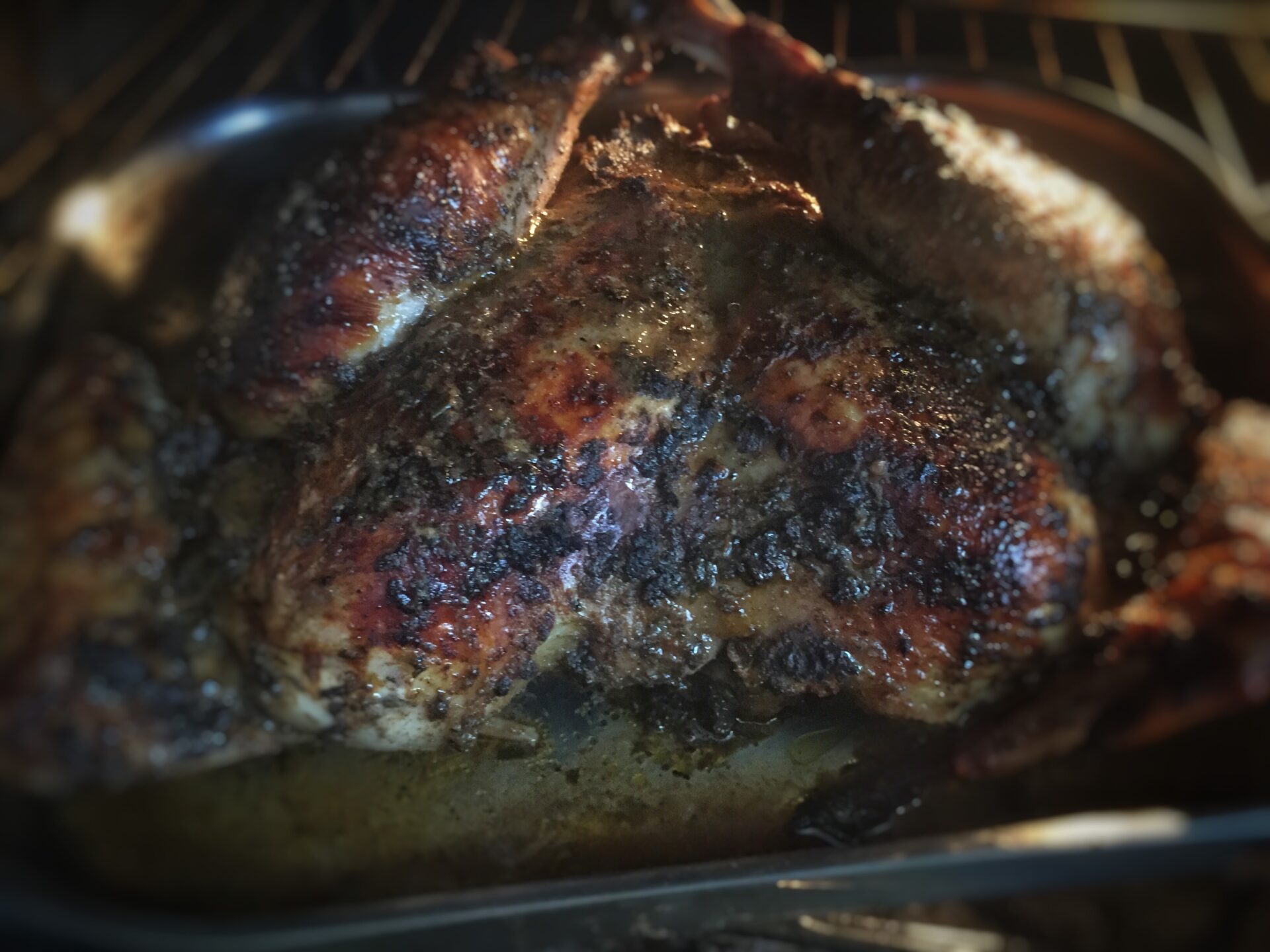
Take the turkey out of the refrigerator about 1 hour before baking so it roasts more evenly. Slice about 2 tablespoons of cold butter and lay the slices on the breast. Roast the turkey uncovered at 400°F for 1 hour, rotating the pan and basting with the juices halfway through so it browns evenly. Most ovens have a hot spot. Mine browns faster on the right, so adjust for yours.
After 1 hour, take the turkey out of the oven and baste it with the pan juices. Cover the pan with foil (oven mitts make this easier and safer), then lower the heat to 375°F. Roast for another 30-45 minutes, or until a meat thermometer in the thickest part of the breast and thighs reads 165°F.
Optional: For a crispier underside, flip the turkey once it’s done and roast the bone side for another 15 minutes. My husband loves chewing on those bones, so I always do this for him.
I expected my turkey to take 2 hours, but it was done at 1½ hours. Ovens and turkey sizes vary, so yours may need up to 30 minutes more. Start checking at 1½ hours.
Rest and Carve the Turkey
Let the turkey rest, loosely covered with foil, for 20 to 30 minutes before carving. This gives the juices time to settle back into the meat, and it frees up your oven for the sides.
Spatchcocked turkey is easier to carve than a whole bird. Cut off the legs and thighs, then the wings. Slice the breast meat off the bone and cut it across the grain. Arrange everything on a platter and spoon some of the pan juices over the top.
Skip the gravy. Jerk turkey has so much flavor that it doesn’t need it. If you’d like a sauce on the side, serve it with jerk sauce. The recipe is on page 140 of my cookbook, Caribbean Paleo.
Storage
Lucky enough to have leftovers? Store leftover turkey in airtight containers in the fridge for up to 4 days, or freeze it for up to 3 months. I always have leftover breast meat, so I use it in place of chicken in my strip chicken fried rice and Guyanese chicken chow mein. For the chow mein, add the turkey in with the cooked veggies. Leftovers are also great in sandwiches, salads and breakfast hash!
Tips for the Best Spatchcock Turkey
- Try the flour wash. Cleaning the turkey with flour and lemon gets rid of the gamey taste. It’s optional; see the recipe card notes.
- Give it time. Marinate the turkey in the refrigerator for at least 24 hours. I’ve gone as long as 2 days, and it was even better.
- Take the chill off. Take the turkey out of the refrigerator about 1 hour before baking so it roasts more evenly.
- Butter the breast. Just before the turkey goes in the oven, slice about 2 tablespoons of cold butter and lay the slices on the breast. No need to soften it.
- Round out the table. Serve your jerk turkey with five cheese mac and cheese, sweet potato gratin, brown sugar green beans and cranberry mango chutney.
Frequently Asked Questions
Jerk turkey is turkey seasoned in the Jamaican jerk style, with a spicy, smoky blend of scotch bonnet, allspice (pimento) and thyme. Jerk is traditionally cooked over pimento wood.
Jerk turkey is moderately spicy. The heat comes from the hot pepper in the jerk marinade. My homemade jerk marinade uses scotch bonnet, but wiri wiri, a pepper widely used in Guyana, or habanero works too. For a milder turkey, remove some of the seeds and ribs from the pepper. For more heat, add another pepper.
Spatchcock the turkey, rub it with a dry rub, then coat it in jerk marinade, under the skin too. Marinate it in the refrigerator for 24 hours to 2 days, then roast. The full steps are in the recipe card below.
No. The jerk marinade does the job of a brine. A long marinade in the refrigerator seasons the meat all the way through, so you can skip the brining step.
At least 24 hours, and up to 2 days for the deepest flavor. For Thanksgiving, season it on Tuesday or Wednesday.
Yes. Use about ½ cup of a jarred jerk seasoning (the paste, not the marinade). Walkerswood and Grace are my two favorites. My homemade jerk marinade is easy to make, though, and it’s gluten-free.
Thaw it first. Allow about 24 hours in the refrigerator for every 4 to 5 lbs, so 2 to 3 days for a 10 to 12 lb turkey. Then spatchcock and marinate it. For Thanksgiving, start thawing on the weekend before.

Caribbean Jerk Turkey

Equipment
- Aluminum Foil
Ingredients
- 1 young turkey 10 to 12 lbs
- 2 tablespoons butter (sliced)
For Dry Rub:
- 2 tablespoons brown sugar
- 2 tablespoons garlic powder
- 1 tablespoon paprika
- 2 tablespoons onion powder
- 1/2 teaspoon cayenne pepper
- 1/2 teaspoon black pepper
- 2 teaspoons coarse kosher salt
Jerk Marinade:
- 1/2 cup Jerk Seasoning (or 1 batch of my homemade Jerk Marinade)
Instructions
- Spatchcock: Place the turkey breast-side down. Using kitchen shears or a sharp knife, cut along both sides of the backbone and remove it. Make a small slit in the breastbone with the shears. Flip it breast-side up and press firmly on the breast until it lies flat. Tuck the wing tips behind the breast.
- Dry: Pat the turkey dry with paper towels.
- Make the rub: Add the dry rub ingredients to a zip-top bag and shake to mix.
- Season the underside: Turn the turkey bone-side up. Rub it with half the dry rub, then half the jerk marinade, working it into every nook and under the skin where you can.
- Season the top: Flip the turkey breast-side up and repeat with the remaining dry rub and jerk marinade, including the neck cavity.
- Marinate: Place it in a large bowl covered tightly with plastic wrap, or in an extra-large brining bag. Refrigerate for at least 24 hours and up to 2 days.
- Take the chill off: Remove the turkey from the fridge 1 hour before baking. Preheat the oven to 400°F.
- Butter: Place the turkey breast-side up in a roasting pan large enough for it to lie flat. Lay the butter slices on the breast.
- Roast: Roast uncovered for 1 hour, rotating the pan and basting with the pan juices at 30 minutes.
- Finish: Remove from the oven and baste with the pan juices. Cover with foil, lower the heat to 375°F, and roast for 30 to 45 minutes more, until the thickest part of the breast and thighs reads 165°F.
- Rest: Let it rest, loosely covered, for 20 to 30 minutes before carving.
Notes
- Marinating: The longer the turkey marinates, the more flavor it has. Up to 2 days is best.
- Store-bought: Walkerswood and Grace are my favorite jarred jerk seasonings. Buy the jerk seasoning, not the Walkerswood jerk marinade. The marinade is thinner and tastes very different.
- Shortcut rub: Swap the dry rub for 4 to 5 tablespoons of my Jamaican jerk seasoning. It and the homemade marinade already contain salt, so no extra salt is needed.
- Optional cleaning (for a less gamey taste): After spatchcocking, coat the turkey in ½ cup all-purpose or gluten-free flour and let it sit 15 minutes. Rinse it off completely. Pour the juice of 2 lemons over the turkey, let it sit 15 minutes, then rinse and pat dry. Use gluten-free flour and the homemade marinade to keep it gluten-free.
- Optional crispy underside: Once the turkey is done, flip it and roast the bone side for 15 more minutes.
Nutrition
The information listed in the recipe card is an estimate provided by an online nutrition tool. The tool evaluates ingredient names and amounts then makes calculations based on the number of servings listed for the recipe. It is provided as a general guideline and not as a precise calculation. For precise nutrition information please feel free to add the ingredients to your preferred nutrition calculator or consult a doctor or licensed nutritionist.
 Guyanese Seven Curry (A Guide to the 7 Curries)
 Easy Pan Seared Lamb Chops
 Instant Pot Chicken Curry
 Guyanese Duck Curry
Shanti Says
I tired this recipe, will never go back to a regular baked turkey again… it was the best everrrr
Natasha Says
Absolutely wonderful! I admit that I was a bit intimidated so I didn’t spatchcock the bird. However, I did use your tips (flour and lemon) as well as the dry rub. In the past I have always used the Walkerswood jerk seasoning along with normal seasoning my bird. Your rub added another dimension to the flavor. Very flavorful and tender. (I serve my turkey precut on a platter. When we sit down we are ready to eat, not watch someone wrestle with a turkey.) I will most definitely use this again and next time I won’t be a wuss and will spatchcock my bird. Did you tie the turkey legs together? Just curious…
Althea Brown Says
So glad you tried it. I don’t tie the legs. Just press them flat.