

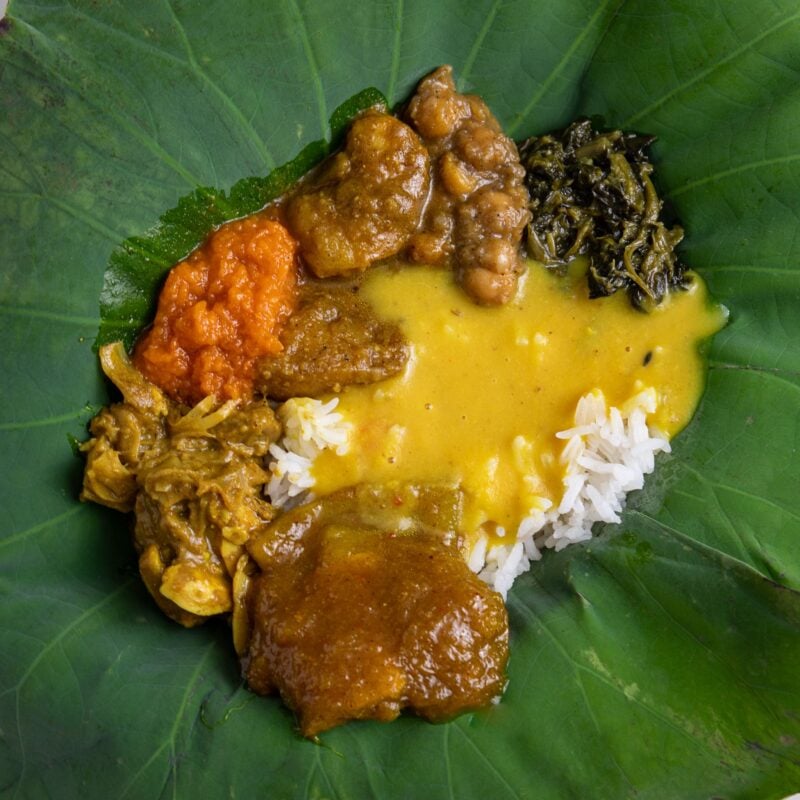
Seven curry is a traditional Guyanese meal of seven vegetarian dishes served with rice. This feast is a staple at Indo-Guyanese weddings and Hindu religious ceremonies, and it’s a cherished part of the wider Guyanese food experience.
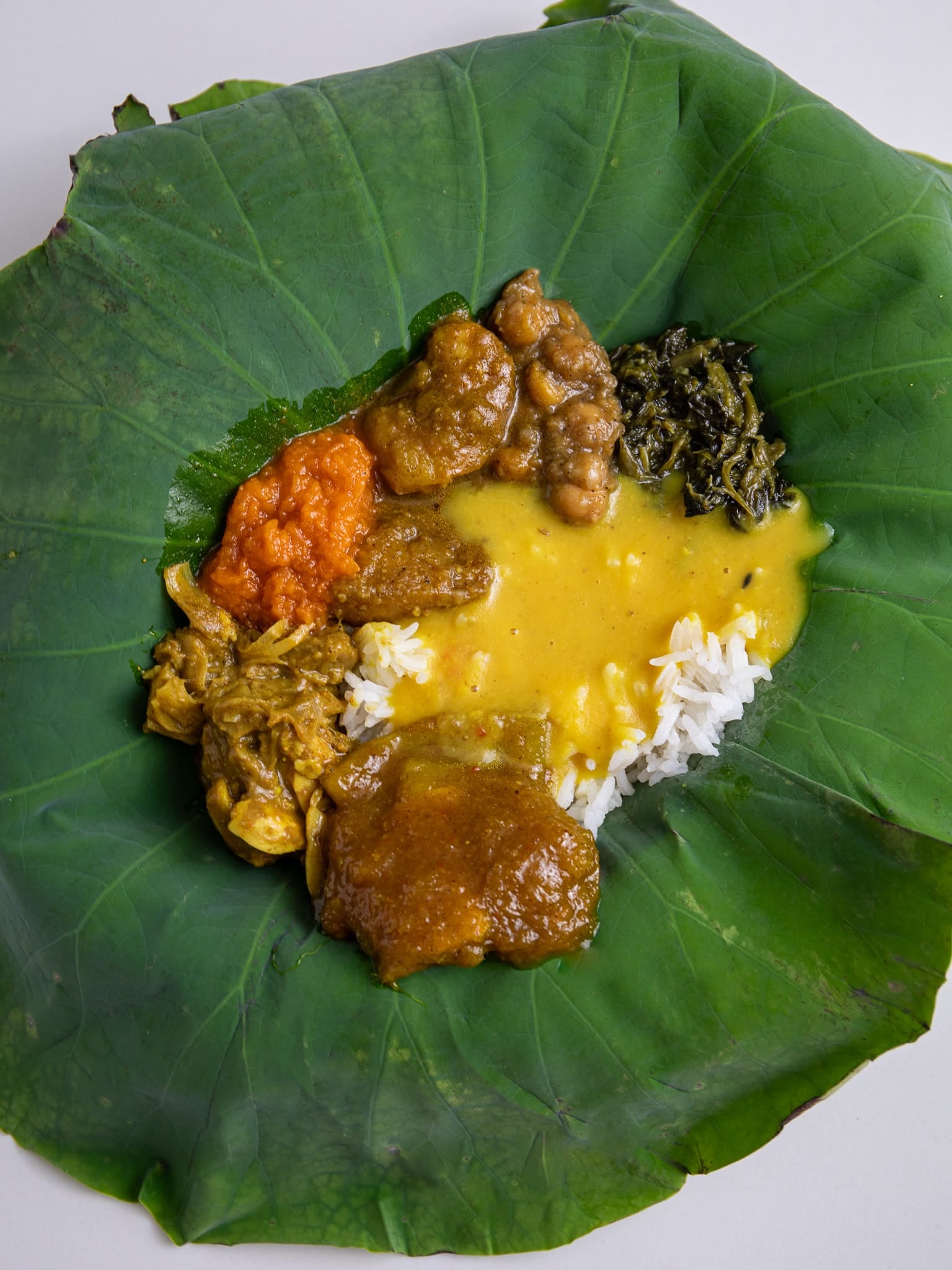
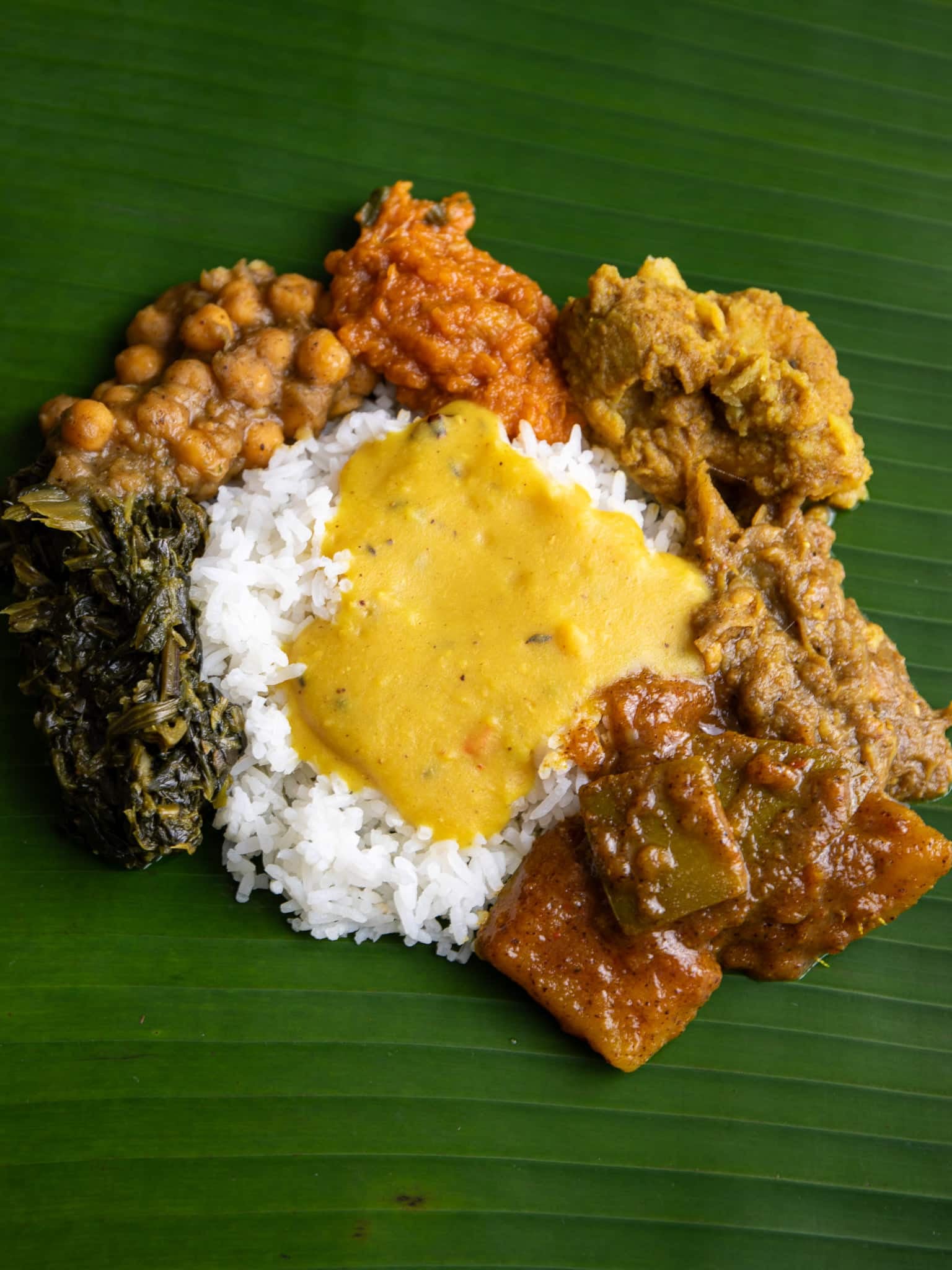
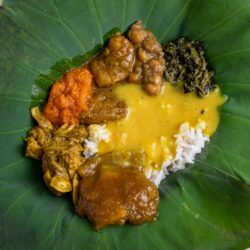
Photo disclosure: The seven curry meal pictured on purain leaves in this article was prepared and gifted by Tropical Isle Roti Shop.
Guyanese Seven Curry
Every now and then, I get a strong craving for Guyanese seven curry. My grandmother was Hindu, and as a child I took part in many jhandis, where this meal was always part of the experience. While it’s mostly enjoyed at festivals, Hindu weddings, and pujas (Hindu rituals), I sometimes find myself wanting that same spread in the comfort of my own home.
Seven curry is also a big part of Phagwah and Diwali, two Hindu festivals that are national holidays in Guyana. Phagwah (Holi) welcomes spring with colored powder and water, and Diwali, the festival of lights, is celebrated with diyas, sweets and family meals. If you’re looking for something special to make for Diwali at home, this is it.
This meal features everything from root vegetables to fruit (green mangoes). I love the marathon of it: toasting the spices for masala, making batches of curry paste, and using every pot I own to make this special meal for my family!
Curry is a universal dish with many variations. In this guide, you’ll learn the history of Guyanese seven curry and how to make the dishes that are part of this traditional meal. The meal is completely vegetarian and I love that about it.
What to Know About Seven Curry
- It’s a must-try in Guyana. Ask anyone what to eat on a visit, and seven curry is on the list.
- It doesn’t have to be seven. Most homes make 4 or 5 curries for everyday meals and save all seven for big occasions like weddings. Which seven make the plate varies a little by family, but they come from a small set of traditional vegetables.
- It’s fully vegetarian. It’s prayer food, so there’s no meat. Vegetables, legumes and spices make it filling and nourishing.
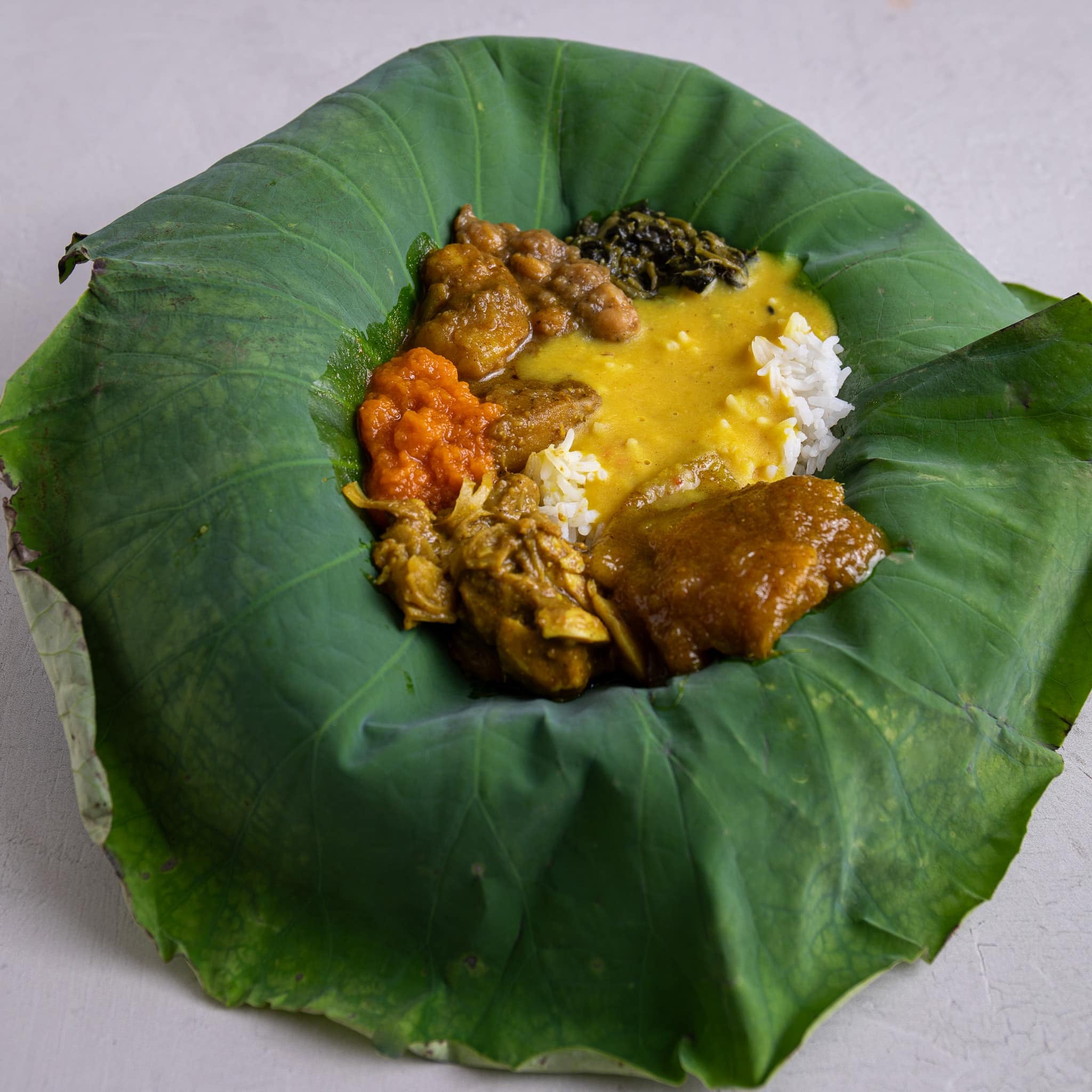
- It’s eaten by hand, off a leaf. Traditionally it’s served on a lotus leaf with rice in the center, and dhal poured over it.
What is Seven Curry?
Seven curry is a Guyanese meal with deep Indian roots. It’s a vegetarian meal eaten during Hindu religious ceremonies and is sometimes called prayer food. It’s very similar to an Indian vegetarian thali. The dishes are placed on a large lotus leaf, with rice in the center, for a beautiful mix of colors, flavors, and textures.
When I visited Kerala, I ordered a vegetarian thali on one of our tours, and to my surprise, it came on a banana leaf with seven dishes! It felt like a little piece of home.
The History of Guyanese Seven Curry
Seven curry has its roots in the traditions of the East Indian indentured laborers who began arriving in Guyana on May 5, 1838 (Royal Historical Society). Guyanese once marked that date as Indian Arrival Day; today we call it Arrival Day, to honor everyone who came to our beautiful country, no matter where they came from. The indentured laborers brought their faith and food traditions with them, and over time, the full spread of curries around rice, much like an Indian thali, became a meal for religious occasions in Guyana.
The dishes themselves were shaped by what they had. On the ships from India, daily rations included rice, flour, ghee, dhal (mostly yellow toor dal), gram (the chickpeas we call channa), pumpkin, and potatoes (Gastronomica). In Guyana, yellow split peas became our dhal, and the land filled in the rest: eddoes grew abundantly along the trenches, so the leaves became the original bhaji, cooked down in coconut milk, and the roots were curried with baigan. Katahar was picked green, and green mangoes were everywhere.
From Prayer Food to Everyday Meal
Seven curry is prayer food, so it’s always vegetarian. In Hinduism, many devotees avoid meat and fast before religious observances, and food is offered to God before it’s eaten (Hindu Website). As a child, I ate it at jhandis with my grandmother, and I loved Diwali, when I got to help her make the sweets.
At home, it looks a little different. For a smaller, thali-style meal, most Guyanese families make 4 or 5 curries: dhal is always one, plus 3 or 4 of the others, and it’s more of a weekly meal. For Diwali and Phagwah, some families also make 4 or 5 instead of all seven. But at a wedding, it’s always seven. And if you’re lucky, there’s mango achar and coconut choka on the side (in Guyana, the coconut is roasted first, which gives it a smoky flavor), plus wedding house puri, a soft, lightly fried flatbread made for tearing and scooping.
What are the 7 Curries?
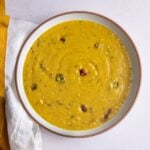
There’s no single set list. Every family has its own combination, and that’s part of what makes seven curry special. The vegetables most commonly used are pumpkin, mango, bhaji, baigan (eggplant), eddo, katahar (a jackfruit relative), and potato with channa (Guyana Tourism Authority). Dhal is always one of the seven. Some lists count it separately, but in all the seven curry meals I’ve eaten, it’s never seven curries plus dhal. Dhal is the seventh, poured right over the rice.
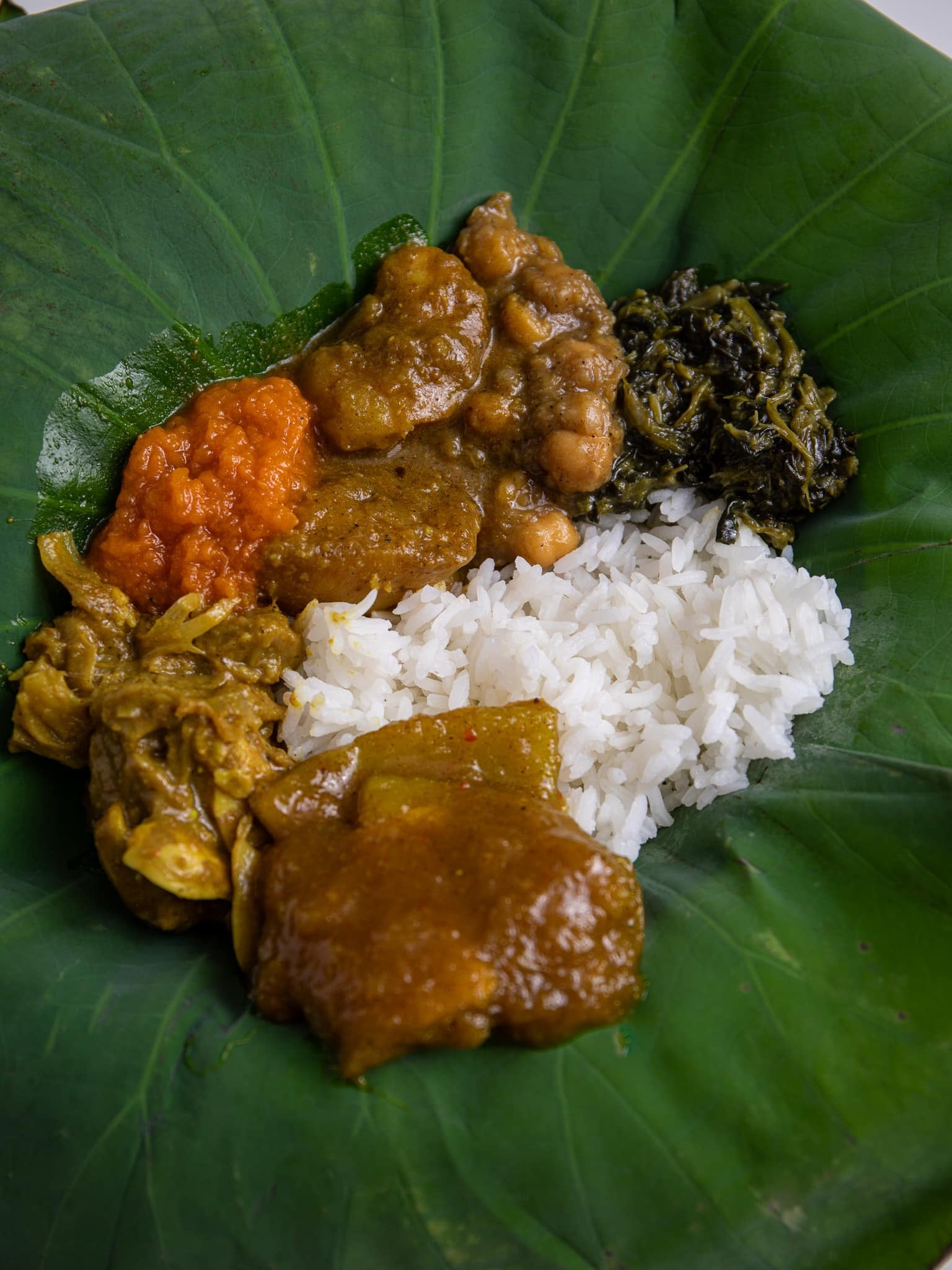
You’ll see them show up in many combinations, mainly:
- Pumpkin
- Mango curry
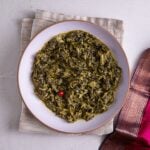
- Bhaji
- Baigan and eddo, or baigan curry and eddo curry as two separate dishes
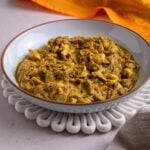
- Katahar curry
- Potato curry, or channa and potato curry
My Seven Curry Favorites

How to Serve
Seven curry is traditionally served on a large lotus leaf with rice in the center, and eaten by hand. Most Guyanese simply call it “the leaf” or a “puri leaf,” but in Indo-Guyanese homes, you’ll also hear “purine leaf.” The name likely comes from purain, the Bhojpuri word for lotus leaf. At a jhandi I went to in Guyana, the host picked the leaves fresh from a pond in his backyard that morning.
The curries are spooned around the rice, and the dhal goes on last, poured over the top. Depending on the occasion, you might also get some pepper sauce on the side. To serve it at home without a leaf, use a large plate or a banana leaf, which you can find frozen at most Asian and Latin grocery stores.
Tips for Preparing the Best Seven Curry
- Prep the day before. Peel, dice and divide all your ingredients the day before, except the eggplant. Most of the curries share the same herbs, spices and aromatics, so this goes quickly.
- Make one big batch of curry paste. Since the curries share the same spices, mix the paste once and divide it between the pots.
- Pull out all the kitchen tools. A food processor saves chopping time. Cook two dishes at a time on the stove, and let the Instant Pot handle the dhal.
- Start with the longest-cooking curries. Dhal and katahar take the longest, so get those going first. Finish with quick ones like bhaji and pumpkin, and plan to finish an hour before you eat, since everything reheats well.
- Multitask. Prep the next dish while another simmers, and adjust the heat as you go to prevent burning.
- Spread it over two days. Dhal, channa and katahar hold up well, and often taste even better the next day. Make them ahead, and cook the quicker curries on the day you serve.
- Make it communal. Seven curry has always been a group effort. At jhandis and weddings, the cooking is shared, and so is the meal. Invite friends and family to help: one person on the dhal, someone else stirring the pumpkin, someone keeping the kitchen clean. Half the fun is cooking together.
Frequently Asked Questions
Because it’s a meal of seven vegetarian curries served together with rice. Seven is also a meaningful number in Hinduism. At a Hindu wedding, the couple takes seven steps or rounds around the sacred fire, called the saptapadi (USC Folklore Archives). There’s no single documented reason for the number, though.
Seven curry is prayer food. It’s served at jhandis, pujas and weddings, and food is offered to God before it’s eaten. It came from the traditions of the East Indian indentured laborers who arrived in Guyana starting in 1838, and it was shaped by their rations and what grew on new land. Today, it’s a symbol of Indo-Guyanese heritage, and a meal that brings everyone to the table to eat together by hand.
Yes. Some lists count dhal separately, but in all the seven curry meals I’ve eaten, dhal is always one of the seven, poured over the rice.
Absolutely. Most Guyanese families make 4 or 5 curries (always including dhal) for everyday meals and gatherings, and save all seven for big occasions like weddings.

How to Make a Seven Curry Spread
Ingredients
For the dhal
- 1 cup yellow split peas
For the katahar
- 1 lb katahar (prepackaged, steamed and frozen)
- 2 cups coconut milk
For the baigan and eddo
- 2 eggplants (large)
- 1 lb eddoes
For the channa and aloo
- 1 can chickpeas (15 oz)
- 1 lb potatoes (gold or russet)
For the mango curry
- 2 lbs young green mangoes
- 2 tablespoons brown sugar
For the pumpkin
- 2 lbs pumpkin
For the bhaji
- 3 bundles fresh spinach
- 1 cup coconut milk
Shared aromatics and spices
- 7 yellow onions
- 4 heads garlic (about 35 cloves)
- 2/3 cup curry powder
- 2 tbsp geera (roasted ground cumin)
- 1 tbsp garam masala
- 8 wiri wiri peppers
- 1 cup oil (neutral tasting for cooking)
- Salt (to taste)
- Scallions and cilantro (for garnish)
To Serve
- White rice (how to cook rice)
- Lotus or banana leaves (optional)
Instructions
Day Before
- Prep ahead: soak the split peas for the dhal. If you like, make the dhal, channa and aloo, and katahar the day before, since they taste even better the next day. Refrigerate, then reheat gently while you cook the rest.
- Make a curry paste: mix the curry powder, geera, garam masala and a little water into one big batch of paste. Store it covered in the fridge and divide it between the curries as you cook.
- Prep everything except the eggplant (about 45 minutes): chop all the onions, garlic and wiri wiri peppers and divide them by dish. Peel and cube the potatoes, eddoes, pumpkin and mangoes. Peel and cut the eggplant on the day of cooking so it doesn’t brown. Wash and chop the spinach.
Cooking day (about 3 1/2 hours before serving)
- Cook two dishes at a time on the stove, with the dhal in the Instant Pot, and plan to finish about 1 hour before you eat. That leaves time to clean up, get ready, and handle anything that goes wrong, like a pot boiling over. All of these dishes reheat well.
- The curry base: the baigan curry, channa and aloo, and mango curry all start the same way. Cook a diced onion with a pinch of salt in oil until soft, add grated garlic for a minute, then add some of the curry paste. Cook it, stirring, until it thickens and dries, 3 to 5 minutes. Add a splash of water if it starts to stick.
- Start the katahar first: get the katahar curry simmering. It needs about 1½ hours, so it goes first.
- Start the dhal next: make the dhal on the stovetop, or use my Instant Pot dhal so it cooks on its own while you focus on the curries. Keep it warm until serving, and hold off on the chunkay until the end.
- Baigan and eddo curry: make the curry base. Add the eddoes, peeled and cut into 2-inch wedges, and stir to coat. Then add the eggplant, peeled, diced and kept in water until now. Sauté 2 minutes, then cover and simmer on low, adding warm water as needed, until the eddoes are fork-tender and the eggplant is soft.
- Channa and aloo: when the baigan curry is done, move it off the heat, covered. Make the curry base, then add the drained chickpeas and cubed potatoes and sauté a minute or two. Add the liquid from the can and about 1 cup of water. Cover and cook, stirring now and then, until the potatoes are tender and the sauce thickens into a gravy.
- Mango curry: once the katahar is done, move it off the heat and cover. Then make the curry base. Add the peeled, seeded green mango pieces, the brown sugar, the whole wiri wiri peppers and about 1½ cups of water. Boil 5 minutes, then simmer on medium-low for about 20 minutes, until the mangoes are soft and melty.
- Start the rice. Put it on a back burner and let it steam while you finish up.
- Finish with the quick dishes: cook the Guyanese pumpkin, then the bhaji, last, since spinach is best fresh.
- Just before serving: for a gathering, keep the curries on warmers. For a family meal, reheat them in their pots on the stove or in the microwave. Then chunkay the dhal: heat a little oil, add garlic and geera until fragrant, and pour it into the dhal.
- Plate it: put rice in the center of each leaf or plate, spoon each curry around it, and pour the dhal over the top last. Garnish with scallions and cilantro. Eat with your right hand, if you like.
Notes
- Make ahead: the dhal, channa and aloo, and katahar hold well, so make them the day before.
- Fewer curries: most homes make 4 or 5 for an everyday meal. Always include dhal, then pick your favorites.
- Prefer the stovetop dhal? Use my stovetop dhal on a third burner.
- Full recipes: each linked recipe has the full amounts and steps.
- Reheating: all of these dishes reheat well. Keep them on warmers for a gathering, or reheat them on the stove or in the microwave for a family meal.
Nutrition
The information listed in the recipe card is an estimate provided by an online nutrition tool. The tool evaluates ingredient names and amounts then makes calculations based on the number of servings listed for the recipe. It is provided as a general guideline and not as a precise calculation. For precise nutrition information please feel free to add the ingredients to your preferred nutrition calculator or consult a doctor or licensed nutritionist.
 Instant Pot Chicken Curry
 Guyanese Duck Curry
 Vegan Plantain Shepherd’s Pie
 Guyanese Oven BBQ Chicken Thighs
Leave a Rating and a Comment