

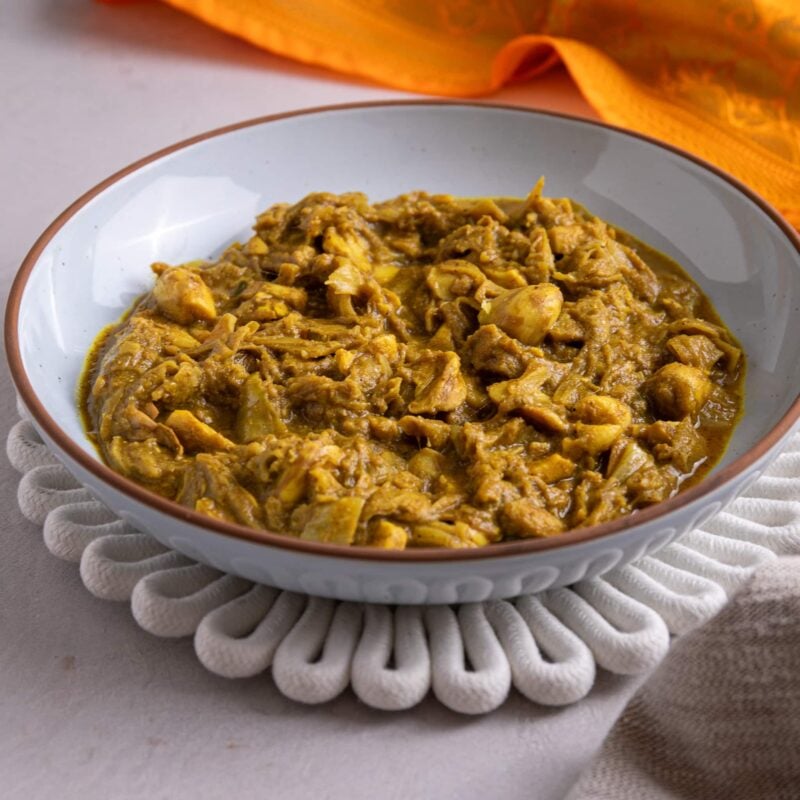
Katahar curry is one of the classic seven curries, served at Hindu weddings, religious ceremonies, and holidays like Diwali and Phagwah in Guyana. It’s also one of my favorites, and it’s easier to make at home than you might think.
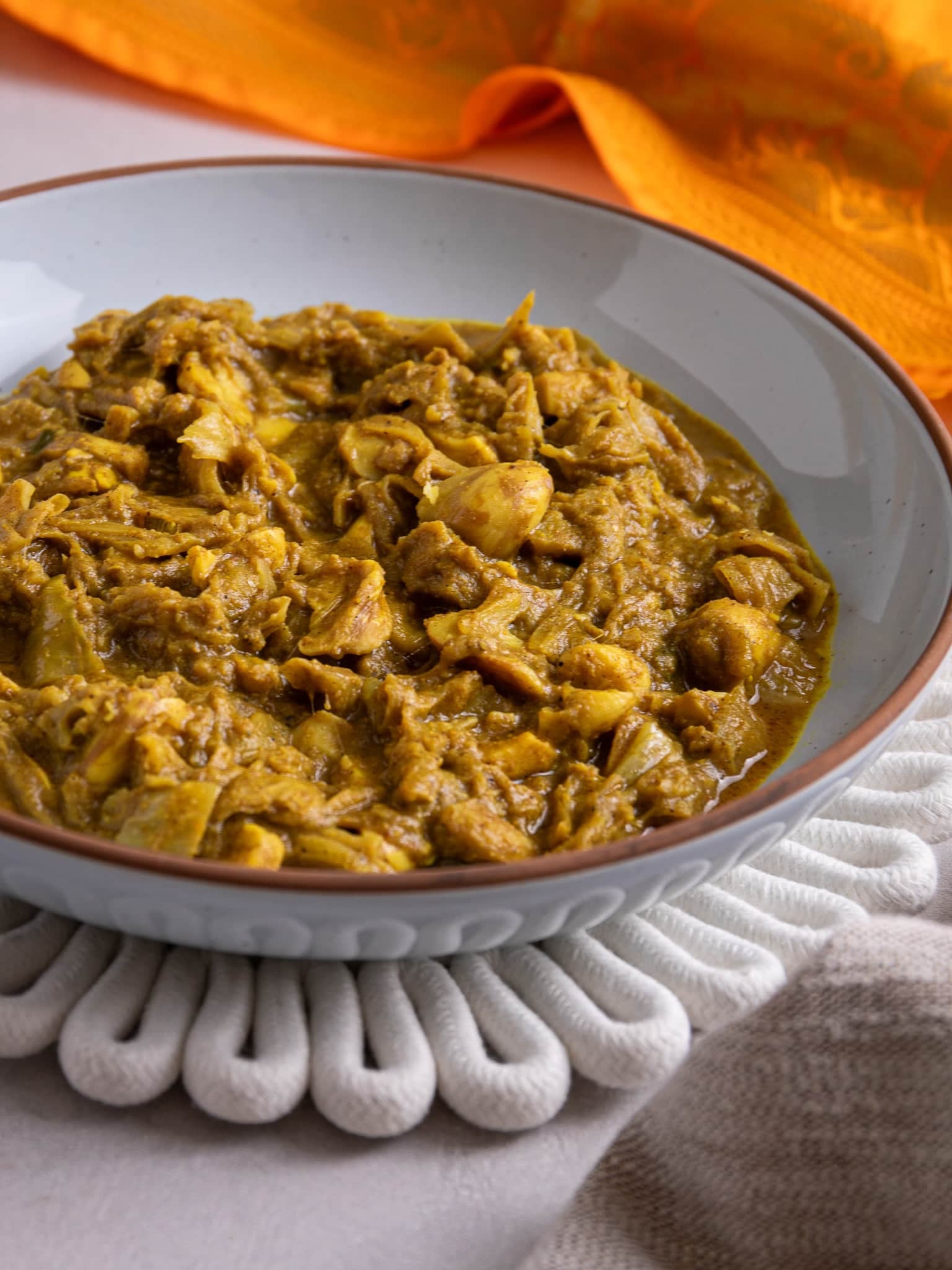
Guyanese Katahar Curry
The first time I made this dish on my own, I hadn’t eaten katahar in over 13 years, because it was never in season when I visited Guyana. When I lived in New York, I rarely longed for Guyanese food because it was so easy to find. Then, on a visit to my mom, we went shopping in Little Guyana, and what did I see on a vegetable stand on Liberty Avenue? Katahar, of course! I bought two, packed them in my suitcase and brought them home to Denver.
These days, my mom sends me steamed, frozen katahar from Queens in little care packages, and I stock up whenever I visit New York. It’s what I use in this recipe, because it’s so much easier than prepping a whole katahar.
For more curry recipes, try Bunjal Shrimp Curry, Guyanese Style Chicken Curry, or Instant Pot Beef Curry.
Why You’ll Love This Guyanese Katahar Curry Recipe
- Easier than you think: Fresh katahar takes a lot of prep. This recipe uses steamed, frozen katahar, which skips the peeling and cleaning. The stovetop is the main method, with the Instant Pot as an option.
- Meaty without meat: The tender seeds and shredded flesh give it a hearty, almost meaty texture, so it’s a satisfying vegan main or side.
- A taste of tradition: It’s a cultural staple, served at Hindu weddings, religious ceremonies, and holidays like Diwali and Phagwah, and it’s one of the seven curries.
What is Katahar?
Katahar (also spelled kathar or catahar) is a fruit in the jackfruit family, and a cousin of breadfruit. In fact, many people mistake it for jackfruit, which is called kowah in Guyana. Katahar is smaller, with more seeds.
Young, green katahar is cooked like a vegetable, most often in a coconut curry like this one. Mature katahar is used only for its seeds, which Guyanese people call breadnut. They’re boiled in brine until tender, then peeled and eaten as a nutty, meaty snack, and they’re so delicious. Outside Guyana, the whole fruit is often called breadnut in English. In Trinidad, katahar is called chataigne, from the French word for chestnut, since the boiled seeds taste a little like chestnuts.
Ingredients for Katahar Curry
You can use fresh or frozen katahar for this recipe.
- Katahar: This recipe uses steamed, frozen katahar, which is already peeled and cleaned. Look for it in the freezer section of Caribbean grocery stores, especially in Richmond Hill, Queens, along Liberty Avenue. Some online Caribbean grocers ship it too. It’s lightly steamed with turmeric so it doesn’t turn brown, but it isn’t cooked, so it still needs the full simmer. If you’re using fresh katahar, choose a green, unripe one, and see “If You’re Using Fresh Katahar” below for how to prep it.
- Aromatics: Onions add a subtle sweetness, and garlic adds a savory flavor.
- Spices and seasoning: I use an aromatic blend of Guyanese curry powder, granulated garlic, geera (roasted ground cumin), garam masala and salt.
- Oil: Any neutral cooking oil, like vegetable or canola oil, works for cooking the curry paste.
- Coconut milk: This adds a rich, creamy texture and balances the spices.
- Water: Enough to cover the katahar while it simmers. You’ll add more as it cooks.
See recipe card for quantities.
How to Make Katahar Curry
I should state as a disclaimer that katahar is quite time consuming to cook, from peeling, to the actually cooking, it takes like 2 to 3 hours, if you’re lucky. So I let the katahar sit in my refrigerator for almost 3 weeks, putting off cooking it every time I saw it in the fridge. Sadly, when I finally decided to cook it, one of them was completely rotten and the other one was salvageable but a bit brown.
How to Prepare Katahar
First, you will need to peel off the tough green skin from the Katahar. Then, separate the “flesh” from the seeds/nuts.
You must remove the outer shell from the seeds. Finally, shred the flesh into tiny strips and cut the seeds/nuts into halves.
Make a Curry Paste
Make the curry paste. Add 1 onion, 6 cloves of garlic and 2 tablespoons of water to a food processor, and blend until finely chopped. Stir in 1 tablespoon of granulated garlic, 1 tablespoon of geera (roasted ground cumin), 1 tablespoon of garam masala, 2 tablespoons of curry powder and 1 teaspoon of salt to form a paste.
Cook the paste. Heat about 3 tablespoons of oil in a large, heavy pot over medium heat. Add the curry paste and cook, stirring often, until most of the liquid has evaporated and the paste is almost brown.
Add the katahar and coconut milk. Add the thawed katahar and stir to coat it in the paste. Pour in 2 cups of coconut milk and cook for about 5 minutes, until it comes to a simmer.
Simmer until tender. Add enough water to cover the katahar. In Guyanese homes, there’s always a kettle of hot water nearby when we cook, and hot water keeps the pot at temperature, but room-temperature water works too. Bring it back to a simmer, cover, and cook for about 1½ hours, stirring now and then. Add more water ½ cup at a time as needed, until the flesh and nuts are melt-in-your-mouth tender and the sauce has thickened. Taste and add salt if needed.
Instant Pot option: Cook the paste on Sauté. Add the katahar and coconut milk, and simmer for 5 minutes. Add up to 1 cup of water, then pressure cook until tender (add your time here). Switch back to Sauté and simmer until the sauce thickens.
Katahar curry is best with white rice, but you can also serve it with oil roti or dhal puri.
Storage
Let leftovers cool, then store them in an airtight container in the fridge for up to 3 days. Refrigerate them within 2 hours of cooking. To reheat, warm over medium heat on the stovetop, adding a splash of water or coconut milk to loosen the sauce.
To freeze: katahar curry freezes well for up to 3 months. Thaw it overnight in the fridge before reheating.
Tips for the Best Katahar Curry
- Keep hot water nearby. Like in Guyanese homes, keep a kettle of hot water close by. Adding hot water keeps the pot at temperature, but room-temperature water works too.
- Check the pot. This isn’t a set-it-and-forget-it recipe. Stir now and then, and add water ½ cup at a time whenever it starts to look dry.
- Adjust the spices. Add more spices or hot pepper to the curry paste if you like. I use a curry powder that already has loads of spices, so I usually don’t add anything else.
- For an extra-rich finish, stir in a splash more coconut milk in the last few minutes.
- If you’re using fresh katahar: prep it the night before. It took me about an hour to peel a small one. Oil your hands and knife first, because the sap is very sticky.
Frequently Asked Questions
No. They’re in the same family and look similar, but katahar is smaller, with more seeds. In Guyana, jackfruit is called kowah. Katahar is cooked green as a vegetable, while ripe jackfruit is usually eaten sweet.
Yes. In katahar curry, the young seeds are peeled, halved and cooked with the flesh, and they give it that meaty bite. The mature seeds are boiled in brine, peeled and eaten as breadnut.
Look in the freezer section of Caribbean grocery stores, especially in Richmond Hill, Queens. Some online Caribbean grocers ship it too. It’s steamed with turmeric but not cooked, so it still needs the full simmer.
Katahar has a mild, sweet taste and a potato-like consistency, that becomes tender and creamy when cooked. Its subtle taste makes it perfect for curry because it absorbs the rich flavor of the spices.
Oil your hands and knife first, because the sap is very sticky. Peel off the skin with a knife, then cut the fruit into sections and remove the core. Separate the flesh from the seeds. Peel the white film and shell off the seeds and cut them in half, then shred the flesh into small strips. Rinse the pieces under cold water to wash off some of the sap, then pat them dry before cooking.

Guyanese Katahar Curry
Equipment
Ingredients
- 1 onion
- 6 cloves garlic
- 2 tbsp curry powder
- 1 tbsp granulated garlic
- 1 tbsp geera
- 1 tsp garam masala
- 3 tbsp oil
- 1 lb Package steamed, frozen katahar (thawed or 1 medium fresh katahar, prepped)
- 1 tsp salt
- 2 cups coconut milk
- Hot water (enough to cover, plus more as needed)
Instructions
- Make the curry paste: Blend the onion, garlic and 2 tablespoons of water in a food processor until finely chopped. Stir in the curry powder, granulated garlic, geera, garam masala and salt.
- Cook the paste: Heat the oil in a large, heavy pot over medium heat. Add the paste and cook, stirring often, until most of the liquid has evaporated and the paste is almost brown.
- Add the katahar and coconut milk: Add the katahar and stir to coat it in the paste. Pour in the coconut milk and cook for about 5 minutes, until it comes to a simmer.
- Simmer: Add enough hot water to cover the katahar. Bring back to a simmer, cover, and cook for about 1½ hours, stirring now and then. Add more water ½ cup at a time as needed, until the flesh and seeds are melt-in-your-mouth tender and the sauce has thickened.
- Serve: Taste and add salt if needed. Serve with white rice, oil roti or dhal puri.
Notes
- Using steamed, frozen katahar: Thaw it first. It’s only lightly steamed with turmeric to keep it from browning, so it still needs the full 1½ hours of simmering.
- Hot water: In Guyanese homes, there’s always a kettle of hot water nearby when we cook. Hot water keeps the pot at temperature, but room-temperature water works too.
- Instant Pot: Cook the paste on Sauté. Add the katahar and coconut milk, and simmer for 5 minutes. Add up to 1 cup of water, then pressure cook for about 1 hour, checking once or twice and adding a little water if needed. Switch back to Sauté and simmer until the sauce thickens.
- Fresh katahar: Oil your hands and knife before cutting, because the sap is very sticky. See “How do you clean fresh katahar?” above.
- Storage: Because it’s made with coconut milk, it doesn’t keep long. Refrigerate leftovers within 2 hours, and eat them within 3 days, or freeze for up to 3 months.
Nutrition
The information listed in the recipe card is an estimate provided by an online nutrition tool. The tool evaluates ingredient names and amounts then makes calculations based on the number of servings listed for the recipe. It is provided as a general guideline and not as a precise calculation. For precise nutrition information please feel free to add the ingredients to your preferred nutrition calculator or consult a doctor or licensed nutritionist.
 Farine
 Creamy Farine (Cassava) Grits
 Steak and Veggies Stir Fry (Whole30)
 Gluten Free Pinwheels
Leave a Rating and a Comment